THROWBACK THURSDAY: Out and about for a night on the town in Offaly from the archives
Search


17 Apr 2026

Please allow ads as they help fund our trusted local news content.
Kindly add us to your ad blocker whitelist.
If you want further access to Ireland's best local journalism, consider contributing and/or subscribing to our free daily Newsletter .
Support our mission and join our community now.
To continue reading this article, you can subscribe for as little as €0.50 per week which will also give you access to all of our premium content and archived articles!
Alternatively, you can pay €0.50 per article, capped at €1 per day.
Thank you for supporting Ireland's best local journalism!


What is it?
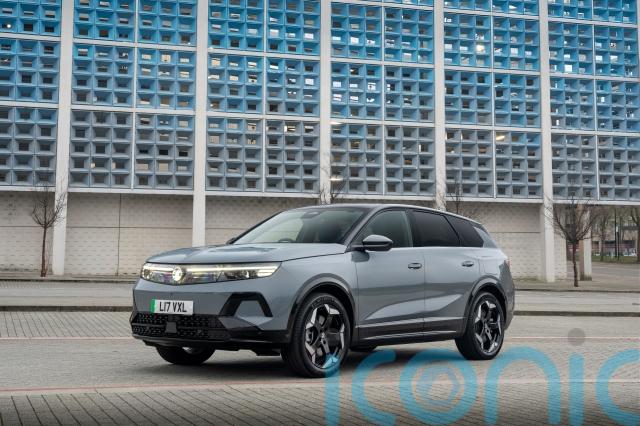
The Vauxhall Grandland is one of those cars that struggles to make a name for itself in the SUV sector.
The second-generation car brought a more upmarket feel and introduced an electric powertrain to boost its appeal, though it still left a rather uninspiring impression.
To solve this, Vauxhall has introduced a more driver-focused variant with a dual-motor all-wheel drive model. So, does this faster offering add a bit more spice to the Grandland line-up?
What’s new?
It’s all about what sits underneath, as there is now a new powertrain that features dual electric motors and all-wheel drive.
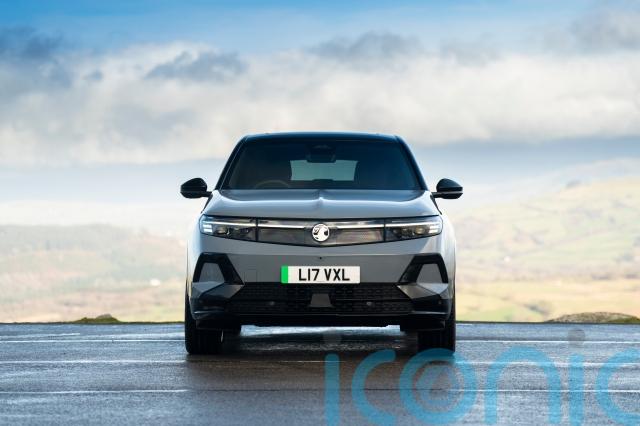
The exterior gains front and rear bumper inserts to help improve airflow and 20-inch two-tone aero alloy wheels. You’ll find more driver modes to help tweak certain elements of the car, too.
The rest of the car remains the same as before, featuring Vauxhall’s illuminated badges and the eye-catching ‘Vizor’ front end design.
What’s under the bonnet?
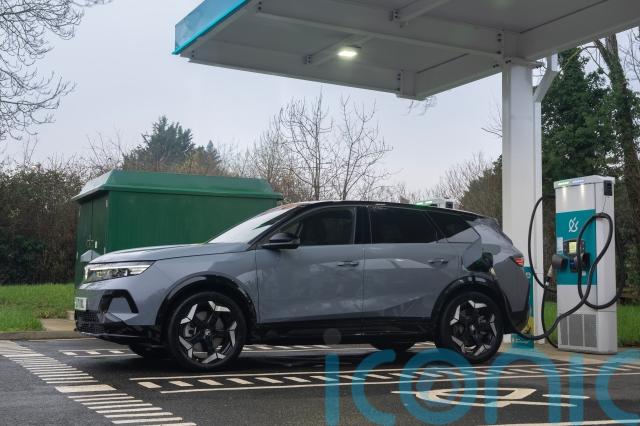
Our test car is equipped with the latest powertrain that the Grandland Electric can be ordered with. It uses a 73kWh battery pack mated to dual electric motors to make all-wheel drive.
In terms of numbers, it produces 321bhp and 509Nm of torque, while it takes the car to 60mph in 5.9 seconds and will reach a top speed of 112mph.
Vauxhall claims the car can travel up to 311 miles on a single charge and that 160kW DC rapid-charging is compatible, enabling a 20 to 80 per cent top-up to take 26 minutes.
What’s it like to drive?
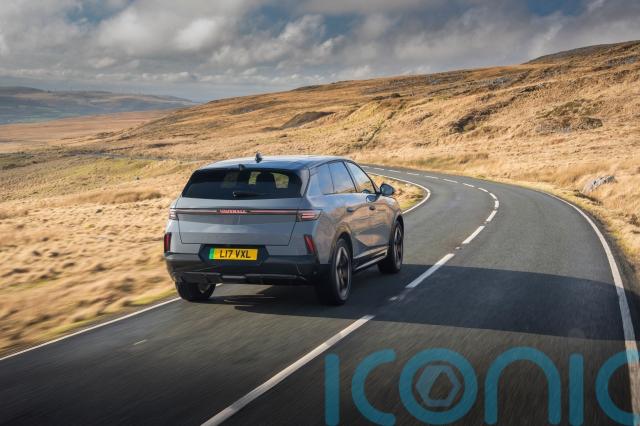
Sticking an extra electric motor into the drivetrain of the Grandland Electric has boosted its performance capabilities, but not its driving dynamics.
This all-wheel drive variant still doesn’t make this big Vauxhall and engaging car to drive, as the light steering, spongy brake pedal and soft chassis give a disconnected feel.
The strangest part of the driving experience is the delay in its power delivery. We noticed that under acceleration, there was a slight lag with a sudden jolt of more power a few seconds after the first tap of the throttle.
That said, it’s certainly a lot more comfortable than we’d anticipated, despite our test car’s 20-inch wheels, with the suspension managing to iron out lumps and bumps with ease.
It’s also refined at speeds and is efficient, with our car returning around 3.5 miles per kilowatt, which works out at 255 miles in real-world driving. That’s still off the pace of the manufacturer’s 311-mile claimed WLTP figure.
How does it look?
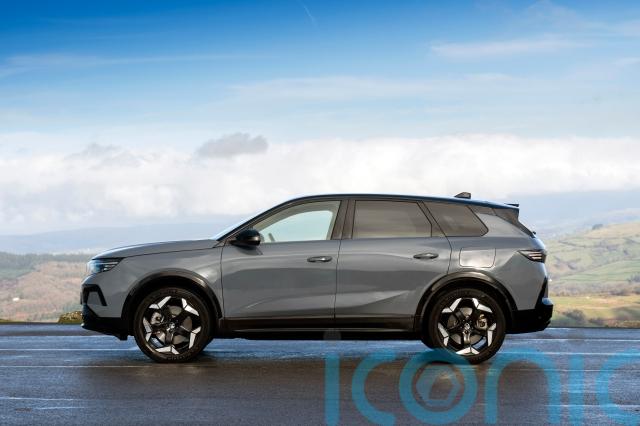
The Grandland is a car that isn’t going to set the world alight in its design, although at least this all-wheel drive model does give it a sportier appeal.
The larger 20-inch wheels and bumper inserts set it apart from the standard model and the two-tone paint option on our test car enhances the look further.
Other neat touches include the hidden lower-window seals, a design element found on the Peugeot E-3008 and E-5008, as well as the sharp lower-body crease. However, the overall silhouette of the Grandland lacks flair, and this new variant doesn’t do enough to make it stand out from its competitors.
What’s it like inside?
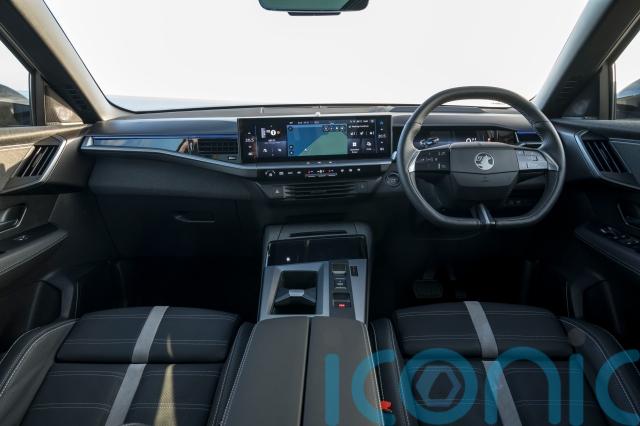
The interior of the Grandland is a vast improvement over its predecessor, with a nice mix of fabric materials found on the centre console and door cards.
The design layout is simple yet stylish and the 16-inch infotainment screen is angled towards the driver. There are physical climate control dials and Vauxhall’s ‘Pixel Box’ – a specially designed cubby hole for your smartphone with a wireless charger and glass lid.
You’ll find 35 litres of storage located throughout the cabin, too. There are large door bins, a cut-out under the centre console, a split centre armrest compartment and two cupholders. Sadly, half of the car’s glovebox is taken up with the fuse box – typical of Stellantis products.
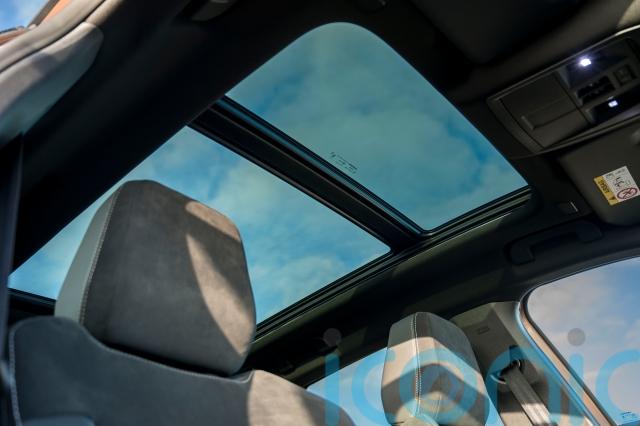
The Grandland performs well when it comes to carrying rear occupants and there is plenty of head and legroom, despite our test car’s panoramic sunroof. Passengers also get seatback pockets and phone holders located in the backrests of the front seats.
There is a low-load lip and the boot capacity remains the same as it is in the standard Grandland Electric.
Space stands at 550 litres, while the split-folding 40:20:40 rear bench will expand that room to 1,641 litres, which is slightly off the pace of the Skoda Enyaq’s 1,700 overall volume.
What’s the spec like?
If you want this 321bhp all-wheel drive setup, Vauxhall only offers this model in two guises.
To make prices attractive, the car is eligible for the government’s Electric Vehicle Grant, which shaves £1,500 off the list prices.
That means the GS grade is priced at £36,095 and includes lots of standard kit for the money: LED headlights, adaptive cruise control, dual-zone climate control and a powered tailgate.
Our test car is the top-of-the-line Ultimate and comes in at £37,595, boasting a 360-degree surround camera, a head-up display, a heated front windscreen and a Focal 10-speaker premium sound system.
All models come with a vehicle-to-load (V2L) function, which enables the car’s battery to be used to plug in electrical appliances such as a vacuum cleaner or coffee machine.
Verdict
The Vauxhall Grandland Electric has never been a car that stands out from the SUV crowd.
This new all-wheel drive model is faster, but that’s all it can offer on top of the standard model.
It provides lots of space and is relatively efficient for a family SUV, though its driving experience is just as bland as before and the larger price tag makes it even less appealing.
We’d suggest opting for the ordinary Grandland Electric as it’s cheaper to buy and just as spacious, or go for a Skoda Enyaq which is a better all-rounder.

James Brazil added another prestigious title his WKO and National Championship victories from last year

Eamon Lonergan, Director of Services Environment and Climate Action, Clare Lee, Climate Action Coordinator and Cathaoirleach Councillor John Carroll

Dublin celebrate a crucial late goal against Offaly last year.

Subscribe or register today to discover more from DonegalLive.ie
Buy the e-paper of the Donegal Democrat, Donegal People's Press, Donegal Post and Inish Times here for instant access to Donegal's premier news titles.
Keep up with the latest news from Donegal with our daily newsletter featuring the most important stories of the day delivered to your inbox every evening at 5pm.

This publication supports the work of the Press Council of Ireland and Office of the Press Ombudsman, and our staff operate within the Code of Practice of the Press Council. You can obtain a copy of the Code, or contact the Council, at www.presscouncil.ie, Lo-call 1800 208 080 or email: info@presscouncil.ie.