Denis O’Donovan of Ballyryan, Donohill, Co Tipperary
Search


12 Mar 2026

Please allow ads as they help fund our trusted local news content.
Kindly add us to your ad blocker whitelist.
If you want further access to Ireland's best local journalism, consider contributing and/or subscribing to our free daily Newsletter .
Support our mission and join our community now.
To continue reading this article, you can subscribe for as little as €0.50 per week which will also give you access to all of our premium content and archived articles!
Alternatively, you can pay €0.50 per article, capped at €1 per day.
Thank you for supporting Ireland's best local journalism!


The Taoiseach has “unequivocally apologised” to the survivors of childhood abuse at industrial and reformatory schools in Ireland.
Micheal Martin issued the apology in the Dail on “behalf of the Government, the State, and all the citizens of the State” for “the profound sorrow for the terrible pain and abuse suffered”.
Addressing survivors, he said: “What you endured on a daily basis as innocent children was harrowing, heartbreaking and wrong.”
He added: “As a country and as a government, we recognised that too many of our children were denied the love, care and security that should have been theirs.
“Abuse ruined their childhoods and was, and remains, an ever-present part of their adult lives, reminding them of a time when they were without support or protection.”
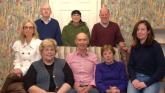
Four survivors of abuse, Mary Donovan, Mary Dunlevy Greene, Miriam Moriarty Owens and Maurice Patton O’Connell, who were sitting in the Distinguished Visitors Gallery, received a round of applause ahead of the apology.
They had staged a hunger strike outside Leinster House to highlight ongoing issues they face because of their abuse.
Addressing the Dail, he said meeting the group had “brought home” the “deep personal toll” abuse in State institutions has “taken on the lives of survivors”.
Micheal Martin reiterated a 1999 state apology, saying it was a “sincere and long overdue apology to the victims of childhood abuse for our collective failure to intervene, to detect their pain and to come to their rescue”.
He outlined measures taken by successive governments to deal with historic abuse and prevent further instances.
The Taoiseach also said the protest group had raised concerns about the “adequacy” of new supports approved by the government in 2023.
Following a mediation process, he said, the government has “agreed to provide further improvements to these services”.
He said: “These include strengthened access to health services for survivors of industrial and reformatory schools through appointment of dedicated health liaison officers and better access to counselling and physiotherapy services.”
He added that “work is already under way to put these services in place”.
He said there was also an agreement to “provide additional funding for education grants under the Supports for Survivors of Residential Institutional Abuse Act 2025 (Education Act 2025)”.
The Taoiseach said he “recognised” calls for “a Contributory State Pension for this group of survivors”.
He said it was a complex issue and said the group had “agreed to explore ways to address this issue that would be more flexible and easier to access”.
The government has approved “the expansion of the education support payments” and “progressed measures to ensure that survivors are prioritised for social housing needs”, he added.
The experiences of children who were “boarded out” was also raised in the apology.
Boarding out was a practice where children were fostered or raised by other families.
Mr Martin said some experienced “heartbreaking exploitation, neglect and abuse within the families and communities in which they were placed”.
He acknowledged: “They were not raised as part of a family or given the opportunities they should have been in relation to their care and education.
“We know that some were physically, emotionally, and sexually abused.
He said: “I apologise on behalf of the State for the abuse and neglect that you suffered.
“What happened to you was wrong, shocking and should never have happened.”
Addressing the issue of criminal records, Mr Martin “categorically” confirmed the state “did not, and does not regard individuals, by virtue of their detention in any industrial school as having committed a criminal offence, and that no criminal record is recorded against them”.
He said the same was true of children detained in Industrial Schools and later transferred to Reformatory Schools “solely by virtue of their detention in the Industrial School”.
He added: “Certificates confirming this for individual survivors can be considered on a case-by-case basis following receipt of records, including posthumously.”
After the Taoiseach spoke, Simon Harris delivered his own statement, in which he said: “We have heard, as we should, in this House on many occasions of the systematically cold and harsh treatment of children and the endemic culture of abuse which went unchecked in our State for far too long.
“It is right that we should hear these harsh truths in this House and it is right that we should apologise for them.
“In truth, we can never apologise enough for what happened.”

Subscribe or register today to discover more from DonegalLive.ie
Buy the e-paper of the Donegal Democrat, Donegal People's Press, Donegal Post and Inish Times here for instant access to Donegal's premier news titles.
Keep up with the latest news from Donegal with our daily newsletter featuring the most important stories of the day delivered to your inbox every evening at 5pm.

This publication supports the work of the Press Council of Ireland and Office of the Press Ombudsman, and our staff operate within the Code of Practice of the Press Council. You can obtain a copy of the Code, or contact the Council, at www.presscouncil.ie, Lo-call 1800 208 080 or email: info@presscouncil.ie.