
Denis O’Donovan of Ballyryan, Donohill, Co Tipperary
Search


12 Mar 2026

Please allow ads as they help fund our trusted local news content.
Kindly add us to your ad blocker whitelist.
If you want further access to Ireland's best local journalism, consider contributing and/or subscribing to our free daily Newsletter .
Support our mission and join our community now.
To continue reading this article, you can subscribe for as little as €0.50 per week which will also give you access to all of our premium content and archived articles!
Alternatively, you can pay €0.50 per article, capped at €1 per day.
Thank you for supporting Ireland's best local journalism!

Five rivers in North Tipperary, all flowing into Lough Derg.

A NUMBER of North Tipperary rivers are deteriorating in quality year on year, the EPA has said.
A recent meeting of Nenagh Municipal District was told that the EPA published a report on Water Quality in Ireland 2019-2024 in October 2025, which stated that just over half (52%) of Ireland's surface waters are in satisfactory ecological health and are in either high or good ecological status. This is a 2% decline from the previous national assessment.
“Ecological status is a measure of the overall health of the water body,” the Nenagh MD Councillors were told by a member of LAWPRO (the Local Authority Waters Programme), “and it includes assessments of the biological indicators of water quality as well as measurements of the pollutant levels.”
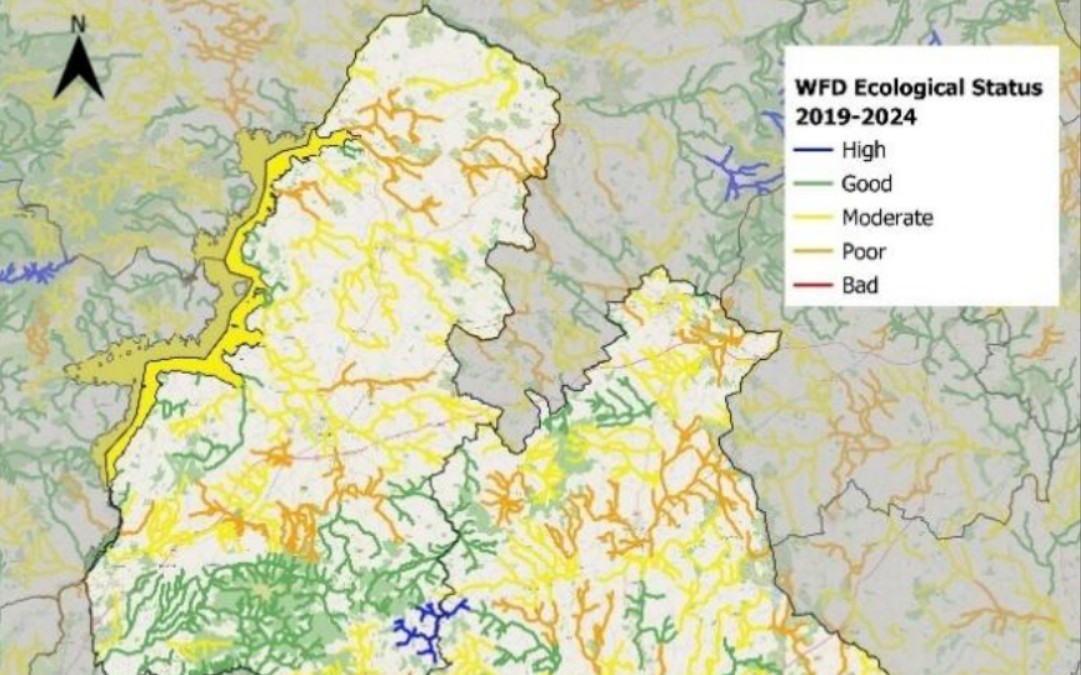
She pointed out that in Tipperary, there was no change in the overall numbers of water bodies achieving satisfactory ecological health, with 33% of monitored surface water bodies in Tipperary at high and good status. Nenagh River was one of the rivers which enjoyed an improved status. The phosphorus concentrations improved in some rivers in Tipperary.
However in the period 2019 – 2024, the status of 21 water bodies declined.
“The number of water bodies at Poor status has grown from 40 to 50 (from 23% to 29%),” the LAWPRO representative continued. “The Little Brosna and Ballyfinboy Rivers in North Tipperary declined in status. We are targeting the areas where there are water quality issues and are working with farmers and others to improve things; this important work is ongoing.
“While there is still much work to be done, there are significant signs of improvement in some areas that we can build on over the coming years.
“We have also received many queries from concerned members of the public in Clare, Tipperary and Galway about the water quality status in Lough Derg. There is a national Water Action Plan featuring five pilot catchments throughout Ireland. We are planning to form one of those five catchments in the Lough Derg area and it will be devoted to the lake's water quality.”
“As I have become older,” said Cllr Seamus Morris, “I have grown to greatly appreciate rivers and I am often walking their banks and examining them for refuse or pollution. Much of our river system looks good to me but there is a worrying amount of it which is below standard. I think the creation of more Drainage Committees would be a good thing. These grassroots committees know the rivers and the land the best. They are excellent at keeping an eye on things. We are fighting a losing battle in quite a few locations. I see quite a few discharge pipes and wonder about them. The discharge pipe in Ballycommon has been operating illegally for years. Have all these various discharge pipes throughout the county been properly examined? Also during my river bank walks I see quite a lot of refuse and dead animals, including dead dogs and dead calves. It makes you wonder, are people using our rivers for dumping dead animals in?”
Cllr John Carroll said the decrease in water quality in the county's rivers is very worrying. He pointed out that excessive vegetation in the Kilmastulla River is causing problems. (Below is a map showing the water quality status of the various water courses in North Tipperary).
Another recent Council meeting was told that three much-loved rivers in North Tipperary have "deteriorated badly" during the last decade. The meeting was told that the Carrig, Lorrha and Ballyfinboy rivers are steadily declining in quality due to an excess of phosphates in the system. Phosphate pollution in rivers causes eutrophication, an overgrowth of algae and aquatic plants from excess nutrients, leading to murky water, blocked sunlight, and oxygen depletion leading to a reduction in fish numbers, invertebrates and microorganisms.
READ NEXT: Tipp farmers respond strongly to European water improvement scheme
Cllr Michael O'Meara, who is a farmer in the Lorrha area, told the January meeting of Nenagh Municipal District that since the Ukraine war broke out, Protected Urea has become more difficult for farmers to get and has become more costly. Protected Urea is an efficient and more environmentally friendly fertiliser.
“Scientists have carried out water quality tests in the Carrig, Lorrha and Ballyfinboy Rivers,” Cllr O'Meara remarked, “and the results show a significant decline in invertebrates and microorganisms.”
The Councillor added that all farms are subject to strict operational directives and farm inspections. “Farmers are operating under a strict set of rules governing our operations, including such things as the run-off from farm yards and farm sheds.”
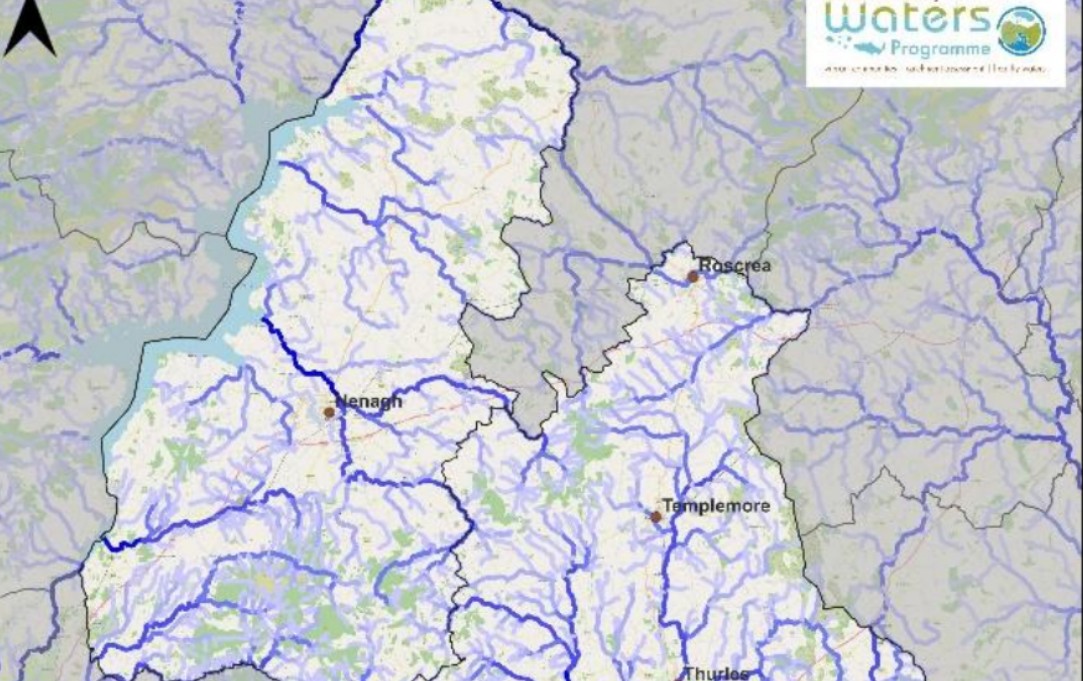
He added that the three rivers flow into the Shannon. “Ironically, while the fish numbers in the rivers are declining, what I am hearing on the ground is that fish numbers are increasing in Lough Derg.” (Below is a LAWPRO map of the rivers and streams of North Tipperary).

Subscribe or register today to discover more from DonegalLive.ie
Buy the e-paper of the Donegal Democrat, Donegal People's Press, Donegal Post and Inish Times here for instant access to Donegal's premier news titles.
Keep up with the latest news from Donegal with our daily newsletter featuring the most important stories of the day delivered to your inbox every evening at 5pm.

This publication supports the work of the Press Council of Ireland and Office of the Press Ombudsman, and our staff operate within the Code of Practice of the Press Council. You can obtain a copy of the Code, or contact the Council, at www.presscouncil.ie, Lo-call 1800 208 080 or email: info@presscouncil.ie.