
Denis O’Donovan of Ballyryan, Donohill, Co Tipperary
Search


12 Mar 2026

Please allow ads as they help fund our trusted local news content.
Kindly add us to your ad blocker whitelist.
If you want further access to Ireland's best local journalism, consider contributing and/or subscribing to our free daily Newsletter .
Support our mission and join our community now.
To continue reading this article, you can subscribe for as little as €0.50 per week which will also give you access to all of our premium content and archived articles!
Alternatively, you can pay €0.50 per article, capped at €1 per day.
Thank you for supporting Ireland's best local journalism!

Can mother and baby attachment influence future relationships

SOME time in the latter years of the 20th century, as young students of psychology, we learned about attachment theory.
We heard about how important early attachment to your primary caregiver was so important, not
just at that time in development but for the formation of relationships later on in life. Most humanities courses will include something on attachment theory, so many of our readers will be familiar with the concept.
Today, we would like to explore how important early attachment is to the ability to form healthy adult relationships.
Is a healthy attachment to your caregiver early in life the only determinant of your ability to form healthy relationships as an adult? Or are there other factors at play too? What are the unhealthy attachment styles and can we overcome them to have healthy adult relationships?
John Bowly was a British psychologist and the first to study attachment in young children to their parents in the second half of the last century.
A little later, in the 1970s, Mary Ainsworth, an American psychologist, expanded on Bowlby’s work. She developed what is known as the “strange situation” in order to study attachment and behaviour.
Ainsworth classified very young children as securely or insecurely attached to their caregiver (usually the mother) depending on their reaction to her leaving the room they shared, and returning to them a little later.
Put very simply, the babies who were distressed when their parent left but were easily soothed when reunited with her, were deemed “secure”.
READ NEXT: Managing the magic of the mind
Two types of insecurely attached children were also identified, the anxiously attached and the avoidantly attached. The anxiously attached babies were distressed when the parent left and then, on her return, were both happy to see her and angry and upset.
The avoidantly attached babies did not appear upset when the parent left the room and did not seem to react when they returned; however, researchers found that these babies’ heart rates were just as elevated as the others, indicating that they too were just as distressed by their parent leaving.
So what does this have to do with adult relationships? If you are fortunate enough to have had a secure attachment early on in life with your caregiver, you are better able to navigate the challenges of intimate adult relationships.
You don't worry about being abandoned or about being overwhelmed in a relationship. If, on the other hand, you are anxiously attached you have a strong need for affirmation and closeness from your partner and if they cannot provide this or only do so inconsistently, this causes significant stress, worry and physiological arousal of the nervous system.
If you are avoidant, you get overwhelmed in adult relationships by your partner’s need for closeness and you prize self-reliance and independence.
Research demonstrates that when two people are in an intimate relationship, their nervous systems become wired together. Our partner regulates our blood pressure, heart rate, breathing and hormones.
When each partner is securely attached they act as a secure base for each other and their bond actually fosters healthy independence and autonomy and emotional regulation.
If one of the couple is anxiously attached they can be calmed and soothed if they have a partner who is securely attached; the securely attached partner is able to reassure, to show up for and to provide consistency for their insecure mate.
This helps lower the anxious partner’s stress levels, down-regulate sympathetic nervous system arousal (our innate instinct to fight or flee when feeling threatened) and they can learn to emotionally regulate.
However when both partners are insecurely attached the relationship is much more fraught and often unhealthy for both. Take for example, a relationship between an anxiously attached person and an avoidantly attached mate. The anxiously attached partner needs closeness, proximity, emotional availability and often reassurance from their mate.
Without that they are often on edge, unhappy and hypervigilant in the relationship. They are prone to getting caught up in thinking traps such as mind reading, personalizing, jumping to conclusions and catastrophising.
The avoidant partner on the other hand, is uncomfortable with closeness, both physical and emotional, and is unable to soothe their anxious partner’s distress. The more the anxious partner pushes, the more the avoidant partner pulls.
Unfortunately this anxious/avoidant pairing is quite common, as the research suggests that these two attachment styles are often drawn towards each other.
In the past, it has been assumed that your adult attachment style was primarily a product of your upbringing. If you had a parent or caregiver who was responsive to your needs - who provided a secure base from which you could explore the world and return safe in the knowledge that your parent would be there for you - then you would develop a secure attachment style.
If your parents were inconsistent or distant then your attachment style would be insecure. However, more recent research tells us that there are other factors which influence adult attachment styles.
Temperament seems to play a role; this makes sense as a baby with an easy temperament is often responded to in a more positive way than a baby with a more difficult temperament.
The role of genetics has also been investigated and research suggests that our genes may play an important role in influencing our attachment style. Life experience, trauma and other adversity can also play a part.
So why is it important to identify what type of attachment style we have?
The good news is that people can learn to be more secure in their relationships. If we can be more aware of how we are in our relationships, either as a single person in the dating world or in a stable partnership, then we can reflect on what it is we need from our mate. We can see who we are suited to and who we are not. It is important to know what we need .
This does not make us needy. We can work on ourselves, for example, the thinking styles, the behaviours, the habits that can self-sabotage and that we would like to change, especially when we are in a relationship.
If we know what we need in a relationship, then we can learn how to communicate that to others. If we can identify our partners’ or potential partners’ attachment styles we have really good information that can provide us with context about their behaviour. We can decide what we are and what we are not prepared to accept in a relationship.
Psychiatrist and neuroscientist Amir Levine and psychologist Rachel Heller have written a wonderful book, 'Attached' (see cover below) in which they dive deeply into the importance of this topic and they give really practical advice based on the science to help us become more secure in our intimate relationships.
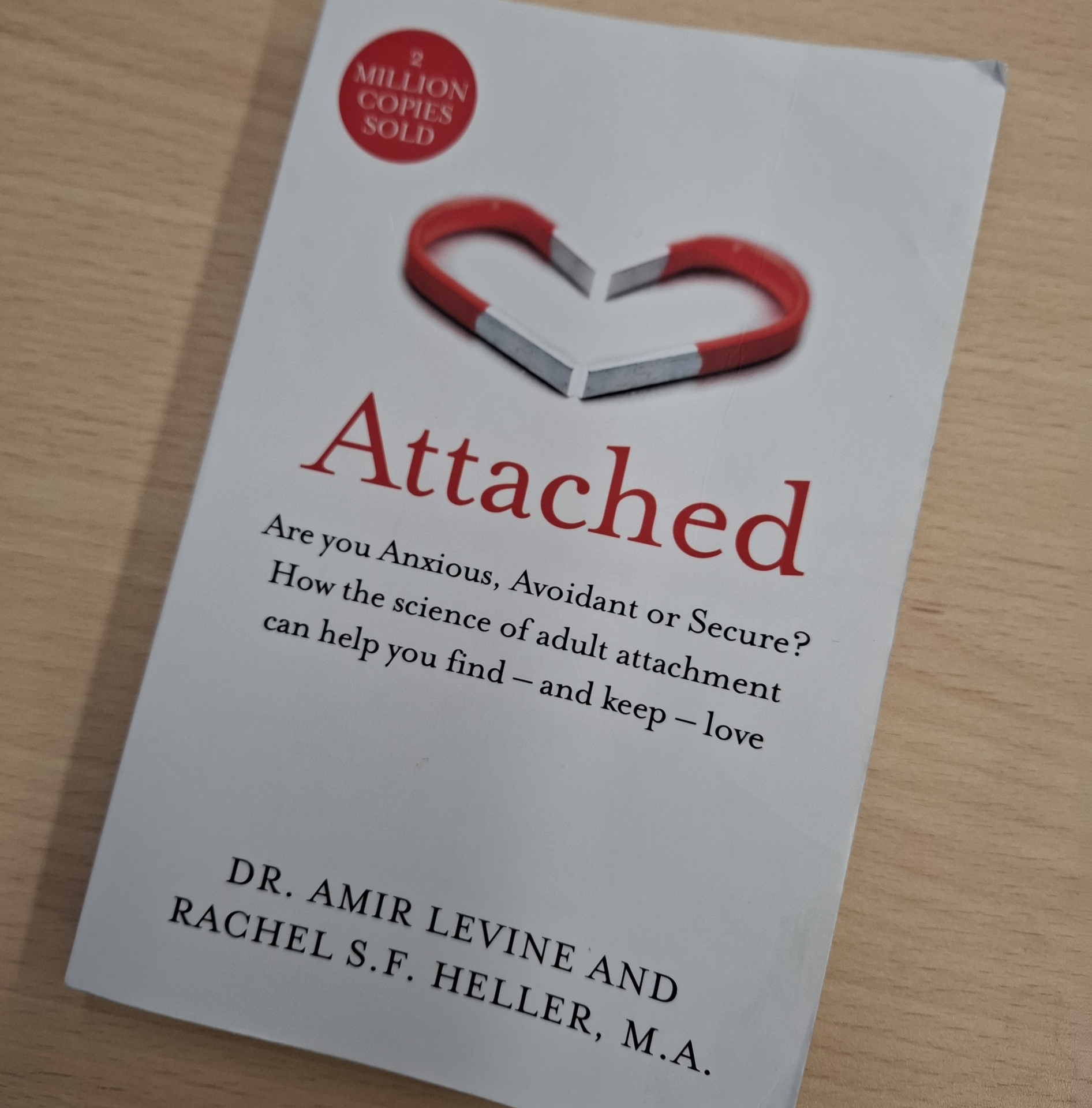
A final note regarding “needs” and “neediness”. Our society often places possibly too much value on qualities such as independence, self reliance and autonomy. However, human beings are social creatures. We evolved as group members and our physical proximity kept us safe. Moreover, we know from the research that we do better psychologically and physically when we have social connection.
So, don’t be ashamed of wanting to be close to your partner, of depending on them or having them depend on you.
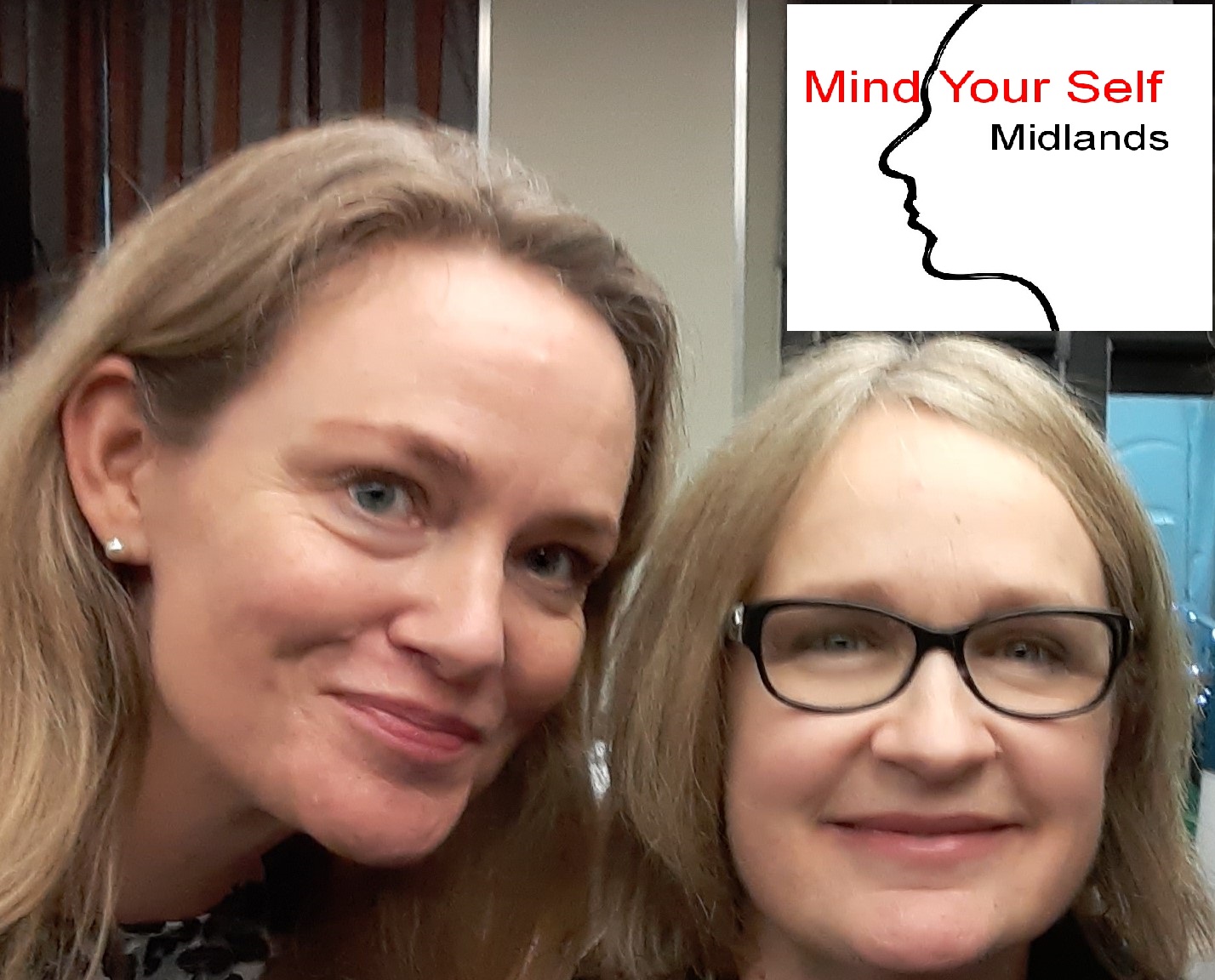
Julie O'Flaherty and Imelda Ferguson (pictured above) are chartered clinical psychologists, both based in private practice in Tullamore. Through Mind Your Self Midlands, they run courses on positive psychology and mindfulness throughout the year. They can be contacted through the Psychological Society of Ireland www.psychologicalsociety.ie (Find a Psychologist section) and also on their Facebook page, Mind Your Self Midlands.

Subscribe or register today to discover more from DonegalLive.ie
Buy the e-paper of the Donegal Democrat, Donegal People's Press, Donegal Post and Inish Times here for instant access to Donegal's premier news titles.
Keep up with the latest news from Donegal with our daily newsletter featuring the most important stories of the day delivered to your inbox every evening at 5pm.

This publication supports the work of the Press Council of Ireland and Office of the Press Ombudsman, and our staff operate within the Code of Practice of the Press Council. You can obtain a copy of the Code, or contact the Council, at www.presscouncil.ie, Lo-call 1800 208 080 or email: info@presscouncil.ie.