Denis O’Donovan of Ballyryan, Donohill, Co Tipperary
Search


12 Mar 2026

Please allow ads as they help fund our trusted local news content.
Kindly add us to your ad blocker whitelist.
If you want further access to Ireland's best local journalism, consider contributing and/or subscribing to our free daily Newsletter .
Support our mission and join our community now.
To continue reading this article, you can subscribe for as little as €0.50 per week which will also give you access to all of our premium content and archived articles!
Alternatively, you can pay €0.50 per article, capped at €1 per day.
Thank you for supporting Ireland's best local journalism!

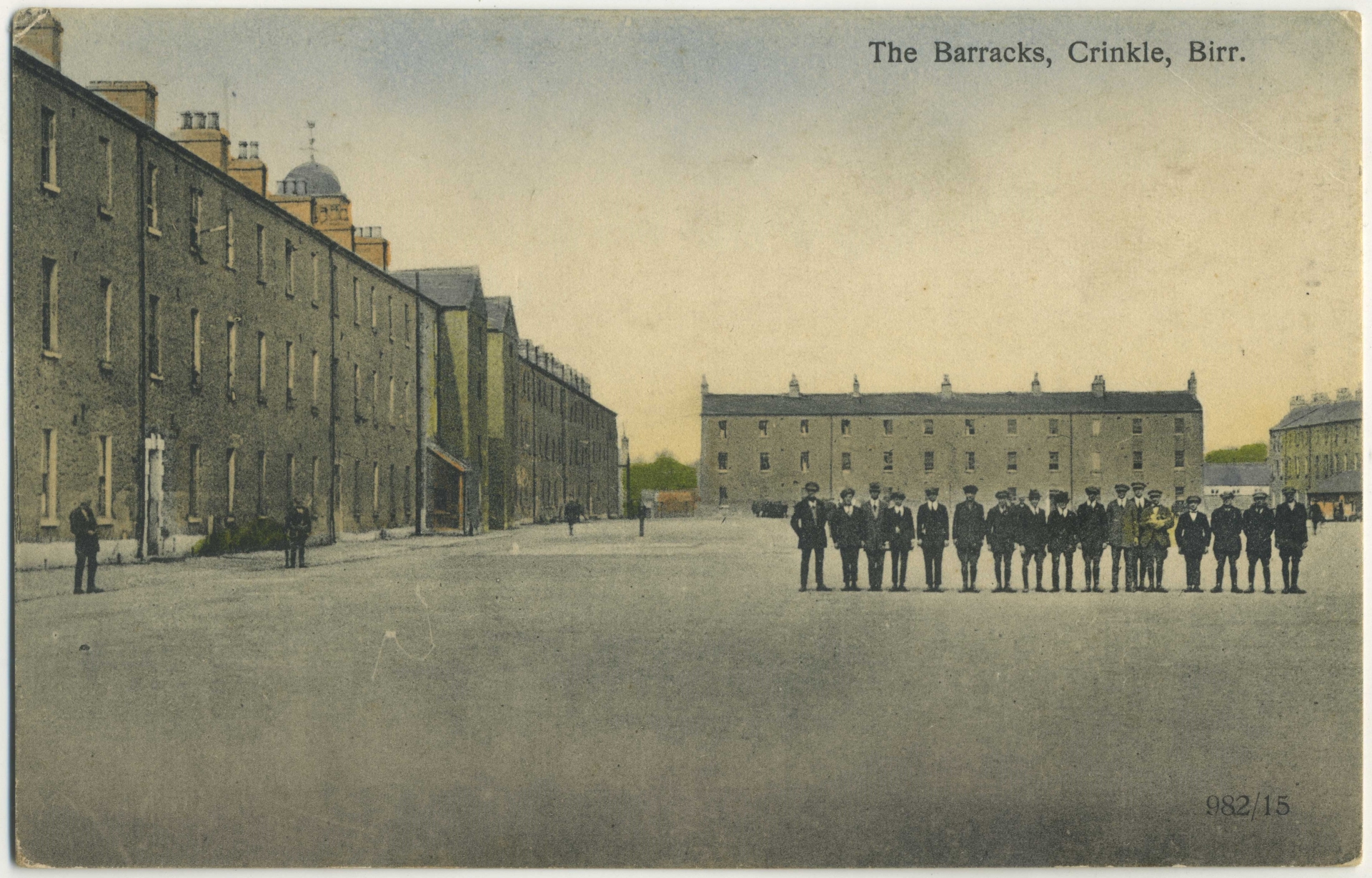
Leinster Regiment soldiers leaving Birr. The sign held by the soldier in the front row reads: 'Old Erins Sons without any guns, shall sail back in the Foggy Dew, the Leinsters'

WEDNESDAY, February 2, 2022 marks 100 years to the day since the Leinster Regiment departed Birr, never to return. While historically significant, the event is not widely known and there are some misconceptions about what actually happened.
On Thursday, February 2, 1922, the remaining members of the Leinster Regiment depot staff, departed Birr Barracks for Colchester, England, where they would join up with the 2nd Battalion (the 1st Battalion was in India at the time).
The regiment along with four other historic southern Irish regiments were earmarked for disbandment, a result of the recently agreed Anglo-Irish Treaty and along with downsizing and cutbacks in the British Army after World War One.
The regiment had a fine record of service, having first been formed in 1881 with the amalgamation of the old 100th and 109th Regiments of Foot, which formed the 1st and 2nd Battalions, Leinster Regiment.
The local militia, the King’s County Royal Rifles, became the 3rd (Militia) Battalion, along with the militias of Queen’s County and Meath becoming the 4th and 5th (Militia) Battalions.
These changes in organisation were part of the Childers reforms of the British Army, named after the then Secretary of State for War, Hugh Culling Eardley Childers.
The regiment would have a fixed depot, which was Birr, and its recruiting area would consist of Meath, Westmeath, Longford, King’s County and Queen’s County.
In the regiment's 41 years of existence, it served all over the British Empire and saw a detachment of the 1st Battalion see active service in the bloodless Fourth Anglo-Ashanti War (1895-1895); the 1st, 2nd and 3rd Battalions, saw active service during the Second Anglo Boer War (1899-1902); and during World War One, the regiment raised two service battalions for Kitchener’s New Armies, with four battalions in total serving in various overseas theatres including, France, Belgium, Gallipoli, Salonika and Palestine.
The 2nd Battalion saw peace keeping duties in Silesia after the war, and the 1st Battalion assisted with the suppression of the Malabar Rebellion (1921-1922) in India.
The Leinster Regiment contingent from the depot consisted of two officers, 64 other ranks, two women and eight children.
The members of the regiment were greeted by a large crowd as they left Birr Barracks for Birr train station. They then then made their way to the North Wall, Dublin and then onto Colchester.
A small detachment of soldiers from the Northamptonshire Regiment remained behind in the barracks, to oversee the auction of the government stores.
The auction was scheduled to take place on February 3 and consisted of 7,000 lots of furniture, sporting requisites, surgical and medical appliances.
It is possible that many of these items from this auction still reside in Birr, the history of their origin long forgotten.
On February 6 the barracks was formally handed over to Commandant General Michael McCormack of the 3rd Southern Division (not Felix Cronin which is sometimes incorrectly stated). There were about 50 members of the National Army in total present at the handover.
There are no images of the event and very little is recorded about the handover in the newspaper of the time. The National Army would use Birr Barracks as the headquarters for the 3rd Southern Division. (See below IRA members at the barracks in February 1922. It was burned by anti-treaty forces during the Civil War)
Despite the departure and relatively short existence of the Leinster Regiment, it built strong links with Birr.
While it is unfair not to acknowledge other regiments which called Birr home for the duration of their stay in the barracks, the Leinsters' link has endured the past century with many people having ancestral connections to the regiment.
The memorial window in St Brendan’s Catholic Church, which was unveiled in 1964, also commemorates all those who served in the regiment and is a fitting honour.
Stephen Callaghan is an independent historian with a keen research interest in Birr Barracks. In 2014 he compiled a database of burial grounds in Offaly for Offaly County Council, and was involved with the excavation of World War 1 era trenches in Birr in 2018. His latest book 'Birr Military Cemetery' took an in depth look at the history of the cemetery attached to Birr Barracks and the people buried there.

Subscribe or register today to discover more from DonegalLive.ie
Buy the e-paper of the Donegal Democrat, Donegal People's Press, Donegal Post and Inish Times here for instant access to Donegal's premier news titles.
Keep up with the latest news from Donegal with our daily newsletter featuring the most important stories of the day delivered to your inbox every evening at 5pm.

This publication supports the work of the Press Council of Ireland and Office of the Press Ombudsman, and our staff operate within the Code of Practice of the Press Council. You can obtain a copy of the Code, or contact the Council, at www.presscouncil.ie, Lo-call 1800 208 080 or email: info@presscouncil.ie.