Rest in Peace James McEvoy
Search


31 Mar 2026

Please allow ads as they help fund our trusted local news content.
Kindly add us to your ad blocker whitelist.
If you want further access to Ireland's best local journalism, consider contributing and/or subscribing to our free daily Newsletter .
Support our mission and join our community now.
To continue reading this article, you can subscribe for as little as €0.50 per week which will also give you access to all of our premium content and archived articles!
Alternatively, you can pay €0.50 per article, capped at €1 per day.
Thank you for supporting Ireland's best local journalism!


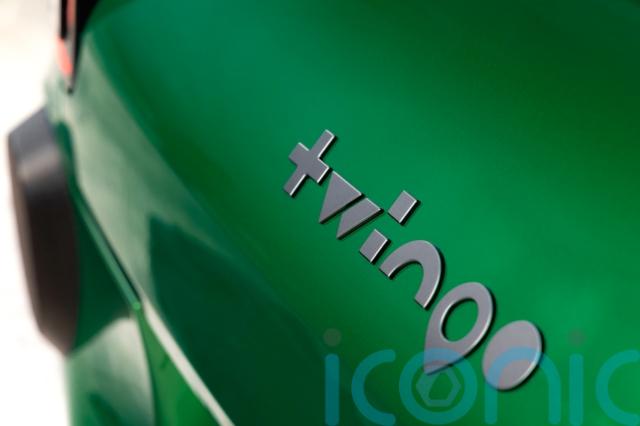
It feels like Renault is on a bit of a roll. It kicked off a new age with its now-successful Renault 5 and quickly followed up with the more spacious 4. Now, it’s looking to revive yet another household name – the Twingo.
The original Twingo was an icon of French motoring, offering low-cost, accessible motoring that was infused with loads of Parisian chic, albeit one we didn’t get here in the UK. A second-generation car brought a similarly compact design before a third generation introduced a quirky rear-mounted motor. Now, it’s making a comeback as an electric vehicle that aims to have the same accessible focus as the cars which came before it. We’ve been driving it to find out whether it’s been a successful operation.
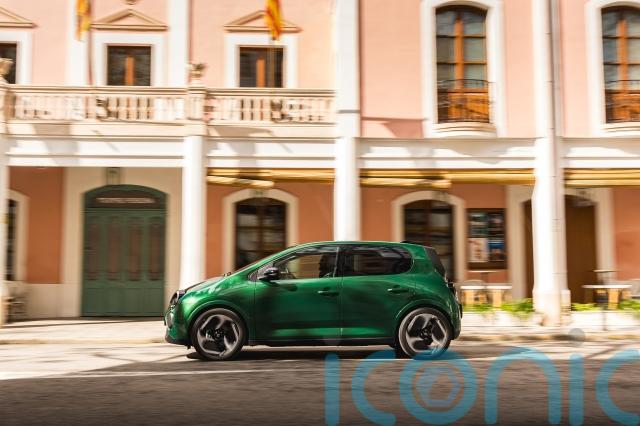
The Twingo arrives as a new electric vehicle, but one which is underpinned by a platform which has already been put to good use in other Renault vehicles like the 5. Like the original Twingo, it has been designed to be as compact as can be, measuring in at just 3.79m. As a result, it’s focused more on urban users and those who are often driving around town, where this car’s compact proportions and tight turning circle should help. The main difference between the underpinnings of the Twingo and the 5 is that this new city car does without the 5’s multi-link rear axle, and instead uses a more traditional beam setup.
While Renault has yet to announce full specifications and pricing, we can confirm that the Twingo will be priced at under £20,000 when it goes on sale, making it one of the cheapest EVs on the market today.
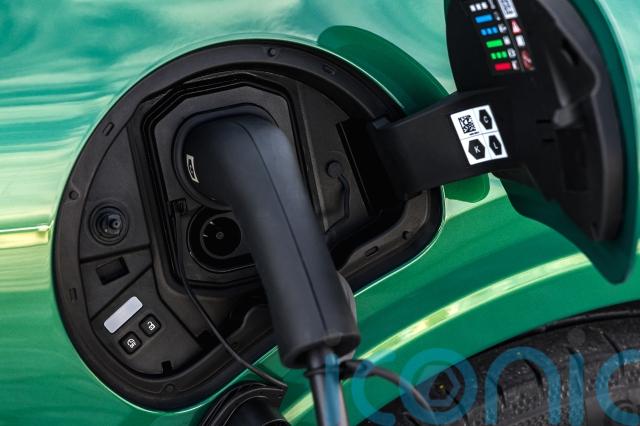
The Twingo gets a relatively compact, lightweight battery and motor setup. With a 27.5kWh battery, it gets a range of 163 miles, which, given the car’s urban focus, seems about right. A small electric motor produces just over 80bhp, so zero to 60mph comes in just under 12 seconds. However, you should be able to get from a dead stop to 30mph in 3.5 seconds, so there’s enough zip for city driving.
A top-whack charge speed of 50kW means that you can take the Twingo’s battery from 10 to 80 per cent in 30 minutes, while a standard slow charge should take just over four hours. Most importantly, the Twingo is light at just 1,200kg – far lighter than many other EVs on sale today. The Twingo will also be available with vehicle-to-load technology, allowing you to power other devices from the car’s onboard supply.
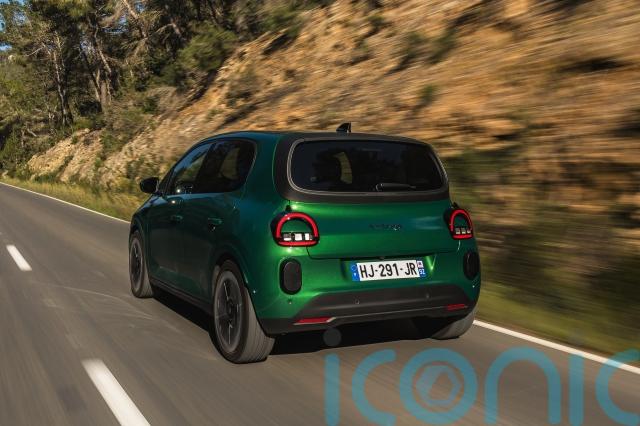
The Twingo is compact in design, so it immediately feels well-suited to more urban driving. With its light steering, it’s a car which is easy to pilot and while that power output might not be all that much, there’s more than enough performance for urban driving. Our test car came on 17-inch wheels, which put a slight edge on the ride, but the car still does a good job of tackling lumps and bumps in the road without sending too many shockwaves through to the interior. For what is a relatively simple car, the Twingo also comes with a self-park feature that can make those inner-city parking operations a lot easier.
Visibility is good, too, and given that the car’s wheels sit right out on all four corners, the Twingo feels easy to manoeuvre. At greater speeds, the Twingo still feels planted, though there’s a fair amount of wind noise. However, as we mentioned, this is a city car designed for nipping in and out of traffic, which the Twingo does very well at indeed.
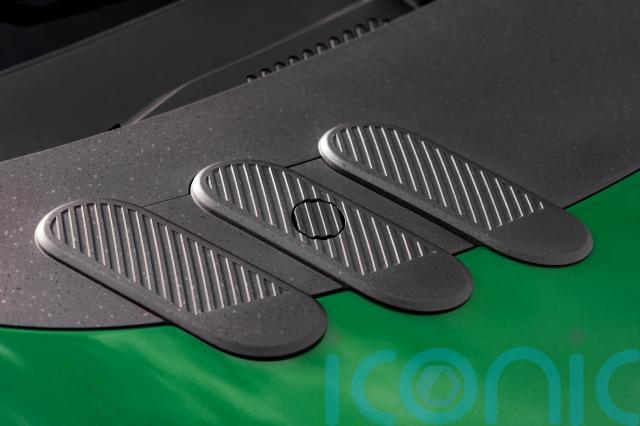
The Twingo has always had style on its side over the years and it feels as though this trend has continued with the latest model. There are some subtle nods to this car’s predecessors, too, such as the plastic trim section on the bonnet, which mirrors the grille on the first-generation Twingo. In this car, it’s actually where you’ll access the windscreen washer fluid bottle.
Up front, there’s a friendly ‘face’ and thanks to a solid range of bright and fun colours, the Twingo is a car that’ll stand out just as strongly as the Renault 5.
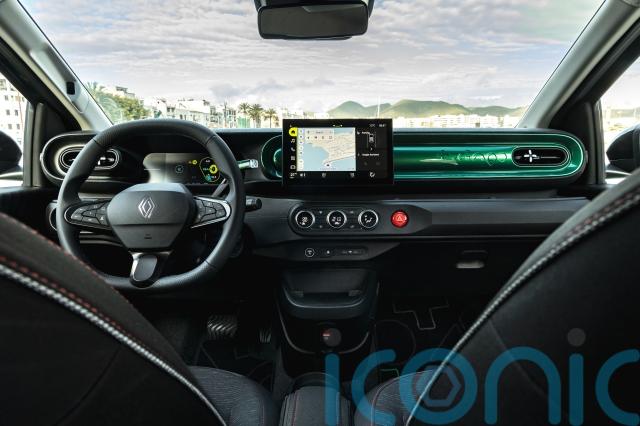
There’s a utilitarian feel to the Twingo, with some clever solutions dotted around the place to help improve practicality without increasing price. There’s a central armrest which unzips to provide storage, while the boot floor is split into two sections so that you can still access the charging cables underneath even if you’ve got luggage up above. Some areas do feel particularly cheap, with the central storage section between the seats flexing when you touch it. The plastics used lower down are scratchy, but fortunately, there are plenty of textured areas to help make things feel a little more upmarket.
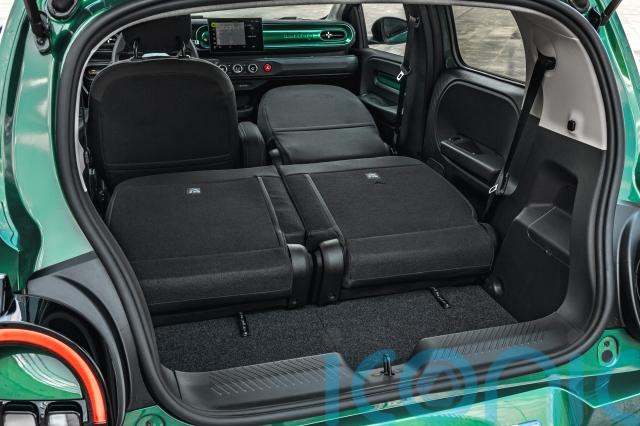
Headroom all-round is surprisingly good, too, and there’s a handy feature linked to the rear seats. They’re on rails, so you can choose between maximising boot space or improving rear-seat legroom. Move those seats forward, and you get up to 360 litres of boot space, and you can fold them down to increase that to 1,010 litres, which is impressive for a car of this size and more than you’ll find on nearly all rivals.
Renault has yet to confirm full pricing for the Twingo, but has already stated that it’ll come in at under £20,000. If it were to qualify for the government’s electric car grant, then it could quickly become one of the cheapest EVs on sale in the UK. However, with its 10-inch central infotainment display and seven-inch driver’s screen, it doesn’t feel lacking in equipment. It’s got Google built in, too, so popular apps such as Google Maps come pre-loaded and are fully integrated into the system as a whole. It’s smooth and easy to use, too.
The only snag is when the Twingo will reach the UK. Though it’ll hit French roads shortly, it won’t be available in the UK until the start of 2027, which feels like a long delay for British drivers.
It feels as though Renault could be on to another winner with the Twingo. It’s the ideal contrast to the wave of heavy, rather plain electric SUVs that have been inundating the new car market lately and instead relies on clever packaging and a lightweight design.
If the pricing is right, then this could prove to be a very popular electric car. We just wish that Renault were bringing the Twingo to the UK sooner.

Walkers who took part in the Good Friday event last year

Organisers and supporters at the Church fundraiser in Roscrea. Photo: PJ Wright

Scoil Eoin Naofa in Roscrea is one of the schools to benefit

St Cronan's Church grounds link to Mount Carmel via a walkway

Danny Rigney at the National Indoor Championships.

Subscribe or register today to discover more from DonegalLive.ie
Buy the e-paper of the Donegal Democrat, Donegal People's Press, Donegal Post and Inish Times here for instant access to Donegal's premier news titles.
Keep up with the latest news from Donegal with our daily newsletter featuring the most important stories of the day delivered to your inbox every evening at 5pm.

This publication supports the work of the Press Council of Ireland and Office of the Press Ombudsman, and our staff operate within the Code of Practice of the Press Council. You can obtain a copy of the Code, or contact the Council, at www.presscouncil.ie, Lo-call 1800 208 080 or email: info@presscouncil.ie.