Search


25 Mar 2026
Search
25 Mar 2026

Please allow ads as they help fund our trusted local news content.
Kindly add us to your ad blocker whitelist.
If you want further access to Ireland's best local journalism, consider contributing and/or subscribing to our free daily Newsletter .
Support our mission and join our community now.
To continue reading this article, you can subscribe for as little as €0.50 per week which will also give you access to all of our premium content and archived articles!
Alternatively, you can pay €0.50 per article, capped at €1 per day.
Thank you for supporting Ireland's best local journalism!


The Vauxhall Astra has been a staple of British roads since 1980, seeing off a whole host of comers and goers to survive in what is becoming an increasingly small pool of C-segment family cars. While its long-term rival, the Ford Focus, is no more, the Astra has survived well into its fifth decade.
Now in its eighth generation, Vauxhall has decided the time is right for a little bit of an upgrade and the car has been given some subtle upgrades to the car that was initially launched back in 2021. The changes are certainly welcome but are they enough to see off competition from the likes of the VW Golf, Peugeot 308 and Skoda Octavia? To find out, we’ve been to Split in Croatia to put it through its paces.
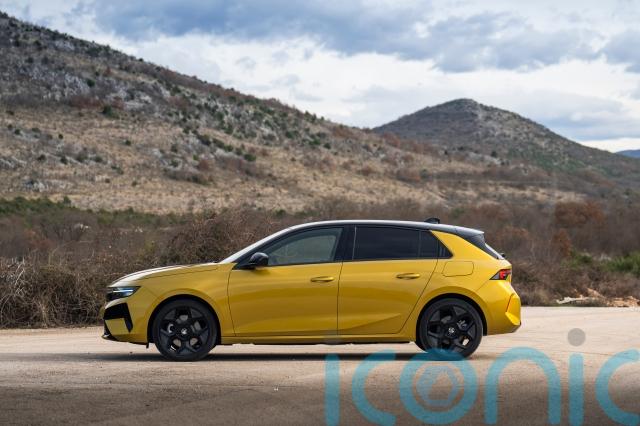
Five years on from its initial release, Vauxhall has made a number of changes aimed at making the Astra a more appealing option to buyers. Changes are both skin and bone deep, with small tweaks made to the exterior, in-car technology and powertrains.
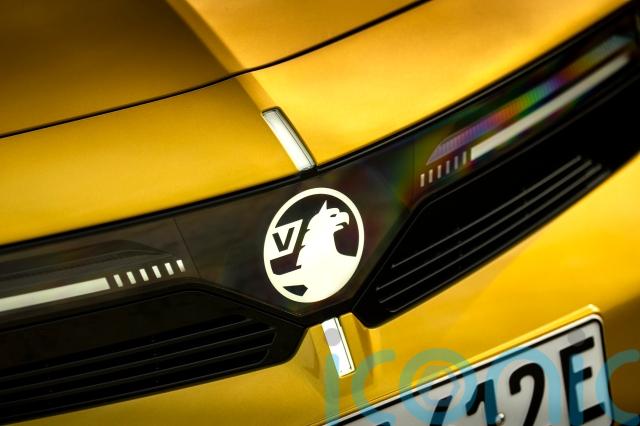
On the outside, fresh touches include a new illuminated badge and cutting-edge front lights, while the interior also gets a makeover with upgraded materials and improved seating comfort. Electric versions of the car also benefit from a larger battery and extended range, compared to the old car, while hybrid options have also been refined with an eye on performance.
From launch, the new Astra will be available with a series of hybrid, plug-in hybrid and electric setups. The fully electric option brings a new 58.3kWh battery, giving a total range of 281 miles – an improvement of 22 miles compared to its predecessor. Meanwhile, the plug-in hybrid version we drove in Croatia gets a 1.6-litre petrol engine, which is paired with a 17.2kWh battery. Using electric power alone, Vauxhall says this model will do a very respectable 52 miles on a single charge.
Elsewhere, the standard hybrid pairs a compact electric motor with a 1.2-litre engine to produce 143 bhp, while a regular 1.2-litre petrol engine will be available with either manual or automatic gearboxes later in the year. Impressively, hybrid, plug-in hybrid and electric models are all priced at the same level, kicking off at £29,995, representing huge savings on electrified models when compared to the old Astra.
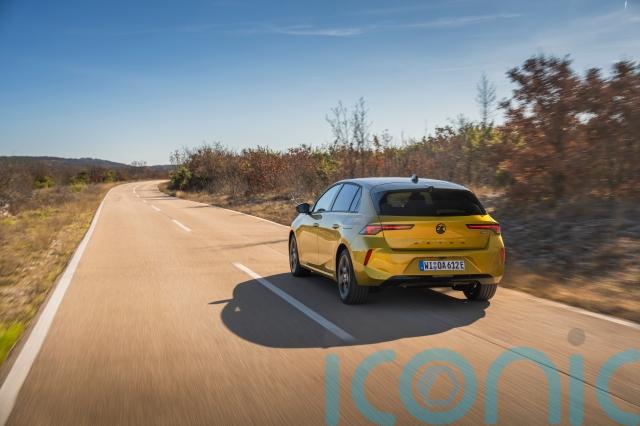
This has always been a relative weakness of the Astra compared to the other big hitters in this segment, like the Golf, and recently deceased Focus. With this new car, Vauxhall has looked to improve things, but the results are pretty mixed to say the least.
In full electric mode, the PHEV version we drove was as good as most EVs in this class – something that cannot be said for all plug-in hybrids. In this setup, the Astra offers genuinely spritely acceleration up to about 60 mph, remaining smooth and comfortable throughout. The downside comes when you switch back to petrol power, especially in sport mode, which removes all the comfort, without offering much by way of improved performance.
In this mode, putting your foot down is met with a lot of strained engine noise but not a lot of acceleration. The gearbox is pretty terrible too, changing up and down far too early for the bendy coastal roads we were driving on. While the car does have paddles which allow you to make changes manually, the system continues to step in and change before you are ready, making it a real challenge to enjoy the experience of driving.
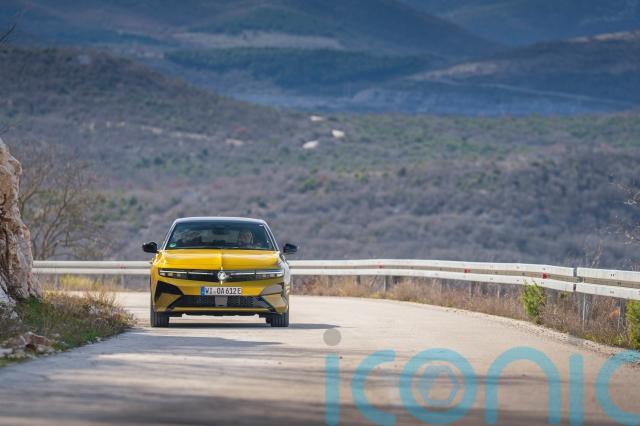
Vauxhall is a brand which has enjoyed something of a glow-up over recent years, with its current line-up consisting of some really interesting-looking cars. The Astra certainly fits that bill, and it is very much a case of evolution rather than revolution with this latest car.
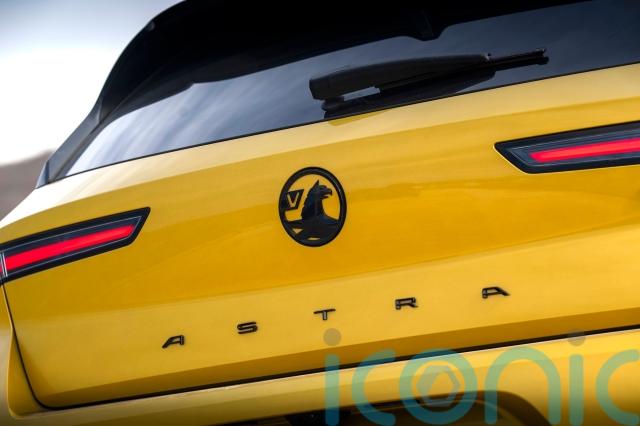
Up front, there is a completely redesigned fascia, with an illuminated Griffin logo at its heart, while chrome trim has been done away with for a smoother, more sophisticated look. An upgraded colour also brings a bit more choice to the model, but otherwise, it is largely a case of ‘as you were’ on the looks front.
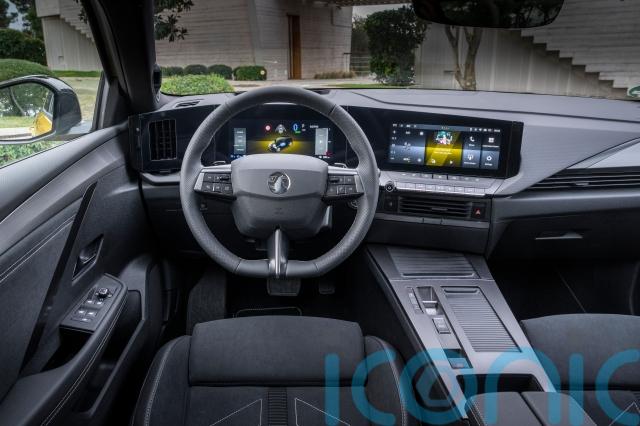
If the changes on the outside were subtle, then the tweaks to the cabin are certainly more noticeable. The car feels significantly more premium than what has gone before, with soft-touch materials, a crisp dual-screen setup and a more intuitive infotainment system leading the upgrades. The car also gets Vauxhall’s ‘Intelli-Seats’ as standard, which are designed to reduce pressure on the tailbone during long journeys.
While this is all excellent, some of the car’s old ways are still on show in the back, where cost-cutting feels more obvious. Rear passengers get harder, cheaper-feeling plastics on the doors and lower surfaces, which – while not unusual for a car in this class – does feel pretty disappointing compared to the front.
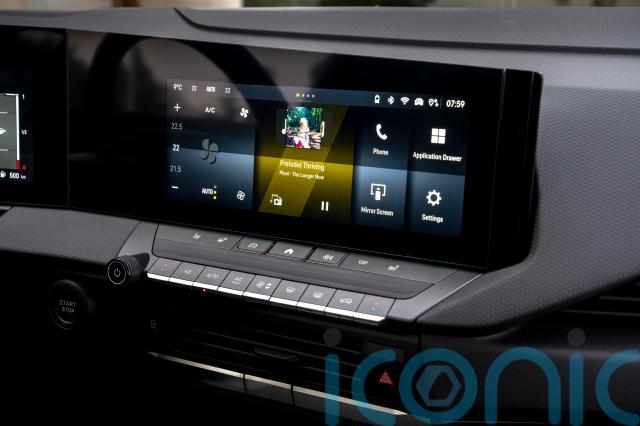
Vauxhall is offering the Astra with price parity across powertrains and body styles, meaning that there is no difference in cost between the standard car and the estate-style ‘Sports Tourer’. But that does not mean that Vauxhall has compromised when it comes to equipment. Even entry-level ‘Griffin’ models feature a 10-inch touchscreen and digital driver display, Apple CarPlay, Android Auto, heated seats and steering wheel, plus adaptive cruise control and parking sensors.
Moving up the range, ‘GS’ and ‘Ultimate’ editions bring many premium touches, including larger 18-inch alloy wheels, a reversing camera and upgraded displays. Top spec cars even get Vauxhall’s new Intelli-Lux HD headlights, which adapt to the road ahead.
The latest Astra certainly represents an upgrade on the old car but we’re still not sure it’s quite enough to compete with the VW Golf, which just feels like a more well-rounded car. Having said that, the Vauxhall certainly has a lot to offer – not least those competitive prices – which means it is still worth considering if you are after something practical, comfortable and dependable for everyday family use.

Kieran Davern, Dale Sheridan and Kieran O'Donnell.

'Fly high' - Tragic final days of man found dead in Offaly house where sister died

Patrick Duffy, Offaly

The heated dispute happened during the latest meeting of Tullamore Municipal District in the Town Hall

Subscribe or register today to discover more from DonegalLive.ie
Buy the e-paper of the Donegal Democrat, Donegal People's Press, Donegal Post and Inish Times here for instant access to Donegal's premier news titles.
Keep up with the latest news from Donegal with our daily newsletter featuring the most important stories of the day delivered to your inbox every evening at 5pm.

This publication supports the work of the Press Council of Ireland and Office of the Press Ombudsman, and our staff operate within the Code of Practice of the Press Council. You can obtain a copy of the Code, or contact the Council, at www.presscouncil.ie, Lo-call 1800 208 080 or email: info@presscouncil.ie.