Search


06 Feb 2026
Search
06 Feb 2026

Please allow ads as they help fund our trusted local news content.
Kindly add us to your ad blocker whitelist.
If you want further access to Ireland's best local journalism, consider contributing and/or subscribing to our free daily Newsletter .
Support our mission and join our community now.
To continue reading this article, you can subscribe for as little as €0.50 per week which will also give you access to all of our premium content and archived articles!
Alternatively, you can pay €0.50 per article, capped at €1 per day.
Thank you for supporting Ireland's best local journalism!


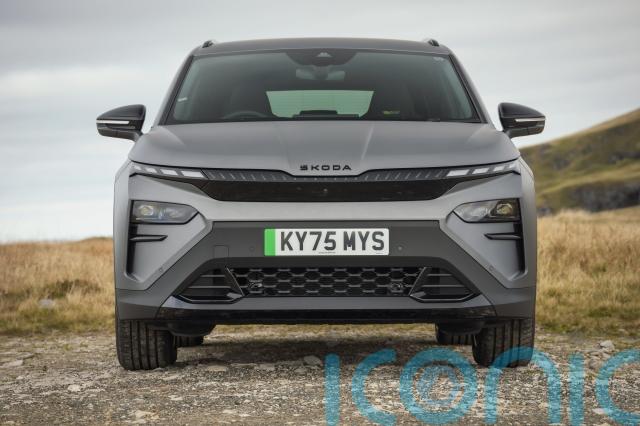
Skoda’s vRS range plays an integral part in this manufacturer’s line-up. Famous for cars like the Octavia and Fabia, it has come to represent assured performance in cars which still bring the practicality that people associate with this manufacturer’s cars. Now, it’s the turn of the Elroq.
The Elroq is the latest electric car in the Skoda range and it’s one of the newest to get the vRS treatment, too. Following on from the larger Enyaq vRS, can this new addition deliver thrills as well as battery-powered efficiency? Let’s find out.
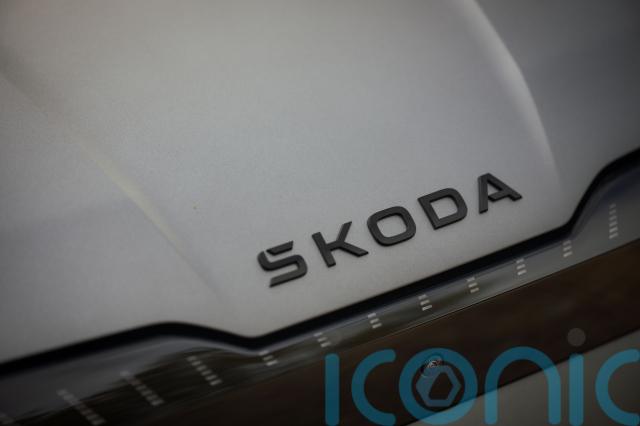
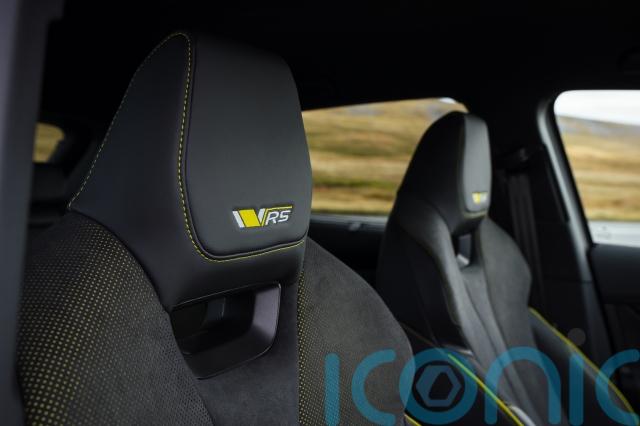
Much of what differentiates the vRS model from the standard Elroq is hiding underneath, but there are some ways to spot this against a regular version. There are model-specific alloys and a range of green-coloured elements inside, while the larger bucket seats give a clue to this car’s added performance.
The good news is that the vRS loses none of the practicality of the regular car, so it still gets a wide range of Skoda’s ‘Simply Clever’ features, including a handy cargo net for the charging cables underneath the parcel shelf.
You get a dual-motor setup in the Elroq vRS, with one at each axle, giving four-wheel drive in the process. It’s unlike other performance-focused models in the Volkswagen Group line-up, too, with cars like the Volkswagen ID.3 GTX and Cupra Born VZ adopting a single-motor setup instead. With 335bhp, the vRS is certainly powerful and with a 0-60mph time of 5.2 seconds, it’s currently Skoda’s fastest-accelerating production car too.
Skoda claims an official range of up to 342 miles, while a very fast maximum charge speed of 185kWh means a 10 to 80 per cent charge can be finished in 26 minutes.
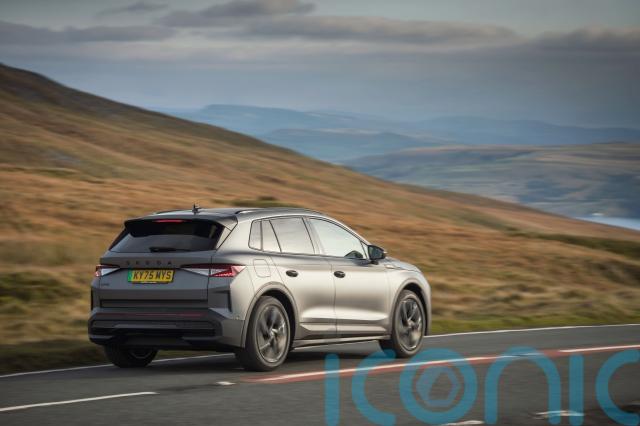
With its dual-motor setup, the Elroq vRS feels ideal for the UK’s slippery and gritty roads. There’s a reassuring grip in all types of driving and even when it’s pouring with rain outside, the Elroq still feels like it’s able to confidently get all 335bhp delivered to the road. That said, it’s not delivered in quite such an exciting fashion as in combustion-engined vRS cars, though it’s hard to fault how effectively it gets you up to speed.
Our car came with Dynamic Chassis Control, which allows you to adjust the softness of the dampers while you’re on the go. In their softest setting, the Elroq does a great job of dealing with even larger potholes. Switch to its firmest setting and it’s simply too rock-solid for the road – but it’s good to have the option. Range-wise, our test car came in well under claimed, with around 260 miles coming from a full charge, with even less being delivered in cold weather.
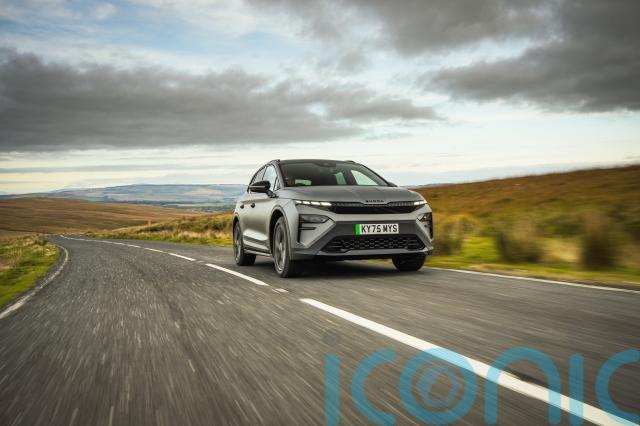
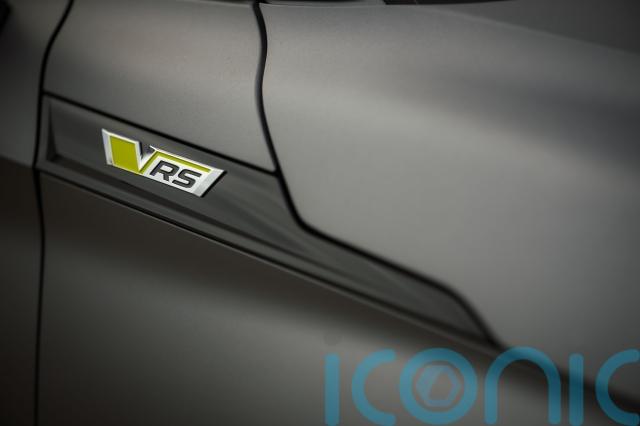
The Elroq is actually one of the more subtle vRS models out there, and that means it’s very subtle indeed – these aren’t cars known for their loud-and-proud styling. As mentioned, you get larger wheels and there are optional 21-inch alloys which do give the Elroq a sportier stance. However, it seems strange that there are only vRS badges on the front wings and none on the rear. From many angles, the vRS looks very similar to the standard car.
One way to spruce things up is with the optional ‘Hyper Green’ paint, which is only available on vRS cars. However, there is a range of more sedate colours for drivers who want them. Skoda has just added some new matte finishes, which work really well on the Elroq, too, and add a somewhat stealthy appeal to the vRS.
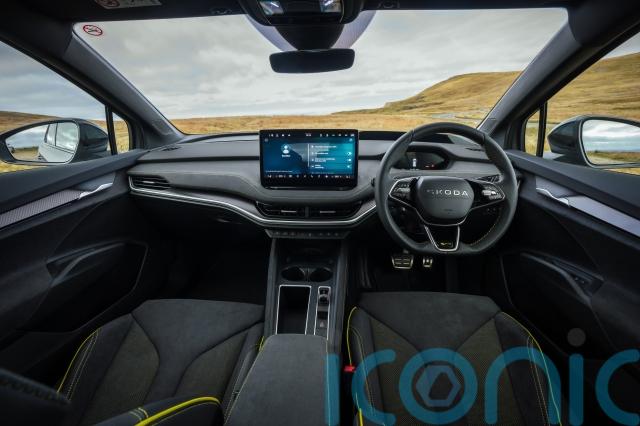
There’s a sporty flavour inside the Elroq vRS, with large bucket seats providing both a more dynamic feeling to the car and plenty of support. They’re heated, too, and you get lashings of Alcantara throughout the interior for a more racy feel. Everything is solid to the touch, too, and there are a few silver-coloured elements to brighten things up. You’ll find vRS badges on the steering wheel and seats, too.
Rear-seat space is impressive for a car of this size, too, and though there’s a handy storage divider in the footwell of the middle seat, you can remove this entirely to free up a completely flat floor. With 470 litres, the Elroq vRS can offer a good amount of boot space, though it’s a shame that there’s no ‘frunk’ for the storage of cables as you’d find in rivals.
The Elroq vRS is the flagship of the range and that means you get a lot of equipment as standard. Prices start at £46,560, and for that you get the dual-motor setup, as well as the aforementioned Dynamic Chassis Control system, an upgraded Canton sound system and even a head-up display.
There aren’t too many options to add, either. There are 21-inch alloy wheels, some additional paint changes and some extra packs, but you shouldn’t have to stray too far from the standard equipment list. One omission that we feel is quite mean, however, is an efficiency-boosting heat pump. On many rivals this comes as standard, but on the Elroq – as is the case on so many Volkswagen Group cars – it’s a £1,100 extra and one that you’ll really need to get the best-possible range from the car.
The Elroq vRS is a fitting topper for the range. It’s got a whole lot of performance, but it doesn’t come at the expense of practicality or everyday usability. As a car that can still prove good fun on a twisty road yet deliver the boot space that a family needs, the Elroq vRS is hard to beat.
Is it the most exciting vRS model to date? Not quite. But for people who might want an Elroq with some extra edge, the vRS could well be just the ticket.
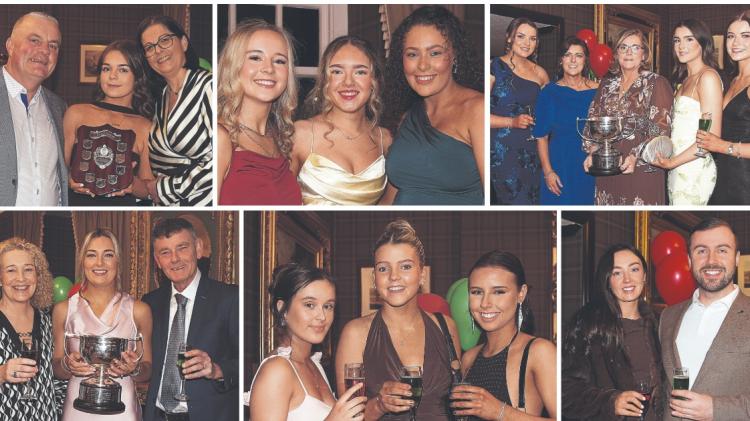
PICTURE SPECIAL: Big night of celebration as Offaly camogie champions receive medals

Landmark birthday celebrated on night out in Tullamore

The meeting also outlined the importance of ensuring residents of Edenderry feel safe and supported

Birthday present for Offaly star on tough night for Ireland in Paris

Charlie Mitchell and Brian Duignan trying to score a goal against Waterford in the Division 1B final last year

Tips to Park Smart

Subscribe or register today to discover more from DonegalLive.ie
Buy the e-paper of the Donegal Democrat, Donegal People's Press, Donegal Post and Inish Times here for instant access to Donegal's premier news titles.
Keep up with the latest news from Donegal with our daily newsletter featuring the most important stories of the day delivered to your inbox every evening at 5pm.

This publication supports the work of the Press Council of Ireland and Office of the Press Ombudsman, and our staff operate within the Code of Practice of the Press Council. You can obtain a copy of the Code, or contact the Council, at www.presscouncil.ie, Lo-call 1800 208 080 or email: info@presscouncil.ie.