Search


10 Mar 2026
Search
10 Mar 2026

Please allow ads as they help fund our trusted local news content.
Kindly add us to your ad blocker whitelist.
If you want further access to Ireland's best local journalism, consider contributing and/or subscribing to our free daily Newsletter .
Support our mission and join our community now.
To continue reading this article, you can subscribe for as little as €0.50 per week which will also give you access to all of our premium content and archived articles!
Alternatively, you can pay €0.50 per article, capped at €1 per day.
Thank you for supporting Ireland's best local journalism!


When Naz Shah was arrested with her mother on suspicion of murder, she recalls joking with the police officers about how good she looked in the white offender’s outfit she’d been given to wear, so laughable was the accusation.
“I’d never had anything so exciting happen to me – I knew I hadn’t done anything. I had this absolute conviction in the British justice system and it was unwavering. I thought, ‘it’s all a big mistake and it’ll be over soon’,” recalls the Labour MP for Bradford West.
Looking back, the 52-year-old now recognises how naïve she was.
Naz was released without charge but her mother, Zoora Shah, was convicted in 1993 of murdering Mohammed Azam by poisoning him with arsenic. She was given a 20-year sentence.
She and her daughter had prepared the meal together and traces had been found in Naz’s blood through dishes which had been cross-contaminated, but she had no idea what her mother was doing.
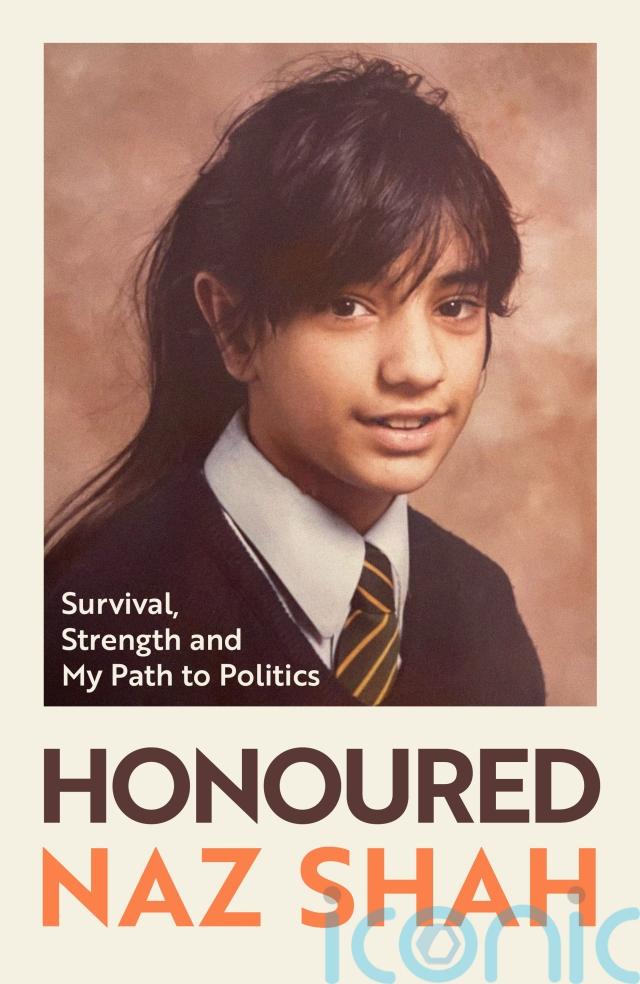
British Muslim Naz describes the context of the crime in her memoir, Honoured, the heart of which rests on the idea of ‘izzat’, or honour.
It was only when Zoora reached out to the women’s organisation Southall Black Sisters, a group that helps black and minoritised women live free from violence and abuse – one of whom visited Zoora in jail and heard what really happened – that Naz discovered the abuse her mother had suffered. It was how the campaign to secure her release started.
“I was sad. Learning about the abuse was really difficult. [My mother had] suffered so much.
“She’d been convicted. You’re trying to work out that she was innocent and she wasn’t innocent, but the jigsaw fell into place which didn’t make sense earlier.
“Why would the forensics lie? How do the forensics get it wrong? And you’re trying to find reasons for it to have been a miscarriage of justice,” she says now.
The book charts her childhood, the daughter of Pakistani immigrants who, at five, saw her late father regularly dragging her mother around the room by her hair in a violent rage. He left the family for the 16-year-old daughter of a neighbour when Naz was six.

Zoora was ‘held to account for driving dad away’, Shah writes, and left to fend for herself, moving frequently in Bradford, living in squalor.
‘In our community, at that time, it was the women who bore the shame of dishonour when izzat was breached.’
When her ‘Uncle’ Azam – not their real uncle – came on the scene they thought he was their saviour, bringing them gifts of fruit and sweets, appearing to be kind and community-spirited.
At 24 and working as a cleaner, Zoora couldn’t get a mortgage. Azam offered to register a house in his name, Naz writes. Zoora paid the deposit by selling her wedding jewellery and they agreed that she would make the payments via him and once she had paid off the mortgage, he would sign off the property to her.
According to the book, that dream became a nightmare when he raped her in her new home and made it clear she had to make herself available whenever he wished. “From that day on, he would assault her at his leisure,” Naz writes.
When he went to prison for heroin dealing, he paid for prison ‘privileges’ by pimping out Zoora to his criminal pals who would visit the house and rape her upstairs, according to the book.
‘No one could have known that these men were raping Mum while her kids were downstairs doing their homework,’ she writes.
At the age of 12, Naz was sent to live with relatives in Pakistan (it turned out later that her mother feared her daughter was Azam’s next target), and at 15 was tricked into a forced marriage to a cousin, believing it was with her mother’s approval (it wasn’t). After returning to England, she eventually walked out of the marriage.
But the biggest bombshell in which her world was “turned upside down” was when her mother was sent to prison.
“Your mum’s gone, you’re left on your own, you’ve got younger siblings [sister Foz and brother Imy] and a house to manage. You have a conviction that your mum hasn’t done anything wrong and you’re going to fight for her,” says Naz.
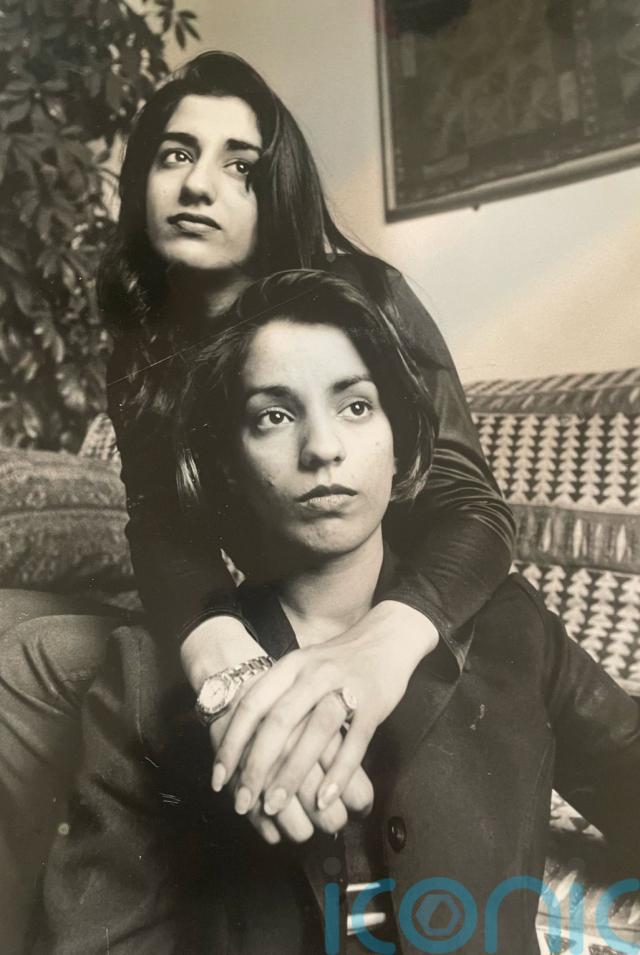
Foz went to family in Pakistan after Azam’s death and Imy followed after the trial. Shah found herself alone and homeless aged 20, sleeping on friends’ floors and sofas.
“One day I didn’t have anywhere to live and literally found myself in a crack house in Manningham [Bradford]. I remember half-lying on the sofa. There was one person on a single seater and another on the floor smoking heroin on foil. I’ll never forget it,” she says.
She had attempted suicide twice by the age of 20 and for almost two years after her mother’s conviction still believed Zoora was innocent.
It was only when she connected with Southall Black Sisters and another campaigning group Justice For Women that she learned that her mother had poisoned Azam because of his abuse towards her.
“Then I had to reframe. I had to understand what that meant in terms of domestic violence, in terms of abuse, exploitation, all of these things,” she says.
After an unsuccessful appeal in 1998 against her mother’s murder conviction, Shah lobbied the then Home Secretary Jack Straw to reduce her mother’s sentence – and finally it paid off. Zoora served 14 years.
“I was in fight or flight mode for years. In some ways I’m still fighting, I’ve just got a different fight now – I’m fighting on behalf of people.”
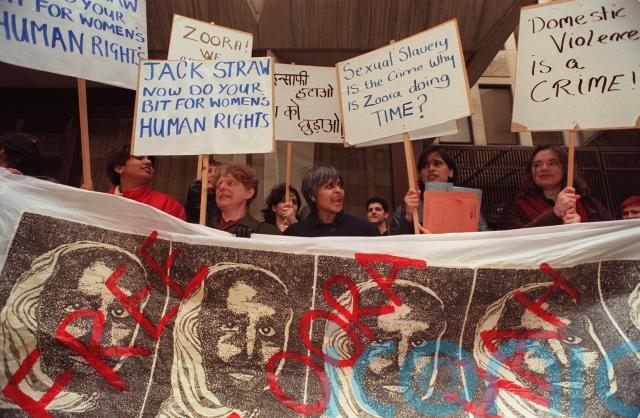
Today, Naz lives with her three children in a stone cottage in Bradford and remains good friends with her second husband, Lee, who she parted from in 2010. Her mother was released from prison in 2006 and now lives in a granny annexe in her son’s home.
They’ve never talked about the abuse or those dark times, Naz says.
“We still don’t really talk about it. From my perspective and my mum’s perspective, she served 14 years in prison. She was abused for so many years, a quarter of a century. She had lots of counselling in prison. I didn’t feel qualified enough to have that conversation with her. I didn’t want to trigger her or upset her.
“When she was in prison I went through phases where I was angry because I thought, why did she do it? Why did she need a house? Why couldn’t she get out of it?
“It’s like grieving stages that you’ve lost her, then you go through the acceptance stage, the anger stage, the reconciling stage. I think I’m at the finding peace and learning to live with it stage.
“I struggle with it at times, especially writing this book and with interviews. I’m a glass half full person but I underestimated how much it would take from me and how exhausting the emotional toil would be.”
In 2024, Naz was diagnosed with PTSD and has had therapy. Her faith, she says, has helped carry her through.
“People will find their strengths in different spaces. One of the biggest things that is said in Islam when you’re going through adversity is that after hardship comes ease.
“The biggest learning point for me, and one of the biggest life-changing moments for me was that I’d convoluted culture with religion. I realised that what my Lord wants from me and does for me is out of love, not out of hatred or punishment.”
Her anger at her mother’s treatment was channelled into campaigning and leadership skills, first joining BradNet supporting women with disabilities, followed by management in the NHS and later becoming an MP in 2015, overturning George Galloway’s Respect Party majority, and she has held the seat for the past decade.
When she became MP, both supporters and detractors offered their congratulations, she recalls. Can she forgive the extended family who once rejected her?
“You wish the best for them – and it’s not easy. Forgiveness relieves you of your burdens.”
Honoured: Survival, Strength And My Path To Politics by Naz Shah is published by W&N, priced £22. Available now

Subscribe or register today to discover more from DonegalLive.ie
Buy the e-paper of the Donegal Democrat, Donegal People's Press, Donegal Post and Inish Times here for instant access to Donegal's premier news titles.
Keep up with the latest news from Donegal with our daily newsletter featuring the most important stories of the day delivered to your inbox every evening at 5pm.

This publication supports the work of the Press Council of Ireland and Office of the Press Ombudsman, and our staff operate within the Code of Practice of the Press Council. You can obtain a copy of the Code, or contact the Council, at www.presscouncil.ie, Lo-call 1800 208 080 or email: info@presscouncil.ie.