
Cardinal Health employees outside the plant last August as details emerged that it planned to cease operations in Tullamore
Search


26 Mar 2026

Please allow ads as they help fund our trusted local news content.
Kindly add us to your ad blocker whitelist.
If you want further access to Ireland's best local journalism, consider contributing and/or subscribing to our free daily Newsletter .
Support our mission and join our community now.
To continue reading this article, you can subscribe for as little as €0.50 per week which will also give you access to all of our premium content and archived articles!
Alternatively, you can pay €0.50 per article, capped at €1 per day.
Thank you for supporting Ireland's best local journalism!

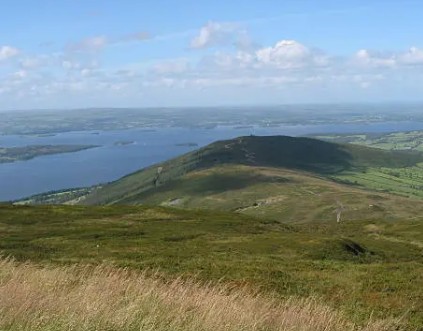
An aerial view of Parteen Weir, just south of Lough Derg.

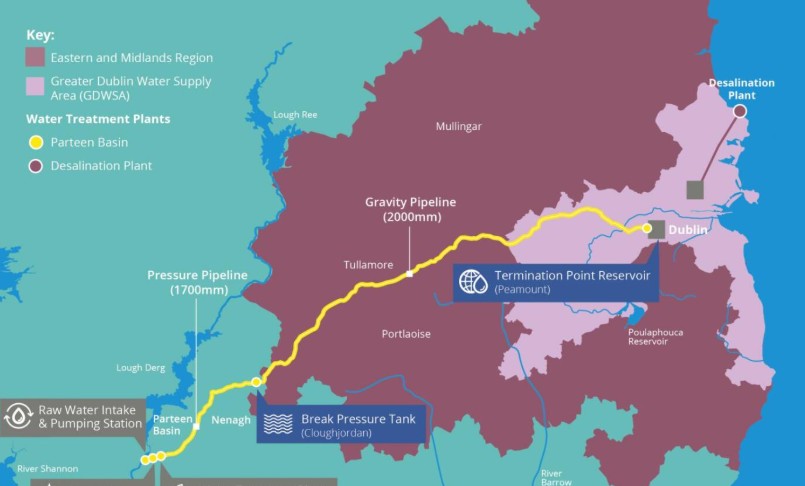
SOME of the objectors to the Water Supply Project for the Eastern and Midlands Region have made a submission to An Coimisiún Pleanála (ACP) stating that they plan to bring the matter to the European Court of Justice.
An Coimisiún Pleanála received 79 submissions regarding the project by February 25th last and will make its decision on the planning application by June 30th next. The majority of the submissions were objecting to the Pipe, primarily on environmental grounds, but a small number, including IBEC and Laois County Council, were in favour of the project.
One of the submissions (which was called a “Petition”) was from a solicitor in East Clare representing “Fight the Shannon Pipeline”. The solicitor said the Fight the Shannon Pipeline group was writing to ACP “as a community which is gravely concerned by the proposal under The Water Supply Project Eastern and Midlands Region to pipe water from Parteen to Peamount in Dublin. We would like to lodge an objection to the Planning Application and intend to bring the issue to the European Court of Justice.”
In the European Court of Justice, Fight the Shannon Pipeline will be arguing that the project is in breach of the legislation under the EU's Water Framework Directive The Water Environment (Abstraction and Associated Impoundment) Act 2022.
The group says the Pipe will reduce flow levels; and will interfere with sediment transport which will cause a deterioration in the status of the water body. “The abstraction is so significant and catastrophic,” commented the group, “that the Minister should not be allowed to make such a continued abstraction to be exempt from this legislation and from the EU Directive. This abstraction should be prohibited on the grounds that it will cause deterioration of the water body and will jeopardise compliance with Environmental objectives. The continuous removal of water will destroy the massive network of Special Areas of Conservation and Special Protection Areas, affecting the Lower Shannon and Lough Derg. Hedgerows, habitats, flora and fauna will be destroyed decimating this unique natural habitat, home to a number of protected species. In the event that the Planning Application is granted, we as a community will have no other option but to hire an independent firm to carry out an Environmental Impact Assessment on this delicate habitat and pursue a case action to protect this area and the endangered species in this area. There is no necessity whatsoever to sacrifice Special Areas of Conservation with all their wildlife, birds, flora and fauna when there are several other options available.”
Another submission was made by a solicitor from North Tipperary representing the communities of Killaloe/Ballina. She said the project presents “unacceptable environmental, social, and economic impacts for local communities, with the perceived benefits overwhelmingly accruing to Dublin, while the local area bears disproportionate risks.”
She pointed out that the proposed abstraction at Parteen Basin lies within the Lower River Shannon Special Area of Conservation, threatening critical habitats and protected species, including pollan, salmon, and trout.
“Modelling indicates,” she pointed out, “that even under current proposals, Lough Derg and Parteen Basin could experience dangerously low water levels during drought conditions, risking ecological collapse. Potential impacts on water quality and river resilience are significant, particularly during low flows, which could affect both biodiversity and downstream communities. The development does not adequately safeguard against long-term environmental degradation, and mitigation measures proposed are insufficient and non-binding.”
She pointed out that the five-year construction period will cause severe disruption to local communities, including heavy traffic on regional and rural roads, temporary road closures, and risks to public safety. “The scale of works, including large construction compounds and abnormal load movements, will generate significant noise, dust, and loss of agricultural access, with impacts lasting up to 24 months per land parcel. Local tourism, a vital economic driver for Killaloe and Lough Derg, will be adversely affected, with potential damage to boating, sailing, and recreational amenities.”
She added that the proposal fails to prioritise the communities most affected.
The solicitor said the Killaloe/Ballina communities “object in full to the proposed development. The environmental, social, and economic impacts are significant, irreversible in some cases, and place an unfair burden on our community for bearing the environmental risk for Dublin’s growth. We request that An Coimisiún Pleanála refuse permission for this project in its current form.”
Another submission came from Property Consultants in Co. Kildare who were acting on behalf of a client in Co. Dublin, who was objecting to a Compulsory Purchase Order of his lands because he had “very serious concerns in relation to the impact of the laying of this large diameter pipe will have in relation to the future drainage of his land. The land is superb quality tillage land producing high crop yields consistently year after year. The land currently has no drainage issues but the construction of the pipeline may block existing land drains and in addition, block the natural flow of water beneath the surface of the land. The water table could become elevated as a consequence of this. A negative impact on the drainage of this owner’s land could have very serious long term consequences in relation to the farming of the land.”
The same Property Consultancy company also made a submission on behalf of another client objecting to a CPO on his land because of the route that had been chosen for the Pipe. “A route that would have a lower negative impact on property owners and the environment should have been chosen.” The landowner also had “very serious concerns in relation to the impact of the laying of this large diameter pipe will have in relation to the future drainage of the lands.”
The Midland Tribune was also in contact with Uisce Éireann this week and asked the organisation a number of questions. In response to the questions Linda McKenny, Regional Communications Specialist (South East/Midlands), Uisce Éireann, said The Water Supply Project Eastern & Midlands Region is a critical infrastructure project that will provide a resilient, safe, and secure water supply with capacity to address the water supply needs for up to 50% of the population; and is a key part of the country's 25-year national water supply strategy, and its delivery is critical to the delivery of Housing and Growth for the State. “Water supply,” said Ms McKenny, “in the Greater Dublin Area and significant parts of the Eastern & Midlands Region is under severe pressure and there is a critical need for a new water source. Current demand in many areas is exceeding what we can sustainably produce, leaving communities vulnerable to restrictions, outages and sudden disruptions. Currently, the River Liffey supplies 85% of the water requirements for 1.7 million people in Dublin, Meath, Kildare and Wicklow. By relying so heavily on one river, there is no alternative if there is a contamination or weather event, or indeed backup if equipment failure affects supply. The project will provide Dublin, Meath, Kildare and Wicklow with a resilient, safe, secure water supply. It will also provide infrastructure with the capacity for future offtakes to serve communities along the route in Tipperary, Offaly, and Westmeath.”
The Midland Tribune pointed out that on February 12th during a public meeting in Killaloe Hotel about this issue it became clear that in Clare and Tipperary many people are very worried about the lake's future, and there's a lack of trust in the government, with some pointing to the Dublin Airport Cap issue as an example of how the Government can change its mind on issues.
In response to this point Ms McKenny commented that Uisce Éireann acknowledges the importance of Lough Derg for recreation, tourism, and local ecology, “and we appreciate the concerns raised by local communities. The Water Supply Project will secure a new source of water from the River Shannon at Parteen Basin, using an existing ESB-managed reservoir. It proposes to abstract a maximum of 2% of the long term annual average flow of the River Shannon at this location – a very small amount relative to the size of the river."
She said extensive hydrological modelling has been undertaken with particular emphasis on drought periods, including an assessment of the peak abstraction in a drought/low flow period. She said the assessments confirm that there will be no change to the statutory compensation flow of 10m3/s (10 cubic metres per second) to the Old River Shannon; water levels on Lough Derg and Parteen Basin will continue to be managed by the ESB within its current Normal Operating Band for water levels; navigation and beneficial uses focused on tourism will experience the same operating water level range as normal; modelling shows that the abstraction is sustainable and the operation of Lough Derg, post works, will feel and look very similar to the way it currently operates, and there will not be a visible day to day difference for any water users; the modelling indicates, even under drought conditions, that the Proposed Project would have a neutral effect on water quality in Lough Derg and Parteen Basin.
“We are committed to continued engagement with all stakeholders, including sports and recreational users, and communities around the Parteen Basin, and to this end, we have appointed a dedicated Community Liaison Officer. Over the coming weeks and months, we will continue to engage with communities along the pipeline route through informal community engagement clinics. These small-format clinics are intended to support local communities with clear, accessible information – details are included at water.ie/watersupplyproject."
The Midland Tribune said that during the Killaloe Hotel public meeting on February 12th it was pointed out by a number of attendees that "while Uisce Éireann says the 2% abstraction limit will not change because it will be regulatory/statutory, the worry remains: What if the demand for the Shannon's water increases and the regulation is therefore changed? What would be your response to that worry please?"
In response, Ms McKenny said the planning application submitted to An Coimisiún Pleanála outlines a proposed abstraction for a maximum of 300 MLD – Million Litres per Day - 2% of the long-term average flow in the River Shannon at Parteen Basin. "This amount is required to address the identified water supply needs of 36 Water Resource Zones in the Eastern and Midlands Region, based on supply and demand projections to the year 2050 (using the methodology from the National Water Resources Plan, which was subject to AA, SEA and statutory consultation). This includes allowances for growth, peaking for extreme events like the recent cold weather, and also includes headroom. The capacity and sizing of the project infrastructure is designed on this 300 MLD basis. The proposed abstraction licence for the project will also be sought on the basis of a 300 MLD maximum abstraction requirement. There are no plans to increase this abstraction, nor is this technically or environmentally assessed. (Our planning application, infrastructure design and proposed abstraction license are all based on a 300 MLD max abstraction). Any new or modified infrastructure, or revised licence to accommodate a level of abstraction in excess of this in the future, would be subject to further statutory consenting processes, including environmental assessments.”
If you would like to view the 79 submissions then you can google: pleanala.ie/en-ie/case/323980
READ NEXT: 'You can't trust the Government over Lough Derg's future,' meeting is told

Subscribe or register today to discover more from DonegalLive.ie
Buy the e-paper of the Donegal Democrat, Donegal People's Press, Donegal Post and Inish Times here for instant access to Donegal's premier news titles.
Keep up with the latest news from Donegal with our daily newsletter featuring the most important stories of the day delivered to your inbox every evening at 5pm.

This publication supports the work of the Press Council of Ireland and Office of the Press Ombudsman, and our staff operate within the Code of Practice of the Press Council. You can obtain a copy of the Code, or contact the Council, at www.presscouncil.ie, Lo-call 1800 208 080 or email: info@presscouncil.ie.