Search


16 Mar 2026
Search
16 Mar 2026

Please allow ads as they help fund our trusted local news content.
Kindly add us to your ad blocker whitelist.
If you want further access to Ireland's best local journalism, consider contributing and/or subscribing to our free daily Newsletter .
Support our mission and join our community now.
To continue reading this article, you can subscribe for as little as €0.50 per week which will also give you access to all of our premium content and archived articles!
Alternatively, you can pay €0.50 per article, capped at €1 per day.
Thank you for supporting Ireland's best local journalism!


Everyone has the occasional bad night’s sleep, but when could persistent tossing and turning in bed point to something more serious like insomnia?
We spoke to Jason Ellis, professor in psychology at Northumbria University and director of the Northumbria Centre for Sleep Research, who highlighted some key warning signs to look out for and suggested some factors that might be causing these issues.
What is insomnia?

“The most general definition of insomnia is problems getting off to sleep, staying asleep or waking up too early in the morning that exists despite having adequate opportunity for sleep,” explains Ellis. “The clinical definition goes a little bit further in terms of quantification, and says that this should happen at least three nights a week for at least three months in order to be classified as chronic insomnia.”
What causes insomnia?
“Insomnia in those first two weeks is a response to a stressor,” explains Ellis. “That could be an illness – a physical illness or a psychological illness – or a general life event, such as loss of a job or loss of a partner.”
However, the psychology professor notes that the lifestyle adjustments that people often do to try to get their sleep back on track can often make this worse and maintain the insomnia.
“The main challenge we have with insomnia is what we try to do to compensate for it is a thing that actually can actually keep it alive and give it its own energy,” he explains. “For example, people will often go to bed early, will have a nap or they might have a lie-in. In addition, they might drink coffee to keep themselves awake or might drink alcohol to put themselves to sleep.
“The challenge with all of this is that all of those things in their own right can disturb the sleep process. Therefore, what becomes a normal adaptive response to stress becomes a sleep problem in its own right.”
What are some signs to look out for?
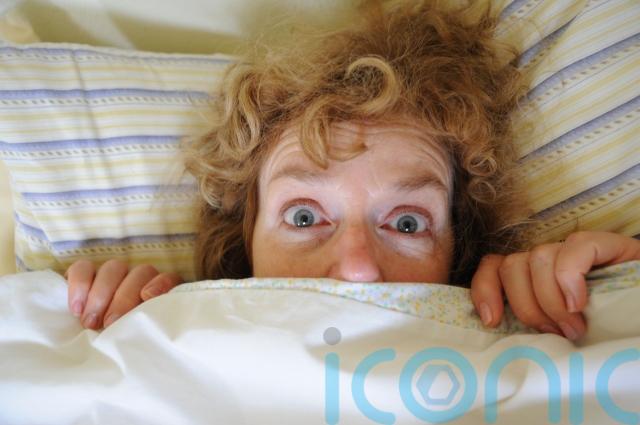
“Generally, people will get into bed and won’t be able to sleep. They will get a racing mind and will start ruminating, thinking and worrying,” highlights Ellis.
According to the NHS website, still feeling tired after waking up, waking up early and not being able go back to sleep, waking up several times during the night, and feeling tired and irritable during the day are other warning signs to look out for.
Ellis adds that another distinguishing feature of insomnia is that after a period of time people often develop an aversion to their bedroom.
“What we find with many patients with insomnia is they’ll have no issues in the early evening, but as soon as they go to the bedroom and all the lights have come off they begin to struggle,” notes Ellis. “It’s what we call a hyper-arousal, because they’ve learnt to associate the bedroom with a negative space.”
How can it impact your everyday life?
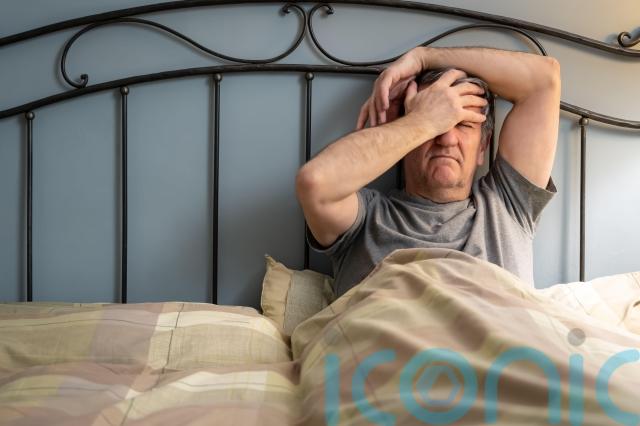
“We all know that after a bad night’s sleep we’re certainly not on top form the next day. We’re a little bit more moody, a little bit more irritable, a little bit more sad and our performance doesn’t tend to do very well after a poor night of sleep,” says Ellis. “However, when we start looking at this over a longer period of time, we start to see some associations with long-term mood problems, particularly depression.
“Insomnia is also associated with the worsening of other illnesses that you might get.”
Are there any factors that can increase your risk of insomnia?
“The personality characteristics associated with insomnia are people who are more anxious and worry-prone, and people who are more perfectionistic,” says Ellis. “In addition, if you have had insomnia in the past, there’s a very strong likelihood you’ll get it again, unless it’s properly treated.”
Getting older can also increase your risk.
“As we get older, our sleep system becomes more vulnerable to insomnia,” says Ellis. “That doesn’t mean that all older adults have insomnia or will get insomnia, but they are a little bit more vulnerable because the things that keep sleep regular do start to degenerate within us as we age. Also, we’re more likely to be chronically ill later in life and to be taking more medications which will disrupt our sleep.”
Menopause is another prominent risk factor.
“Some of those hormones that fluctuate around the menopause also impact on your sleep, so we do see a higher level of insomnia in menopausal populations compared to non-menopausal populations,” says Ellis.
When should people seek help about their symptoms?
“Insomnia becomes pathological or abnormal after about two weeks, so I would recommend talking to your GP after you have experienced these symptoms for longer than two weeks,” advises Ellis. “It’s always better to seek help sooner rather than later.”
Can insomnia be treated?
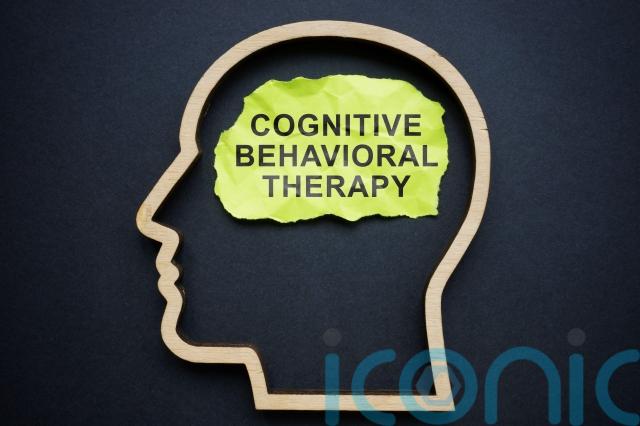
“CBT-I (cognitive behavioural therapy for insomnia) is the first line treatment for insomnia,” says Ellis. “It’s a talking therapy and is a series of techniques that are taught over six to eight weeks which deal with the dysfunctional attitudes and worries as well as managing that sleep regularity.”
There’s two main aspects to it.
“The cognitive aspect gets people to identify their worries, anxieties, concerns and maybe some inflated, dysfunctional beliefs around sleep,” explains Ellis. “Then there are cognitive techniques used to get rid of them, such as constructive worry time to deal with that racing mind.
“Then there there are also behavioural components which help people regulate the sleep process itself, maximise the drive to sleep, as well as getting rid of those worries and concerns before you even get into bed.”

Subscribe or register today to discover more from DonegalLive.ie
Buy the e-paper of the Donegal Democrat, Donegal People's Press, Donegal Post and Inish Times here for instant access to Donegal's premier news titles.
Keep up with the latest news from Donegal with our daily newsletter featuring the most important stories of the day delivered to your inbox every evening at 5pm.

This publication supports the work of the Press Council of Ireland and Office of the Press Ombudsman, and our staff operate within the Code of Practice of the Press Council. You can obtain a copy of the Code, or contact the Council, at www.presscouncil.ie, Lo-call 1800 208 080 or email: info@presscouncil.ie.