Cardinal Health employees outside the plant last August as details emerged that it planned to cease operations in Tullamore
Search


26 Mar 2026

Please allow ads as they help fund our trusted local news content.
Kindly add us to your ad blocker whitelist.
If you want further access to Ireland's best local journalism, consider contributing and/or subscribing to our free daily Newsletter .
Support our mission and join our community now.
To continue reading this article, you can subscribe for as little as €0.50 per week which will also give you access to all of our premium content and archived articles!
Alternatively, you can pay €0.50 per article, capped at €1 per day.
Thank you for supporting Ireland's best local journalism!

Birr Workhouse, as it presently looks.

A NEW, hopeful chapter has begun for one of Birr's most important buildings, the Workhouse, as it has been sold for €350,000, the Midland Tribune has learned.
The building was sold to its new owner in October, by its previous owner of six years, the Canadian/Chinese company Castle Rook.
The Workhouse has been bought by Birr businessman Eoin Garry and his company “Canbe Ltd”.
Speaking to the Tribune, Mr Garry said his workers are currently clearing and tidying up the area immediately around the building “so it can be surveyed for a planning application.”
After years of false dawns and inactivity, many locals were very glad to see something happening at the site as dumpster trucks and JCBs began their clearance work. Many locals feel the premises is now in capable hands and the future is hopeful.
Over the last quarter century a number of projects have been proposed for the Workhouse but unfortunately they never came to anything. One project was objected to by locals and the planning application was turned down. In 2012 owners from Clonmel wanted to create a National Diaspora Centre at the site; however the government axed the plan in 2015.
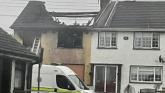
In August 2017 a fire broke out in the building, causing extensive damage. The fire had been started by local youths. The boys' dormitory, school room, men's dormitory were “destroyed”; and the elderly men's quarters was damaged.
At the time Birr Historical Society commented, “Birr Historical Society is greatly saddened to see the destruction by fire of a large section of the main block of Birr Workhouse yesterday. It is the end consequence of many years of neglect, of a wonderful building that had so much to offer the community. Well done to the many individuals and groups that battled in vain to save it over the years. The building was built to the plan of George Wilkinson and opened on 1st April 1842. It closed in 1921 and housed Birr Shoes from the 1930s to the 1960s. In more recent times it was home to Peerage Brass Factory.”
Since the inception of Birr 20:20 in 2015, the restoration of the Workhouse was always in the group's sights. In September 2018 a Birr 20:20 meeting was told that the building had been purchased by Castle Rook, a Canadian/Chinese company with its Irish base in Louth, and restoration was about to get underway, focusing initially on the roof, which is riddled with holes. Detailed plans were shown during the September 2018 meeting to great enthusiasm. Access, the meeting was told, had been secured to the right of the building, leading past a proposed museum. It was proposed to transform the Workhouse into “a centre providing care for those with dementia.” The years rolled by and nothing happened.
The history of Birr (Parsonstown) Workhouse was very grim and feels alien to us. Social conditions at the time were horrendous, class segregation very severe and human life less valued. The attitude of the “haves” to the “have-nots” was extremely stark. For example, a member of Parsonstown Workhouse Union, John Grome complained bitterly about any compassion being shown to the impoverished.
He called them “paupers and beggars and brats” who should be left in their “cabins and hovels of the meanest and filthiest kind.” He objected to all this “pity” being directed towards the “beggars”, while there was no sympathy at all for “the Landlords, and gentlemen at whose expense these persons were to be fed sumptuously, and get in addition Nutmeg Whey.” The Union board was comprised of “Landlords and gentlemen” who were excessively prudent in fiscal matters and overly austere.
The Parsonstown/Birr board was one of the few boards in the Poor Law Unions most affected by the Famine never to grant outdoor relief. Those living in the Workhouse had to live within its confines.
During the Famine it was overcrowded and terrible disease broke out, including typhus, relapsing fever and dysentery. During the Famine typhus and relapsing fever accounted for 795 deaths, marasmus 748 and “dysentery and diarrhoea” 625. The inhabitants were fed inappropriate food and the hospital was overcrowded. Everyone had to wear Workhouse uniforms rather than their own clothes. In May 1849 it was estimated that the building was 1,300 people over capacity.

Subscribe or register today to discover more from DonegalLive.ie
Buy the e-paper of the Donegal Democrat, Donegal People's Press, Donegal Post and Inish Times here for instant access to Donegal's premier news titles.
Keep up with the latest news from Donegal with our daily newsletter featuring the most important stories of the day delivered to your inbox every evening at 5pm.

This publication supports the work of the Press Council of Ireland and Office of the Press Ombudsman, and our staff operate within the Code of Practice of the Press Council. You can obtain a copy of the Code, or contact the Council, at www.presscouncil.ie, Lo-call 1800 208 080 or email: info@presscouncil.ie.