Cardinal Health employees outside the plant last August as details emerged that it planned to cease operations in Tullamore
Search


26 Mar 2026

Please allow ads as they help fund our trusted local news content.
Kindly add us to your ad blocker whitelist.
If you want further access to Ireland's best local journalism, consider contributing and/or subscribing to our free daily Newsletter .
Support our mission and join our community now.
To continue reading this article, you can subscribe for as little as €0.50 per week which will also give you access to all of our premium content and archived articles!
Alternatively, you can pay €0.50 per article, capped at €1 per day.
Thank you for supporting Ireland's best local journalism!

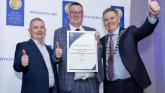
Senior footballer of the year, Cormac Egan, himself a dual county minor and U20 star, with Offaly's most famous dual hero, Liam Currums at the Offaly GAA awards.

MIXING insightful information with self deprecating humour, dual hero Liam Currums warmed the hearts of the large crowd as he told great stories and rekindled fond memories at the presentation of the annual Offaly GAA/Tullamore Court Hotel awards on Friday evening.
Currums' remarkable exploits in the early 1980s when he won All-Ireland Senior Hurling and Football Championship medals as well as All-Stars in both codes earned him national fame. He became the first person to be inducted into the Offaly GAA hall of fame for his dual achievements – normally a separate footballer and hurler are inducted but this year, the Kilcormac native was the only person honoured.
His introduction and the following questions and answers session with the MC, the 2024 chairman, Michael Duignan provided the highlight of a very memorable evening. Duignan himself was among the distinguished group of people who played senior hurling and football championship for Offaly – while he won fame for his hurling achievements, he played both codes for a spell in the early 1990s and he remarked that no one will ever achieve what Currums did again because of the congested GAA calendar and the way demands have changed.
There was a great atmosphere at the function as the Offaly GAA senior, senior B, intermediate, junior and U20 footballers and hurlers of the year, the camogie and ladies football senior, intermediate and junior and the football and hurling referee of the year were presented with their awards.
As usual, the highlight of the event was the presentation to and following chat with the hall of fame inductee.
Before injury curtailed and eventually ended his career prematurely from 1983 onwards, Liam Currums was a terrific force of nature on the Offaly GAA scene. He was sensational as Offaly won All-Ireland senior hurling and football titles in 1981 and 1982, winning an All-Star in each code in those years. While hurling was his true love and he had intended concentrating on that until injury dictated otherwise, he played senior football for Offaly first, lining out in a tournament game in Galway in 1979 and winning Leinster senior football medals in 1980, '81 and '82.
He only came onto the Offaly senior hurling panel in 1981. A brilliant athlete with pace to burn, he was known fondly as “Liam of the speed” during his career. Amazingly, he was still U21 in 1982 and the gruelling toil took its toll when he suffered a cruciate injury in late 1983 and he never really got back, though he did play more after that. Living in Donegal Town for decades, he played senior hurling briefly with Derry in 1989 but has retained a terrific pride in his home county and parish and this was evident in the passion and sincerity in which he spoke on Friday evening.
Clearly delighted to be honoured and surrounded by his family and friends, Currums told a series of very entertaining stories.
“It is unbelievably special in many respects. Number one, my family is here. I got All-Stars and different things were given to me but to have my family here tonight is special to me,” he smiled.
“It is nights like this I enjoy. When you achieve all that I achieved, I was too young to appreciate it. Nights like this mean more,” he added.
He outlined the many influences on his career: his club Kilcormac and Mick O'Connor, Michael Spain, Justin Graham and Willie Gorman, two from Kilcormac and two from Killoughey. “They kept the club going when the club was going bad and I appreciate the work those guys did. Our club is in great shape at the moment, probably in the top ten in Ireland in hurling clubs and it is the work those guys did at the very start that grounded that.”
He also singled out the principal in Ballyboy National School, Michael Keary for getting him to hurl at a young age. “That was my first introduction to hurling. I never saw a football at all, he got me going,” he reflected.
He outlined how he made the football team first, playing Galway in a challenge game against Galway at half forward in Tynagh in 1979. “I was no more a half forward than the man in the moon. I couldn't kick the ball but what I could do was run. The following Spring they were playing Kerry in Tullamore. Kerry were at the height of their powers and Pat Spillane was at the height of his powers and he was running amok around Tullamore. Holy God, almighty, he was like a gazelle. (Eugene) McGee made this decision on the line, put Currums on Spillane. I went on Spillane as a half back and held that position for six years because I could run and I could defend but I couldn't kick the ball.”
He was still a minor in 1979, playing county minor football and hurling for three years while he played U21 hurling for Offaly for five years, football for four years. “It sounds like I was playing an awful lot of games but you see, we didn't win much,” he joked to laughter and applause – though he did win Leinster U21 hurling and football medals in 1978 and 1979.
He recalled his first meeting with Eugene McGee in Tullamore in 1978 when he gave a team talk to the minor footballers before the game. “He inspired me with his passion, he was so mad about the game,” he reflected.
At the time, Currums was an apprentice with the ESB in Lanesboro, living there. He outlined a story that McGee told himself about the manager being caught for drink driving and getting Currums to drive him for that year to training and matches. He spent a year living with McGee's mother in Aughnacliffe in north Longford at that time and he recalled one journey from there to Killarney for a National Football League game, a six hour drive. “Not a word was spoken the whole way down. Now it suited me fine because that time I was very shy and I didn't speak anyway. He was doing writing and all sorts of stuff. Not a word was said but if you put him in front of a team at training and all that, he was brilliant.”
He also spoke about the influence of coach Diarmuid Healy on the 1981 All-Ireland senior hurling champions. “Diarmuid Healy came into Offaly when Offaly hurling was quite good but it was too physical. It was the man instead of the ball but Diarmuid Healy came in with the Kilkenny touch. It was the stick work and that is all we were missing. You look at Kilkenny, their stick work, their first touch is the whole thing and that is what Diarmuid Healy brought. He used to put us in lines and you'd hurl the ball up and down the line. The fellow in the middle would be knackered then because he would be hitting everything but that is how we got the stick work.”
Currums also referred to Johnny Flaherty's all important hand-passed goal in the 1981 All-Ireland hurling final win over Galway. “He is dead now, he is gone, I miss the guy so much, he was a character,” he said, recalling a session before that final when they were running up and down the field hand passing the ball. “Johnny Flaherty said to Diarmuid Healy, Diarmuid come on. This is ridiculous, hand-passing the ball, shur we can all hand pass the ball. The goal that Flaherty scored came from where. . . . It was an unbelievable hand-ass, he knew what he was at.”
He talked about a function for dual All-Ireland medal winners he attended after the 1982 All-Ireland football final with his father Frank and they met one of the great dual heroes, former Taoiseach, Cork's Jack Lynch. “That was a great story. That October I got a B and I award for appearing in winning All-Ireland football and hurling finals. That had only happened three times in the GAA and Jack Lynch was there that day because he won six All-Ireland's in a row in the 1940s, between hurling and football in successive years.”
The only other person to achieve that was Frank Burke, a Carbury man who went to the St Enda's school founded by 1916 Easter Rising leader Padraig Pierce. Burke was 17 in the Rising and won fame for placing the tri-colour flag on top of the GPO. “He wasn't shot, the rest of them were but he was interred in Frongoch in Wales,” Currums outlining that he returned to St Enda's afterwards. “We were sitting around having a chat. My father was smoking a long shanked pipe and Jack Lynch had a long shank pipe. My father drank a whiskey and Jack Lynch drank a whiskey. After two or three whiskeys, the conversation started to flow and my father was able to tell every match Jack Lynch played. It was unbelievable. Then Jack Lynch said someone else should be here but at that stage Frank Burke was 86 or 87.
“Jack Lynch said to Eugene McGee, get a taxi so we all left the function and out to Rathfarnham to Frank Burke. There is photographs of the three of us. It was over my head at that stage but I couldn't get over it afterwards. My father left that function that day. He was a bus driver in Dublin in the '60s, he knew Dublin like the back of his hand and my mother never told me the story until many years afterwards but he got lost. He didn't know where he was going, he was so excited. That is what the GAA stands for with me.”
Currums talked about the many friends he made through the GAA and the return of goal scoring hero Seamus Darby to the Offaly football panel in 1982 – Darby got the winning goal in the All-Ireland final against Kerry. “I will never forget the night he came back. We used to train in the famous field in Rhode. It was a tenth of an acre and the incline on the field was severe, probably 10% and a 400 yard run around. Seamus came onto the field and he hadn't trained like that before. We used to do runs, you'd get a fellow the same weight and height as you and put him on your back and you'd sprint up the hill. You'd only get 100 yards. I didn't know Seamus at the time and he was struggling a little bit. I remember putting my hand on his back and saying come on, you can do it. I had actually forgotten it but he told me that story many times. We became friends from that.”
He referred to opponents he played against, Frank Cummins of Kilkenny, Tim Crowley of Cork, the hardest footballer he played on was “Jigger” (John) O''Connor of Roscommon, Ger Power of Kerry was the fastest player he played on. “The one thing I was able to do was I was able to run,” he grinned.
He was asked about the famous opening point he kicked in the 1982 All-Ireland senior football final against Kerry – a stunning kick over the bar from forty metres after racing up field, ignoring pre-match instructions from Eugene McGee not to leave Ger Power's side or venture beyond the half way line.
“There was a meeting the night before or the Friday night and under no circumstances was I to pass the half way line. McGee said, Currums, no sally runs as he called them. Your'e job is to mark Ger Power, you are not to let him get a kick of the ball and don't go on any runs. This ball landed about five or ten minutes into the match and Gerry Carroll was behind me and I saw the gap. Shur what can you do when you see a gap, only go through it. I could hear Gerry Carroll saying keep going, keep going and shur I kicked it and it went over the bar.”
He was later told that McGee turned around to his four selectors, Sean Foran, PJ Mahon, Leo Grogan and Paddy Fenelon and said: “Lads we can't lose this game, Currums is after scoring a point.”
Currums stated that it was great to see the excitement returning to Offaly and Kilcormac-Killoughey in recent years. “It is unreal. When I was playing in the '70s, we had one changing room in Kilcormac and it was a sheep shed. There was no water in it, no electricity, there was no door on it. There was barely even a roof and the opposition team were having a team talk and you could hear every single word they were saying. Now they have a lift to go from the ground floor to upstairs. In forty years, it is unreal.”
He concluded with a story about a painter coming to his house in Donegal to do work and discovering Currums had All-Ireland medals, wanting to see them. The player didn't know where the medals were and had to contact his wife Dympna who directed him to her jewellery box. The painter's attention was drawn to a silver medal in the collection which was the 1981 All-Ireland football runners up one. “I said that is what you get when you lose an All-Ireland final. Jaysus, he said, there is a fair few of them in Mayo.”
Chairman of Offaly GAA Tom Parlon paid tribute to Liam Currums and all the award recipients. He thanked everyone involved in organising the night and the local journalists who selected the winners.
Philip O'Brien of sponsors, the Tullamore Court Hote, said they were delighted to sponsor and host the awards. “We have a long history of sponsoring the football championships and we are delighted to take this on board,” he said, thanking the County Board for the way they look after their sposnors.
The full list of recipients are:
Hall of fame – special dual award
Liam Currums (Kilcormac)
Senior hurler of the year
Charlie Mitchell (Kilcormac/Killoughey)
Senior footballer of the year
Cormac Egan (Tullamore)
Senior “B” hurler of the year
Peter Geraghty (Kilcormac/Killoughey)
Senior “B” footballer of the year
Keith O’Neill (Clonbullogue)
Intermediate hurler of the year
Declan Parlon (Coolderry)
Intermediate footballer of the year
Robbie Gallagher (Ballinagar)
Junior hurler of the year
Ronan Flynn (Belmont)
Junior footballer of the year
Cian Murphy (Edenderry)
U20 hurler of the year
Adam Screeney (Kilcormac/Killoughey)
U20 footballer of the year
Cillian Bourke (Tullamore)
Hurling referee of the year
Joey Deehan (Clara)
Football referee of the year
Eamon O'Connor (Ballycommon)
Handballer of the year
Sian Cooke (Crinkle Handball Club)
Camogie players of the year: The Camogie awards were chosen by the Offaly Camogie Association
Senior
Rachel Brennan (St. Cillian's Camogie Club)
Intermediate
Jane Cleary (Shinrone)
Junior
Orla Kilmartin (Kilcormac/Killoughey)
Ladies players of the year -The ladies awards were chosen by the LGFA;
Senior
Lorraine Keena (Naomh Ciaran)
Intermediate
Susan O'Grady (Shamrocks)
Junior
Ella Fanning (Edenderry)

Subscribe or register today to discover more from DonegalLive.ie
Buy the e-paper of the Donegal Democrat, Donegal People's Press, Donegal Post and Inish Times here for instant access to Donegal's premier news titles.
Keep up with the latest news from Donegal with our daily newsletter featuring the most important stories of the day delivered to your inbox every evening at 5pm.

This publication supports the work of the Press Council of Ireland and Office of the Press Ombudsman, and our staff operate within the Code of Practice of the Press Council. You can obtain a copy of the Code, or contact the Council, at www.presscouncil.ie, Lo-call 1800 208 080 or email: info@presscouncil.ie.