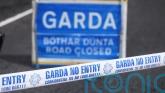
Gardai say Aodhan Ryan has been located following the urgent appeal issued on April 3
Search


05 Apr 2026

Please allow ads as they help fund our trusted local news content.
Kindly add us to your ad blocker whitelist.
If you want further access to Ireland's best local journalism, consider contributing and/or subscribing to our free daily Newsletter .
Support our mission and join our community now.
To continue reading this article, you can subscribe for as little as €0.50 per week which will also give you access to all of our premium content and archived articles!
Alternatively, you can pay €0.50 per article, capped at €1 per day.
Thank you for supporting Ireland's best local journalism!

Laois-Offaly Fianna Fail TD Barry Cowen

OFFALY Fianna Fáil TD Barry Cowen has called for the ESB to be sold off and has suggested the establishment of a stand-alone Department of Energy.
Deputy Cowen included the radical proposals in a wide ranging Fianna Fáil policy document on energy which he has just published.
In 'Powering Ireland's Edge for the 21st Century', the Laois-Offaly Dail representative also restated his disappointment with the just transition process.
Setting out his reasons for a new Department of Energy, Deputy Cowen says: “At the minute six Government Departments and as many Government agencies hold different parts of the energy jigsaw. One point of Government, with an economic and environmental energy focus, needs to hold all the relevant powers instead of the current warren of the Departments of Environment, Housing, Transport, Enterprise, Agriculture, Finance, Public Expenditure, CRU, EirGrid, ESB, An Bord Pleanala, IDA, Enterprise and dozens more.”
He strongly backs the Government's Climate Action plan but prioritises the development of offshore wind energy.
The Clara man writes: “Too often Government reports just sit on the shelf. Fianna Fáil needs to ensure the Climate Action Plan happens and in the best way for the citizens of Ireland. An FF plan on offshore wind and energy can mean the following will be achieved from it: an increase in renewable energy by 80% by 2030 and the increased target of up to 5 Gigawatts of offshore wind, 8 GW from onshore wind and 1.5-2.5 GW from solar PV. Wind farms along the coast must benefit the surrounding areas. We can do this if Fianna Fáil designates energy zones. In these zones which could be 100km wide, the energy produced has to either be used in that zone or exported, it cannot just be wired from the west to the east.”
He also hits out at those who make data centres the “fall guy” in discussions about energy in Ireland.
“The real issue is the failure to properly plan our future energy system and respond to demand growth signals. Electricity demand growth is one key factor for economic development and facilitating this growth with suitable infrastructure and sustainable resources is vital,” he says.
“Data centres are the grass roots of the technology industry. Our online world cannot exist without data centres and suggesting they shouldn’t exist is facile. They also serve as a backup to our phones, our photos, our apps, and our business. During their development, construction and operation data centres generate significant direct and indirect economic benefit.”
He indicates that his recent publicly stated deep concerns about the ESB have motivated his conclusion that it should be sold by the State.
“In the first half of 2021, while businesses throughout the country struggled and hundreds of thousands of people fought to survive on the PUP, the ESB announced an increase in operating profits by €114 million. Before exceptional items, its operating profit was €363 million,” he says.
“I have challenged ESB on several fronts, questioning its role in energy costs, questioning how public service obligations benefit the ESB, questioning the regulation of the ESB, as well as seeking an investigation on manipulation of the energy market. Most of all I cannot understand how we have arrived in this situation of a lack of energy security, in a country brimming with energy sources.
“I have decided to take these ESB and regulatory issues to the European Union for a State aid investigation, plus to the Competition and Consumer Protection Commission for an investigation of the ESB’s price hikes for householders. I will not take that issue up further here except to say that I do not believe it is in the State’s interest to continue to own the ESB.
“It has served a useful purpose over the decades and has been an asset for the State. But the time has come to have a debate on its ownership. The State has often been a pointless owner of assets and a terrible shareholder. It also has not been able to supervise the companies it owns, either lacking the technical people to see what its businesses were doing or the powers to curb them.
“Ownership is no longer the key determinant of how dominant companies operate, it is regulation. In my view, we need to review the regulation of the ESB, but we should also sell the company off and use the money to power our move into offshore wind and other industries for a green future.”
Deputy Cowen's document also attempts to underline Fianna Fáil's green credentials, saying the party “believes in the need for climate action”.
“As our manifestos and documents show, we have been concerned for decades and were the first party to govern with the Greens.”
But he is critical of current Climate Action Minister Eamon Ryan and of how the Government has presented its climate action policies.
“When the current Minister for Climate Action was in Government over a decade ago, he promised then to start the planning and the investing for the years 2020 to 2035. It never happened and neither did any national dialogue,” the TD's policy document says.
“This Government’s presentation of the Climate Action Plan has not been inclusive. People in rural Ireland feel excluded from the dialogue and threatened by the statements against turf and wet wood. Climate action can be the friend of rural Ireland as I have emphasised with my thoughts on offshore wind.
“Carbon credits could be a new source of income for Irish farmers who are interested in trials by Intel and others on using bogs etc as carbon sinks, forestry and other opportunities. Rather than paying carbon fines at EU level, we should be conversing with rural Ireland about how we can avoid such fines and invest the money in Ireland. Farmers and businesses can be part of the energy solution too with community-based electricity generation and their own forms of renewable energies, solar, wind and so on. Grants and opportunities need to be focused on them.
“Farmers feel threatened by the rhetoric on herds, but this is from a lack of communication on opportunities. Methane reduction can be achieved in many ways other than just herd cullings, including through a seaweed ration for animals.”
He says the climate messaging to farmers and others “seems to include none of the potential”.
“That’s why we need this national dialogue if we are to avoid the perception of two Irelands, one in the east that has an energy future and one in the midlands and west which has none. Just Transition must be part of this dialogue too.
“So far in the Midlands, the just transition post ESB and Bord na Móna has been a disappointment. Funds have got so tied up in bureaucracy by Government Departments that it has failed so far. But this needn’t be the case. If the funds are allowed to flow into developing new industries, new tourism opportunities and new life, the midlands can flourish under Just Transition. Rural Ireland can flourish under climate policies, it can be friend not foe.”
The policy document also includes detailed proposals on a European “Supergrid”, which would help power the EU using offshore wind from the northern and western seas and solar power from the southern countries.
“A European Supergrid would offer Ireland a huge opportunity for exporting its domestic wind resource. Ireland would also be an ideal starting point for developing the grid and leading the European project,” he says.
Deputy Cowen also strongly endorses research being done by the Irish company Supernode Ltd which is working with partners to develop “superconducting cables” which will be capable of transmitting large amounts of electricity under the sea.
In his introduction to the policy document Deputy Cowen writes that Fianna Fáil leaders such as De Valera, Lemass, Lynch and Ahern “helped to define Ireland’s edge in the world”.
He also mentions his older brother, former Taoiseach Brian Cowen: “Brian Cowen worked to stabilise our country and our finances for the success that came in the years before the pandemic struck.”
Deputy Cowen, who was appointed as Minister for Agriculture by Taoiseach Micheal Martin and then sacked shortly afterwards when the Offaly man's disqualification for drink-driving was made public, said the current Taoiseach “has been absorbed by Covid” recently but writes: “Understandably the focus has been Covid and Brexit for the past number of years. But hopefully now as we come to an easing of the pandemic, it is time to put the focus back on Fianna Fáil. Our history has always been intertwined with Ireland’s economic future and Ireland’s place in the world. Fianna Fáil needs to establish its future by painting an economic roadmap for this island north and south plus by establishing our role in the world.”

Subscribe or register today to discover more from DonegalLive.ie
Buy the e-paper of the Donegal Democrat, Donegal People's Press, Donegal Post and Inish Times here for instant access to Donegal's premier news titles.
Keep up with the latest news from Donegal with our daily newsletter featuring the most important stories of the day delivered to your inbox every evening at 5pm.

This publication supports the work of the Press Council of Ireland and Office of the Press Ombudsman, and our staff operate within the Code of Practice of the Press Council. You can obtain a copy of the Code, or contact the Council, at www.presscouncil.ie, Lo-call 1800 208 080 or email: info@presscouncil.ie.