Search


02 Apr 2026
Search
02 Apr 2026

Please allow ads as they help fund our trusted local news content.
Kindly add us to your ad blocker whitelist.
If you want further access to Ireland's best local journalism, consider contributing and/or subscribing to our free daily Newsletter .
Support our mission and join our community now.
To continue reading this article, you can subscribe for as little as €0.50 per week which will also give you access to all of our premium content and archived articles!
Alternatively, you can pay €0.50 per article, capped at €1 per day.
Thank you for supporting Ireland's best local journalism!


When it comes to buying a new car, safety is the most important factor to consider.
In 2024, the European Union announced, as part of its ‘New Vehicle General Safety Regulation’, that all new vehicles have to come as standard with several driver safety assistance systems to help improve road safety.
These systems are known as ‘Advanced Driver Safety Assistance Systems’ or ADAS, which are in-car technologies, using cameras, radars and sensors to prevent accidents occurring on the road and make drivers more alert and safer behind the wheel of their vehicles.
If you’re in the market for a new car, what do all of these ADAS systems consist of? How do they work? And, can they prevent an accident from occurring?
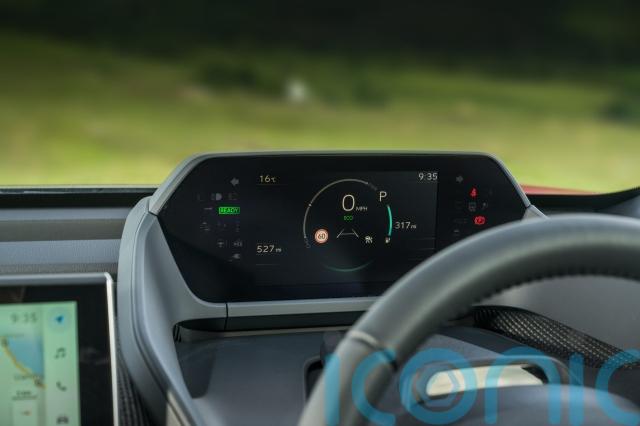
Traffic sign recognition, also known as ‘Intelligent Speed Assist,’ is designed to prevent drivers from exceeding the speed limit.
The system works with a camera located in the car’s front windscreen, which reads different speed limit signposts and then projects them onto the car’s dashboard.
If the driver exceeds the speed limit, an audible beep and a bong will sound, and the projected image of the signpost will start flashing, depending on the vehicle’s make and model.
You can turn the system off by accessing the vehicle’s driver assistance settings, which could be located in the car’s infotainment screen, instrument cluster, or shortcut button; however, due to EU legislation, the system will automatically switch on when the vehicle is restarted.
Lane-keep assist is a safety system that is designed to reduce the risk of a vehicle swaying out of its lane on the motorway or on a busy main road.
It works by using forward-facing cameras and radars to monitor the white lines on the road surface. If the system detects the vehicle crossing the road into the path of an oncoming vehicle, or drifts out of lane on the motorway, the system will automatically apply steering input to pull the vehicle back onto the correct side of the road, or lane on the motorway.
Just like with traffic sign recognition, lane-keep assist can be switched off via a shortcut button or sub-menu in the vehicle’s infotainment system, but it will automatically be switched on every time the vehicle is restarted.
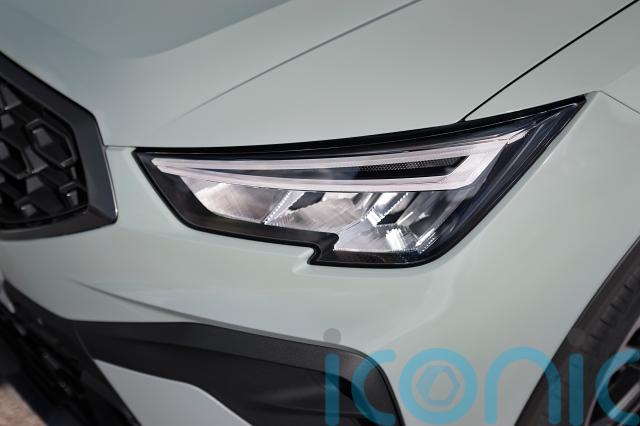
Automatic high beam assist is designed to take the strain out of night driving, with the car automatically applying high and dip headlight beams, depending on oncoming traffic.
The system works via a sensor and camera located in the front windscreen of the car, which can detect oncoming light from approaching traffic and will automatically dip your car’s high beams, to prevent dazzling other drivers.
When the road is clear and less light is projected, the system will know and automatically switch the high beams back on to give you the best forward visibility.
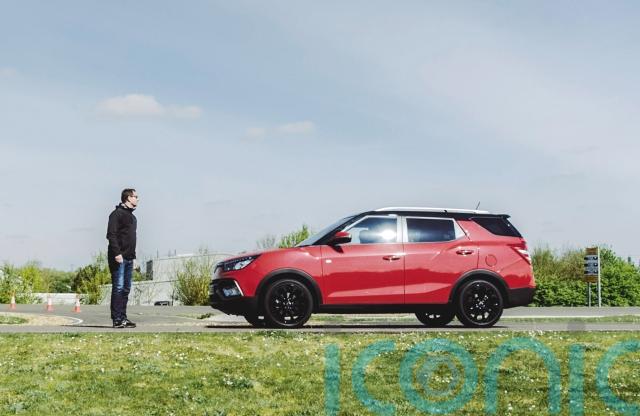
Autonomous Emergency Braking or ‘AEB’ is one of the longest-serving modern driver safety assistance systems.
It uses forward-facing cameras and radars, located in the vehicle’s front bumper, and scans the path of the road ahead to sense potential impacts occurring in front, whether it’s a vehicle, pedestrian or cyclist.
If the system senses an emergency, it will automatically apply the car’s brakes to prevent car-to-car impacts and accidents involving pedestrians and cyclists.
A driver drowsiness detection system uses a driver-facing camera, which scans the driver’s eyes to make sure they’re concentrating on the road.
The system works by looking at the driver’s gaze and will monitor where the driver is looking, for how long, if they’re focusing on the road, or if they begin to close their eyes due to fatigue.
If the driver looks away from the road for too long or begins to fall asleep, the system will alert the driver with an audible beep.
These systems can vary depending on the vehicle’s make and model, with some cars alerting the driver by vibrating the steering wheel, followed by a notification with a coffee cup in the instrument binnacle.
Certain Chinese car makers have implemented an audible warning where the vehicle will tell the driver ‘keep eyes on the road’, to make it even safer.
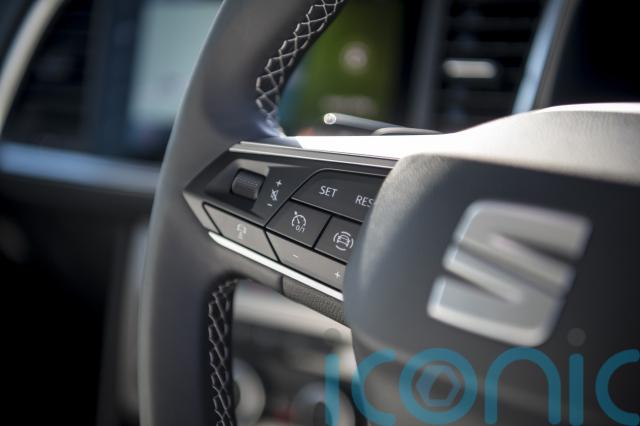
Adaptive cruise control is a more advanced cruise control, which alters the vehicle’s braking and speed, depending on the road conditions.
ACC allows the vehicle to speed up and slow down automatically to help keep pace with the flow of traffic.
The system works by featuring lasers and radar systems built into the front of the vehicle and it will scan the road ahead for other vehicles.
It can monitor the speed, distance and size of the vehicle in front and is just as easy to use as standard cruise control.
To activate ACC, simply accelerate to the speed you’d like to cruise at and press the ‘set’ button, located on the steering wheel. There will be ‘+’ and ‘-’ buttons on the wheel too, where you can alter the speed of the car.
Once you’ve set the speed on the vehicle, you can then set a gap of how far you want the vehicle to maintain its position from the vehicle in front, which is also controlled through buttons on the vehicle’s steering wheel.
If the car in front begins to slow down, the ACC will detect this and slow your car down to maintain the gap you’ve set or it will alert you to apply the brakes, which will deactivate the system.
Once the vehicle in front begins to speed up, your car will accelerate back to the cruising speed you’ve set it at with the ACC.
In some vehicles, the ACC will work alongside the lane-keep assist function to help maintain the vehicle’s speed and position on the road, effectively allowing the vehicle to drive itself, though the driver must be in control behind the wheel at all times.
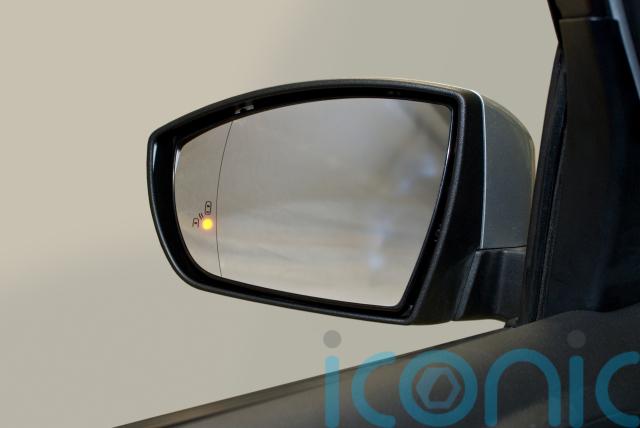
Blind spot monitoring systems have been around for more than a decade, with their purpose of preventing accidents occurring when changing lanes on a motorway.
Blind spot monitoring systems will alert the driver of a vehicle’s presence that may not be visible in their side mirrors.
The system works by using radar sensors located on the side of the car, with the signal of the sensors programmed to read beyond the length of the vehicle to clearly monitor traffic approaching from either side of your car.
When a vehicle is detected by the radar sensor, a warning signal is given, with a little orange or red light shown in the door mirrors to alert the driver. Depending on the vehicle’s make and model, a warning beep or even the steering wheel will vibrate to alert the driver.
If you’re on a motorway and signal to change lanes, certain blind spot monitoring systems will also work with the lane-keep assist to prevent you from turning into the path of a faster-moving vehicle.

Group of former Fine Gael elected representatives from across Offaly visiting Government Buildings.
The Birr Castle Easter Express

Chelirs Brecq from Birr

Offaly representatives in New York Cllr Noel Cribbin, Lavinia and John Leahy, Cathaoirleach OCC, Deputy John Clendennen Cllr Hugh Egan, Paddy Hogan, Offaly Association, Eoghan Ryan Chief Executive OCC

Founding committee members Billy Gleeson, Mick Mahon, Liam White and Johnny Butterfield

Subscribe or register today to discover more from DonegalLive.ie
Buy the e-paper of the Donegal Democrat, Donegal People's Press, Donegal Post and Inish Times here for instant access to Donegal's premier news titles.
Keep up with the latest news from Donegal with our daily newsletter featuring the most important stories of the day delivered to your inbox every evening at 5pm.

This publication supports the work of the Press Council of Ireland and Office of the Press Ombudsman, and our staff operate within the Code of Practice of the Press Council. You can obtain a copy of the Code, or contact the Council, at www.presscouncil.ie, Lo-call 1800 208 080 or email: info@presscouncil.ie.