

Man with West Offaly roots had involvement with many famous buildings

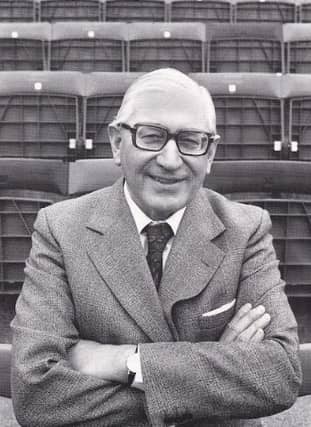

THE Sydney Opera House is one of the most iconic and beautiful buildings in the world, but very few know that a leading Structural Engineer, with strong Offaly connections, was a major player in the company which partly designed and oversaw the construction of this famous structure. That man was Peter Thomas Dunican, whose family came from West Offaly.
This year sees the 50th anniversary of the opening of Sydney Opera House and, with the year that’s in it, I think it’s worth recalling Peter’s talent and legacy, not just in terms of the Opera House but also some of the other great buildings his company was connected with. I recently spoke to one of the Engineer’s relatives who told me a little bit about his life story.
“Peter Dunican was my father’s first cousin," his relative told me. "Peter was one of the engineers in a major company in which, throughout the ‘50, ‘60s and ‘70s, he worked on the design and oversaw the construction of many iconic and celebrated buildings. The company was called Ove Arup & Partners, named after the celebrated engineer Ove Arup, who founded the company. Peter was involved from the company’s early days, which was founded shortly after the Second World War. He became a partner in 1946. He was Chairman for quite a while and Ove Arup’s right hand man. He was greatly influenced by Ove Arup, a man with a fantastic vision who was much admired in the structural engineering and architectural world.
“Peter has strong west Offaly connections, and some of his relatives are still living in the area. For example, my uncle is still living in the family home in Leamonaghan. Peter's father was raised in this family home, a small farm in Leamonaghan, between Ferbane and Ballycumber. Peter's father emigrated to London in 1912 and became a police officer in Battersea London. He died from consumption in 1919.”
Peter was born on March 15th, 1918 and was raised in poverty, in Battersea. (Throughout his life he would frequently embody the Battersea motto which was the egalitarian, “Not for me, not for you, but for us”). “His mother was resilient,” his relative told me, “and prevailed through the hardships. After school he worked in a library for a while; he loved libraries and loved collecting knowledge and information. This love of finding and collecting information made him an excellent organiser. He studied engineering and found employment as an engineer in London in 1946. His company Ove Arup and Partners designed such greatly admired buildings as the Dunlop Station in London, as well as the Donnybrook bus station in Dublin. When his company was working on Sydney Opera House there was huge controversy about the project. Some of the questions being asked included why was it costing so much? And why was it taking so long to build, over a decade?”
The built environment is often the cause of controversy and the recipient of criticism but Peter remained resilient and positive throughout the many years and projects and received plaudits for his work, including receiving a CBE from the Queen.
He passed away on December 18th, 1989.
From the beginning of his career he deeply admired Ove Arup’s philosophy, a philosophy which was wary of the degrading effects of money in every facet of life, including the architectural world. Arup’s (and Peter’s) philosophy underlined the importance of creating a community atmosphere in the company, a company where the ethos was about team effort. In the years that followed the founding of the company, Ove Arup & Partners helped engineer the construction of some of the most famous post war buildings: Hunstanton School by the Smithsons, Coventry Cathedral by Basil Spence, the Royal College of Physicians by Denys Lasdun and of course Sydney Opera House by Jorn Utzon. The company changed its name to Arup Associates in 1963, under which name the firm brought together engineers, architects and quantity surveyors under one roof (a move opposed by many contemporary architects). With designers such as Philip Dowson and Frances Pym, Arup Associates would continue to both design and engineer many lauded structures, including the Barbican Estate, the Lloyds Building and 30 St Mary Axe (aka the Gherkin). Ove Arup retired in 1970 after being knighted for his services to engineering and died in 1988 in London. Today his company continues to thrive, and is simply called Arup.
In the words of Jack Zunz and Peter Hobbs, other senior partners from the firm, in a booklet published to mark Peter’s 70th birthday in 1988: "If Ove is the architect-philosopher, Peter is the builder, the doer who moulded the philosophies into workable arrangements whereby so many hundreds of talented people have come together to work under the Arup banner. We have worked with Peter for nearly 40 years and still find it difficult to articulate the essential Dunican: a warm personality, loyal to his colleagues, always helpful, steadfast in a crisis and with an ever-open door to anyone who needs him.”
Peter also became chairman of the Ove Arup Partnership, a trust which owned Ove Arup & Partners on behalf of its staff, in 1977. He was also President of the Institution of Structural Engineers and Chairman of the National Building Agency.
As a senior partner Peter was credited with overseeing much of its growth from a single office in London in 1946 to a firm of over thousands (eventually reaching 15,000 staff in 2020). He also worked on many of the firm’s most iconic projects, including the Centre Pompidou, the Barbican Estate, Coventry Cathedral and others. He was the managing partner of Arup during the time the Sydney Opera House was engineered and overseen by an Arup office in Australia.
He often lectured on the subjects of Structural Engineering and Architecture. These lectures were filled with excellent points which still hold true today, such as this: “Today, structural engineers are concerned mainly with the viability, stability, efficiency and economy of their constructions, or systems, to use a general expression, that they are creating. They are necessarily concerned with the physical environment of the systems except where the environment affects the system. But it is the effect of the system on the environment that should now concern and obsess us. The aesthetic consequences of our calling are tomorrow’s imperative and can be realised satisfactorily only through the total and willing collaboration of all concerned. It is no longer a matter of skill or competence or controls or regulations. It is primarily a question of our attitude and willingness to trust and to work together with our collaborators – as we want them to trust and to work with us – achieve our collective aims. This is what creating the built environment is all about.”
Many former employees looked back with fondness in the 70th birthday booklet on their time working with Peter. One former employee recalled that he joined Arup in January 1947 bringing the total number of staff up to 20. “So began 30 years of working with Peter during which I learned so much.” The former employee was nostalgic about the old school ways of Arup: “The present trend in engineering is to insist on a University degree, which can be a shortsighted attitude because it can block the path of people who, through an apprenticeship system, would turn out to be first class technicians.
“During my initial years with the firm I had a lot of contact with Peter through my work and had first hand knowledge of his willingness to help if one had any problems. One never asked him for help in vain, and often he was able to steer you through so that next time one knew what to do.”
Another former colleague joked that he was tempted to tell Peter that he admired him more for his failings than for his good points! He said he admired Peter’s behaviour during difficult moments in the workplace such as “wriggling out of losing a logical argument by some Irish repartee which has absolutely no relevance to the matter in hand but makes everyone laugh, delivered as it is with spontaneous promptness and wit, and which clears the air of any kind of unpleasant confrontation or bad feeling. It shows up the inability of logic to deal with the fundamental problems of our life, for ‘All our achievements lead to calamity if we betray our basic humanity’ and you have understood that. You care for people and people care for you, you are loyal and you inspire loyalty. You are human.”
Another colleague said Peter’s “clear, direct and blunt thinking and drive” led to a considerable amount of the company’s growth “but has retained the friendly, co-operative (and often quarrelsome) atmosphere which I think gives us the edge over our competitors. It was mainly due to him that the paternal system of Christmas bonuses was replaced by our profit sharing scheme, which has largely prevented the growth of a ‘them and us’ situation (Maggie Thatcher please note).”
What also shines through in the various testimonies is the positive atmosphere in the firm. Arups was, and is, different to many firms because it has an atmosphere of kindness and generosity, and also a lack of greed and deluded thinking. There’s a deep appreciation of the importance of creativity and the quality of respecting each other. One of the company’s principal aims is to create a humane organisation. It’s sceptical of those cornerstones of “better management” in a capitalist entity – central control and central direction. It is sceptical of the view that a humane approach cannot work in the midst of the savage and cruel environment of the business world. It believes that clever, skilful, talented people do not thrive under a central framework of control.
Peter worked on Donnybrook Garage with Ronald Jenkins. In typical Arup fashion an office was established in Dublin to service the Bus Station job. From these beginnings in 1946 the practice in Ireland began its long association with Peter. The employees in the Dublin office had the benefit of Peter’s advice through the difficult period of the ‘50s into the prosperous ‘60s. His rapport with one of the Dublin employees and and his understanding of the context in which the firm operated in Ireland made for a very close relationship: "He has the ability," said the Dublin employee in the 1988 booklet, "to inspire by his very confident engineering talent, too often submerged by the necessity to give himself to the organisation, administration and direction of the firm."