Search


09 Apr 2026
Search
09 Apr 2026

Please allow ads as they help fund our trusted local news content.
Kindly add us to your ad blocker whitelist.
If you want further access to Ireland's best local journalism, consider contributing and/or subscribing to our free daily Newsletter .
Support our mission and join our community now.
To continue reading this article, you can subscribe for as little as €0.50 per week which will also give you access to all of our premium content and archived articles!
Alternatively, you can pay €0.50 per article, capped at €1 per day.
Thank you for supporting Ireland's best local journalism!


Have you noticed that everyone seems to be coughing, sneezing or sniffling at the moment?
Although the evenings are now longer and lighter, many of us are still cooped up at home, desperately reaching for the next tissue.
We spoke to Dr Alia Fahmy, medical director and GP at Concierge Medical, to find out whether this is just a coincidence, or if there is something in the air that is causing so many of us to feel run down…
What might be making us feel ill this time of year?
The spring season is notoriously unpredictable, and Fahmy highlights how the fluctuations between sunny spells and downpours can have an impact on our immune system.
“We’ve had some nice, bright days, but then all of a sudden there has also been some cold and damp days, and this does have an impact on our vitamin D levels, our immune system and our general feeling of wellbeing,” says Fahmy.
“We know that people feel better in themselves when the weather is better, and we have had a long, cold, damp winter this year.”
The pollen count also rises significantly this time of year, so lots of people tend to struggle with hay fever symptoms in spring.
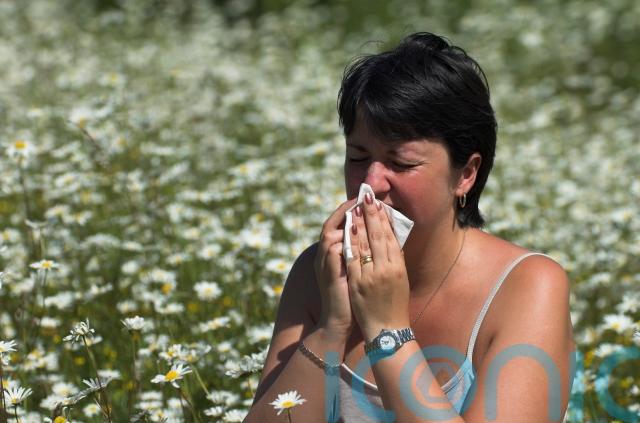
“Some people will have hay fever from the spring blossom, so will start experiencing symptoms now, although the exact timing and severity vary from person to person,” says Fahmy. “People tend to present with watery eyes, sneezing and a runny, itchy nose. They can also experience a lot of congestion and feel quite foggy in the head with it as well.”
Meanwhile, the start of 2026 saw a significant circulation of various viruses.
“It has been a really nasty year so far for several kinds of viruses,” says Fahmy. “For example, flu cases were particularly elevated at the start of the year and have now started to return to normal levels, but norovirus levels are still quite high at the moment, which isn’t helping us feel well.”
In addition, stress can have a negative impact on our health.
“We shouldn’t underestimate the impact of all the things that are going on in the world right now, which is likely to increase people’s stress levels and therefore have an impact on their immune system and general feeling of wellbeing,” says Fahmy. “So, there’s lots of different things that are playing a part in making people feel under the weather this spring.”
How can we distinguish between a cold and hay fever?

While colds and hay fever share many symptoms such as sneezing and a runny nose, a fever is a key indicator that helps distinguish between the two.
“There’s no fever or temperature change with hay fever, so if you are experiencing fevers that a clear sign that is a viral infection, like a cold, rather than hay fever,” explains Fahmy.
“In addition, I wouldn’t expect watery, itchy eyes to be a sign of a cold, as this is more likely to be hay fever.”
Looking at previous patterns can also be helpful.
“Are you somebody that has a tendency towards allergies? Are you asthmatic? Do you have eczema? Because if you are in that category, then you are classed as having atopy, which is essentially those sensitivities, which means hay fever is probably going to be more likely,” says the GP.
What symptoms can we manage at home?

“If you are feeling fluey and achy and have got a bit of a temperature, make sure that you’ve always got some form of paracetamol in the house,” advises Fahmy. “Similarly, for norovirus, I think it’s always sensible to have some Dioralyte rehydration sachets in the cupboard at home.
“With many norovirus and flu-like symptoms, it is usually a case of symptom control and prioritising rest and fluids rather than actual treatment.”
Furthermore, The GP says if you know you suffer from seasonal hay fever, being proactive is key.
“Make sure that you start your antihistamines a good four weeks before hay fever season starts to stop you from getting those hay fever symptoms when pollen levels are already at its peak,” recommends Fahmy.
What symptoms should people seek professional help about?

“If your symptoms are new or different or ongoing, or if your fever symptoms aren’t settling, or if anything feels like it’s getting worse with time, rather than better with time, you need to get help,” advises Fahmy. “This would especially be the case for anybody at the two extremes of age, i.e. young infants or older adults.”
Is there anything we can do to boost our immunity this spring?
“Make sure that you are taking vitamin D supplements and are getting outdoors,” advises Fahmy. “Getting some fresh air and doing some exercise are both simple things, but actually make the world of difference.
“Exercise, in particular, will help boosts your immunity, your cardiovascular health and that general feeling of wellbeing.”

Subscribe or register today to discover more from DonegalLive.ie
Buy the e-paper of the Donegal Democrat, Donegal People's Press, Donegal Post and Inish Times here for instant access to Donegal's premier news titles.
Keep up with the latest news from Donegal with our daily newsletter featuring the most important stories of the day delivered to your inbox every evening at 5pm.

This publication supports the work of the Press Council of Ireland and Office of the Press Ombudsman, and our staff operate within the Code of Practice of the Press Council. You can obtain a copy of the Code, or contact the Council, at www.presscouncil.ie, Lo-call 1800 208 080 or email: info@presscouncil.ie.