Search


19 Mar 2026
Search
19 Mar 2026

Please allow ads as they help fund our trusted local news content.
Kindly add us to your ad blocker whitelist.
If you want further access to Ireland's best local journalism, consider contributing and/or subscribing to our free daily Newsletter .
Support our mission and join our community now.
To continue reading this article, you can subscribe for as little as €0.50 per week which will also give you access to all of our premium content and archived articles!
Alternatively, you can pay €0.50 per article, capped at €1 per day.
Thank you for supporting Ireland's best local journalism!


Netflix’s reality series Blue Therapy has swiftly become a fan favourite.
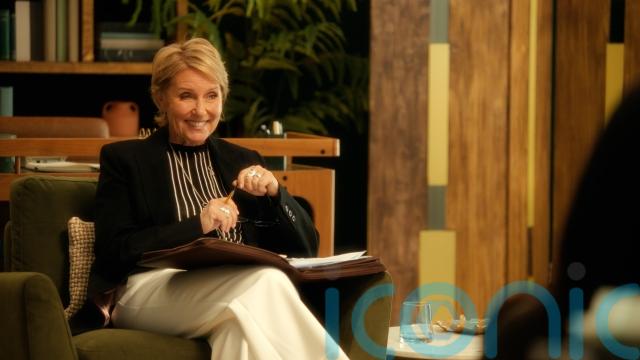
The eight-part series follows seven couples as they navigate relationship therapy with expert Karen Doherty.
The fly-on-the wall documentary, which captures both therapy sessions and the couples’ interactions in the real world, covers issues including infidelity, dishonesty, financial difficulty and parenting.
Couples therapist and relationship coach Doherty told PA that the show was exactly like her day job. “I had no contact with them [the couples] other than the six hours of therapy that I did with them,” she explains.
“The whole show is based on the premise that the therapist gets to know what she finds out in that moment and responds appropriately there and then. We all stuck to that format. I didn’t really have to do anything with them outside of therapy and the production team was so brilliant.
“The room they created was even just like one of my consulting rooms.”
“But once the three of us got going in what felt like a very safe space, the magic happened and it worked. You didn’t hear or see the cameras, it was just like my day job.
“It’s about getting couples talking to see each other, see what’s going on, unpacking resentment, then getting them communicating and connecting again.”
When it comes to the benefits of couples therapy, Doherty says it’s usually really effective. “It creates an opportunity for couples to hear each other and a therapist can create a space that is safe enough for people to hear each other, not just move to their patterns of fighting or bickering or falling back on old arguments,” she says.
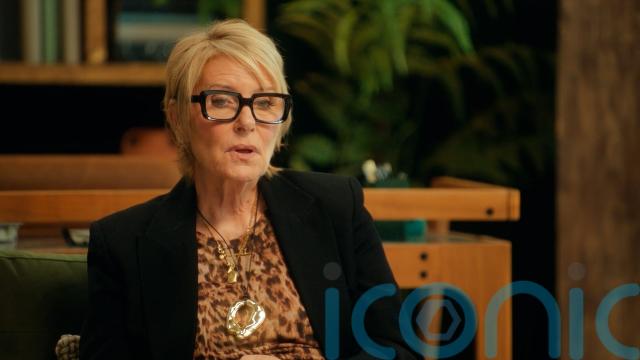
“I don’t tolerate that in the room. It’s actually a great space and I think the show democratised therapy and the idea that anybody can go to therapy and get something out of it.”
Here are the signs that couples may need therapy, according to Doherty.
Constant arguing
“If you’re constantly arguing, it will eat away at everyone’s patience,” Doherty says. “It eats away at the willingness, the empathy and the compassion, so constant arguments have to be arrested.
“Bickering that goes on over the same things, all these superficial bits, they are all indicators of something much more profound going on underneath.”
Lack of communication
“There is this constant battle that couples seem to have between the reality and their scripted narratives, based on assumption,” Doherty adds.
“People don’t hear each other and they don’t communicate effectively, and the assumptions one makes about the other can be so offbeat and wrong.”
She explains this issue materalises a lot of couples where one or both is neurodivergent.
“It happens where somebody who is overwhelmed and can’t speak is thought of as ignoring or rejecting somebody, or stonewalling them. But actually they’re just so emotionally dysregulated and they can’t actually put words together because their executive function [mental processes] is compromised.”
Living separate lives
Doherty explains that this happens quite a lot. “People can start living alongside each other, rather than together,” she says.
“Once the couple becomes deprioritised like that, there’s an issue because you’re never bridging that gap.”
Intimacy issues
“You have to look at intimacy,” Doherty explains. “If that is broken down, what is going on?
“By intimacy I mean in a range of different connections. But if sex and intimacy is broken down you need to ask – did you sign up to be flatmates or is there something missing?
“This is a key sign that a conversation needs to happen.”

A common theme within Blue Therapy was the reluctance among some couples to attend therapy – but Doherty explains there are ways to approach this too.
“Your partner may not want to go but realistically, it’s not going to get better. That’s the first thing to remind them off and then ask them – do we want to stay like this?,” she says.
“Then what you can do is simply have an introductory call with a therapist. Lots of them do these initial consultations and I can guarantee you and your partner will both take something out of that. ”
Doherty says many couple really need help at the moment – “It’s a very complex time for modern relationships.”
“They’re navigating new environments that have never been navigated and the old models are not necessarily equipped to deal with the new challenges that couples are facing.
“You’ve got this hyper-connectedness and confusion over identities. You’ve got men in crisis everywhere. It’s a completely different environment where roles are up for discussion. I’m hopefully one of those therapists looking at it through that lens.”

Subscribe or register today to discover more from DonegalLive.ie
Buy the e-paper of the Donegal Democrat, Donegal People's Press, Donegal Post and Inish Times here for instant access to Donegal's premier news titles.
Keep up with the latest news from Donegal with our daily newsletter featuring the most important stories of the day delivered to your inbox every evening at 5pm.

This publication supports the work of the Press Council of Ireland and Office of the Press Ombudsman, and our staff operate within the Code of Practice of the Press Council. You can obtain a copy of the Code, or contact the Council, at www.presscouncil.ie, Lo-call 1800 208 080 or email: info@presscouncil.ie.