Search


09 Mar 2026
Search
09 Mar 2026

Please allow ads as they help fund our trusted local news content.
Kindly add us to your ad blocker whitelist.
If you want further access to Ireland's best local journalism, consider contributing and/or subscribing to our free daily Newsletter .
Support our mission and join our community now.
To continue reading this article, you can subscribe for as little as €0.50 per week which will also give you access to all of our premium content and archived articles!
Alternatively, you can pay €0.50 per article, capped at €1 per day.
Thank you for supporting Ireland's best local journalism!


Queen Elizabeth II was far more involved in designing her wardrobe than many might have realised – personally directing hemlines, embellishment and even fabric choices for major overseas tours.
A new exhibition marking the centenary of her birth reveals that the late monarch’s famously composed public image of brightly coloured coat dresses and intricately embroidered evening gowns, was the result of decades of careful collaboration with Britain’s leading couturiers.
Opening on April 10 at The King’s Gallery in London, Queen Elizabeth II: Her Life in Style will bring together around 200 garments and related items in what is the largest exhibition ever staged of her clothing.
Spanning 10 decades, the show charts her evolution from young princess to Britain’s longest-reigning monarch, exploring how fashion became one of her most powerful tools of communication.
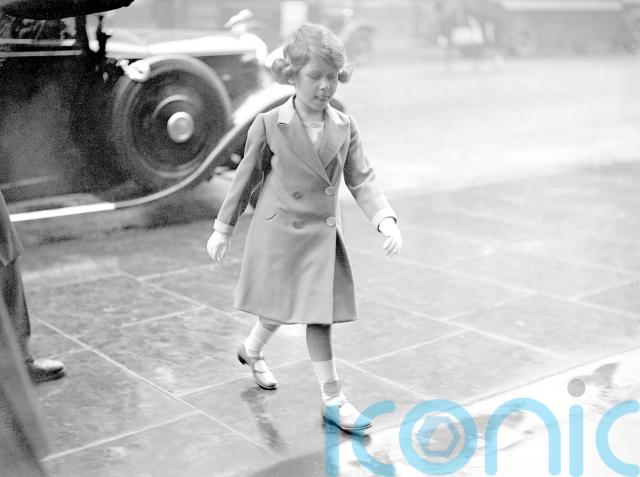
For curator Caroline de Guitaut, exhibition curator and surveyor of the King’s Works of Art, examining the archive was a revelation.
“I was surprised by just how closely involved she was,” she tells the Press Association. “There’s so much evidence of her directing the details – hemlines, embellishment and so on. It was clearly a very symbiotic relationship”.
The public memory of the late Queen is often distilled into a single, instantly recognisable image: a block-colour coat, matching hat, sensible shoes and handbag. That uniform, developed over decades, ensured she could be seen clearly during walkabouts and large public events.
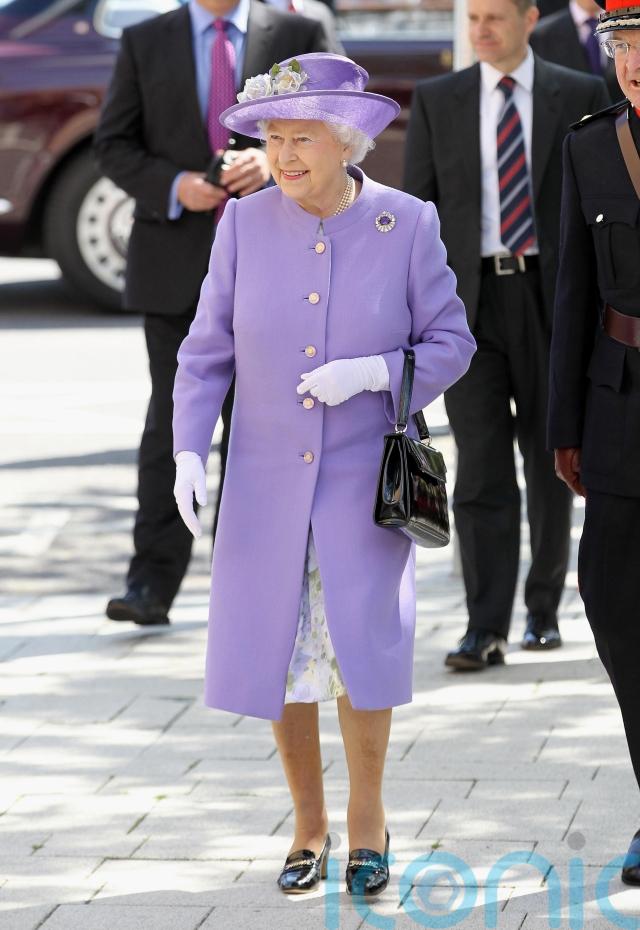
“If you imagine her in your mind’s eye, you can picture exactly what she’d be wearing,” de Guitaut says, “she established a very distinctive style.”
But that signature look was not accidental. In the years following her accession in 1952, the young Queen worked closely with designers including Norman Hartnell, who created her wedding dress in 1947 and her coronation gown in 1953, and Hardy Amies, a key figure in post-war London couture.
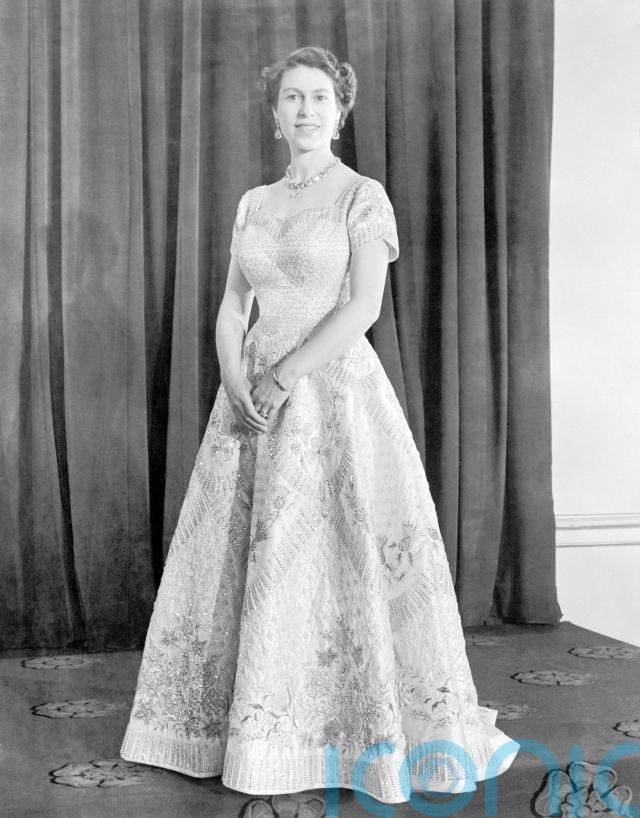
Their designs helped define the stylistic language of her early reign, defined by structured silhouettes, delicate embroidery and luxurious British textiles that projected continuity and optimism in the aftermath of war.
“You can sense her finding her style, establishing her style, distinct from her mother and grandmother,” de Guitaut explains. “At the same time, there are still codes in the way she dressed that hark back to previous generations.”
Rather than arranging the exhibition chronologically, de Guitaut chose a thematic approach, with sections devoted to eveningwear, daywear, tailoring and the creation of tour wardrobes.
This structure demonstrates how clothing functioned differently depending on the occasion – from the grandeur of state banquets to the practicality of country life at Balmoral.
Sketches and presentation albums reveal the depth of the Queen’s involvement. Annotated drawings show her handwritten notes on fabrics and colours for overseas tours. Far from being a passive wearer of couture, she played an active role in shaping garments that would be seen by millions across the world.
Her use of colour – perhaps the most recognisable aspect of her wardrobe in later years – was carefully considered.
“It’s about being visible. It’s about being seen […] Using colour as a messaging thing is definitely something she developed,” de Guitaut explains.
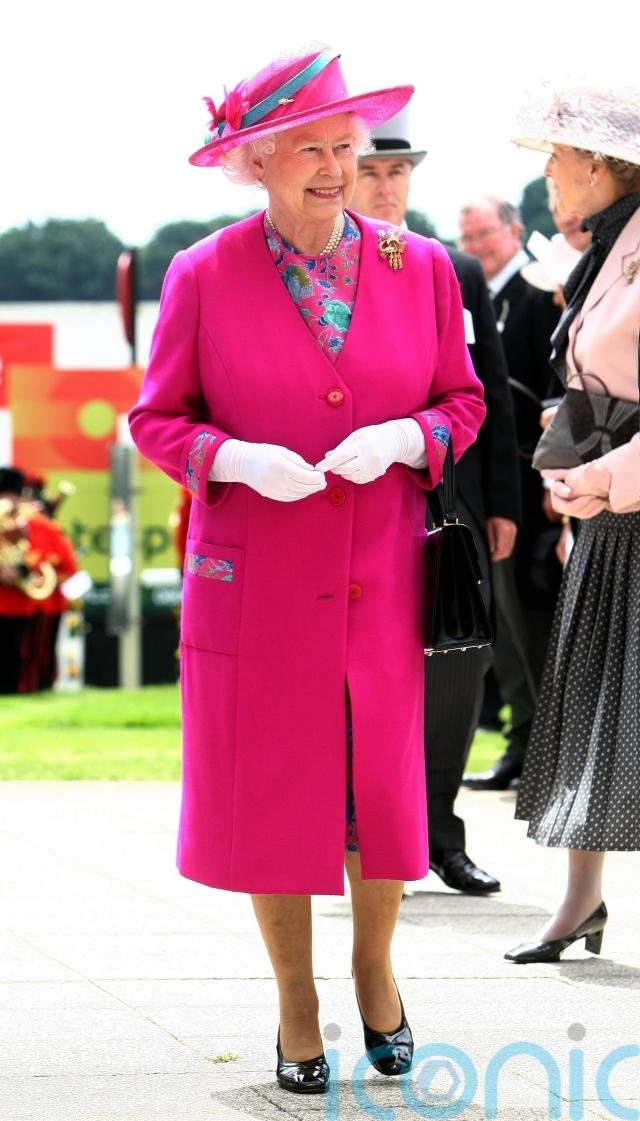
On overseas visits, colours and embroidery often carried subtle diplomatic references.
Yellow was frequently worn in Australia as a nod to the national wattle flower. Embroidered motifs might incorporate emblems of host nations. Such details, while understated, formed part of a broader strategy.
“The attention to detail can’t really be over-emphasised,” says de Guitaut.
The exhibition also highlights the breadth of British talent behind the Queen’s wardrobe. Alongside major names such as Hartnell and Amies, it shines a light on lesser-known figures.
Avis Ford, who worked under Madame Elizabeth Handley-Seymour, created elegant pieces that were sometimes mistakenly attributed to others.

Upon learning that designs were often attributed incorrectly, Buckingham Palace ensured that designers were properly credited in official communications – a move that underscored the monarch’s support for British craftsmanship.
“She obviously cared about that,” says de Guitaut. “It mattered that people knew who had made the clothes.”
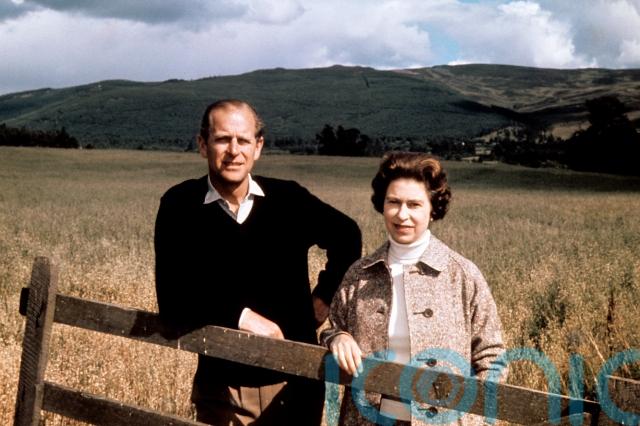
The Queen’s off-duty wardrobe forms another strand of the exhibition. Silk headscarves tied neatly under the chin, tartan skirts, well-worn tweeds and Barbour jackets reflect a different aspect of her life – one rooted in the countryside and family traditions.

“It’s about practicality and comfort, but also about looking stylish,” says de Guitaut, “even if she was walking across a field in wellies, she still looked completely put together.”
Among the exhibition’s most poignant items is the royal christening robe worn by 62 royal babies, including Queen Elizabeth II herself.
Created in 1841 from Spitalfields silk and Honiton lace, it is believed to be going on public display for the first time.
Created 185 years ago, the robe required 100 hours of specialist conservation before it could be exhibited. In 2004, the Queen commissioned an exact replica to preserve the fragile original – a decision that reflected her careful balance between maintaining tradition and safeguarding heritage.
For de Guitaut, the archive as a whole reveals a monarch who understood clothing not merely as adornment, but as part of the machinery of monarchy.
“I wouldn’t say she was the most influential fashion figure of the 20th century, but I would perhaps say she was one of the most.”
Taken together, the garments demonstrate how she used fashion to project stability, support British industry and communicate subtle messages without saying a word.
And as the centenary exhibition makes clear, the image of Queen Elizabeth II – vivid, composed and instantly recognisable – was the product of collaboration and extraordinary attention to detail.

Subscribe or register today to discover more from DonegalLive.ie
Buy the e-paper of the Donegal Democrat, Donegal People's Press, Donegal Post and Inish Times here for instant access to Donegal's premier news titles.
Keep up with the latest news from Donegal with our daily newsletter featuring the most important stories of the day delivered to your inbox every evening at 5pm.

This publication supports the work of the Press Council of Ireland and Office of the Press Ombudsman, and our staff operate within the Code of Practice of the Press Council. You can obtain a copy of the Code, or contact the Council, at www.presscouncil.ie, Lo-call 1800 208 080 or email: info@presscouncil.ie.