
Rest in Peace Dr Courtney
Search


05 Mar 2026

Please allow ads as they help fund our trusted local news content.
Kindly add us to your ad blocker whitelist.
If you want further access to Ireland's best local journalism, consider contributing and/or subscribing to our free daily Newsletter .
Support our mission and join our community now.
To continue reading this article, you can subscribe for as little as €0.50 per week which will also give you access to all of our premium content and archived articles!
Alternatively, you can pay €0.50 per article, capped at €1 per day.
Thank you for supporting Ireland's best local journalism!


Researchers are optimistic after early results showed that experimental drug treatment zorevunersen may significantly reduce the number of seizures in children with a rare and severe form of epilepsy.
The trial, led by University College London and Great Ormond Street Hospital, involved 81 children aged two to 18 with Dravet syndrome – a rare genetic disorder that begins with seizures in the first year of life and evolves into treatment-resistant epilepsy – in the UK and US.
Before treatment, participants experienced an average of 17 seizures per month and during the study they received either a single dose between 10mg and 70mg of zorevunersen – which was administered using a lumbar puncture – or were given doses of between 20mg and 70mg two or three times over a three-month period.
Those given the highest 70mg dose (either in one, two or three doses) saw seizure reductions of 59% to 91% during the first 20 months of follow-up.
Seeing someone you care about have a seizure can be distressing, but recognising when emergency help is needed is crucial. We spoke to Kirsten McHale, epilepsy nurse consultant and head of health services at Young Epilepsy, who suggested some helpful things parents can do if their child has a seizure…
What causes an epileptic seizure?
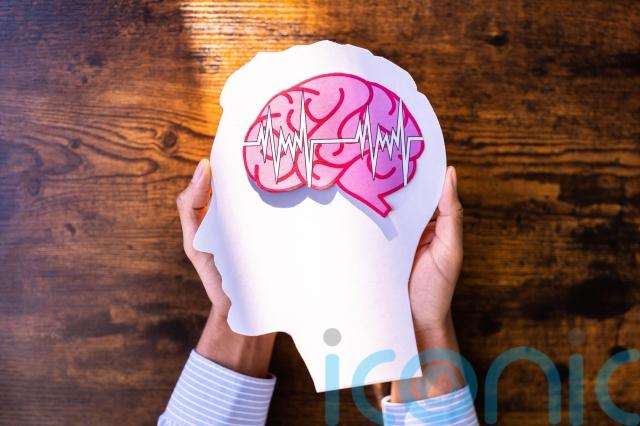
“Our brain communicates with the rest of our body through the use of electricity and an epileptic seizure is what happens to the brain when it has too much electricity in it,” explains McHale.
How a seizure affects you depends on what area of the brain is involved in this intense electrical activity, she explains.
“For example, focal seizures come from one part of your brain only and a common symptom is repetitive behaviours,” explains McHale.
“Whereas, generalised seizures are when you have too much electricity across the whole of your brain. They can cause an individual to lose consciousness, fall to the ground and rhythmically convulse.
“So, when we talk about seizure and seizure management, it’s really important to know what type of seizures somebody has and how to treat them appropriately.”
What are some common signs of epileptic seizures in children for parents to look out for?
Everyone experiences seizures differently, but here are some warning signs to look out for…
Convulsions

“People seem to react to the quickest when someone has a generalised tonic-clonic seizure because they happen so quickly. Individuals tend to fall to the ground and rhythmically convulse,” says McHale.
Biting cheek or tongue
“Sometimes individuals might bite the inside of their cheek or their tongue, so look out for blood or swelling,” says McHale.
Staring into space
“I used to get children referred to me for daydreaming or for zoning out, but many of these young people were actually having absent seizures,” says McHale. “You can have 50-100 absent seizures a day, and even though it doesn’t look like your body’s doing anything, you are effectively unconscious.
“It can be really difficult for them to take on information at school because their brain is switching on and is turning off again.”
Time it
“The first thing you need to do is to time the seizure,” says McHale. “It’s really important to know how long this goes on for. The good rule of thumb is that we would treat a generalised tonic-clonic at five minutes.”
Stay calm and protect them from injury
“Try to stay calm and make the area as safe as possible,” says McHale. “Protect that child from any type of injury and move away any dangerous objects so they can’t hurt themselves.”
Don’t restrain them
“If they’re having an episode where their arms and legs are flaying around, do not try to restrain them, as this can do more harm than good,” says McHale. “Just put something soft under their head and keep reassuring them.”
Take a video
“Videoing the seizure on your mobile phone, if you can, is so helpful,” says McHale. “When parents come in with videos, I can look at a video and go, absolutely that definitely looks like a seizure, let’s do some more investigation.”
Take notes
“Keep detailed notes on the events and when they’ve happened to tell your GP,” recommends McHale. “To get a diagnosis of epilepsy, you must have had two or more unprovoked seizures at least 24 hours apart. So, if parents document what they do see then that really helps us build a case for looking for further investigations.”
Protect their privacy and dignity
“If they have a seizure out in public, try to protect their privacy and dignity,” advises McHale. “Some people can wet or soil themselves, and that can be really embarrassing when they come around from that seizure.”
Put them into the recovery position
“If you can, get them into the recovery position,” recommends McHale.
“A GP will take a detailed history so showing them any videos or notes that you have will be really helpful,” says McHale. “Then they might refer you child onto a specialists, such as an epilepsy consultant or a consultant paediatrician with a epilepsy specialist interest.”
Find resources on the Young Epilepsy website
“As an organisation, we’ve put together a whole series of You Can Help videos to help families learn how to best support their young person,” says McHale. “These are really educational tools.”
When does a seizure become a medical emergency?

“If the seizure last longer than five minutes, or if it’s their first event, or if it’s not usual for your child to have had this event, call 999,” advises McHale. “In addition, if you are worried that the colour has changed in somebody or think their breathing sounds interrupted do call the paramedics. That is what they’re there to do, and they would be more than happy to come out and help and support.”
Visit Young Epilepsy for more information, guidance and resources.

Subscribe or register today to discover more from DonegalLive.ie
Buy the e-paper of the Donegal Democrat, Donegal People's Press, Donegal Post and Inish Times here for instant access to Donegal's premier news titles.
Keep up with the latest news from Donegal with our daily newsletter featuring the most important stories of the day delivered to your inbox every evening at 5pm.

This publication supports the work of the Press Council of Ireland and Office of the Press Ombudsman, and our staff operate within the Code of Practice of the Press Council. You can obtain a copy of the Code, or contact the Council, at www.presscouncil.ie, Lo-call 1800 208 080 or email: info@presscouncil.ie.