Search


04 Mar 2026
Search
04 Mar 2026

Please allow ads as they help fund our trusted local news content.
Kindly add us to your ad blocker whitelist.
If you want further access to Ireland's best local journalism, consider contributing and/or subscribing to our free daily Newsletter .
Support our mission and join our community now.
To continue reading this article, you can subscribe for as little as €0.50 per week which will also give you access to all of our premium content and archived articles!
Alternatively, you can pay €0.50 per article, capped at €1 per day.
Thank you for supporting Ireland's best local journalism!


Gennaro Contaldo might have dedicated his life to Italian food, but admits he “didn’t know” just how much variety there is in his country’s cuisine.
“It’s incredible – I didn’t know myself,” says Contaldo, who grew up on Italy’s Amalfi Coast, before moving to the UK more than 50 years ago.
Contaldo – known for his numerous TV appearances alongside his protégé, Jamie Oliver – cites with glee the fact there are “about 600 [known] shapes of pasta” and “God knows how many other thousands”.
“Each family makes their own versions, their own way,” he adds.
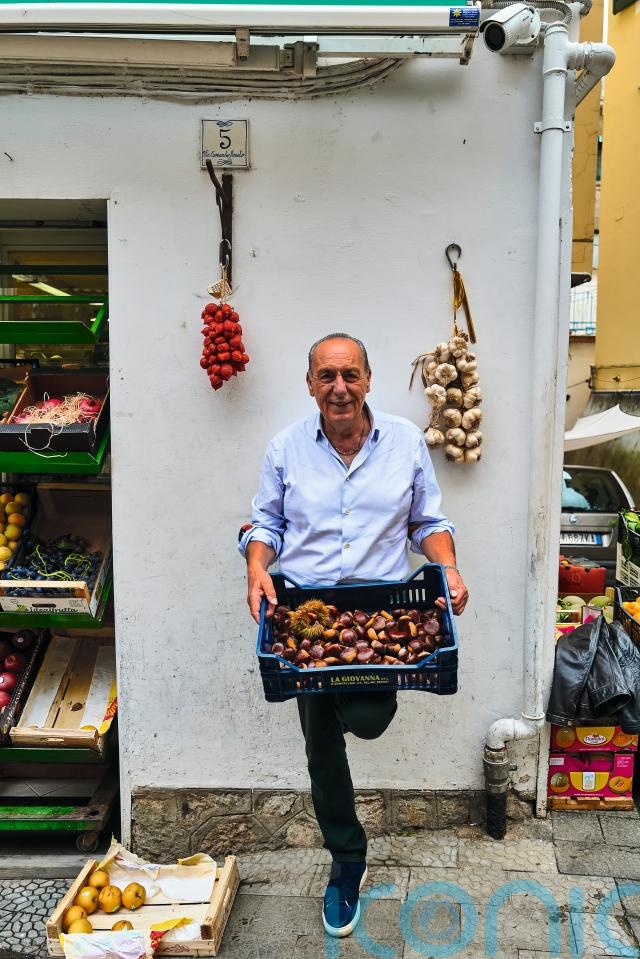
Contaldo explores the varied nature of his home country’s cuisine in his latest cookbook, Hidden Italy, which is split up into four geographical parts: central Italy, the islands, the North and the South.
Ultimately, he wanted to show people that Italian food “is not just carbonara, Bolognese, cacio e pepe”.
Not that it was particularly easy to find some of these recipes.
“Nobody’s writing any books about those original recipes and where they come from, so there was a lot of research, nearly two years of research,” notes Contaldo.
It’s not like these recipes “disappeared”, he says, but “they hide” – families are “still doing it”.
However, 77-year-old Contaldo is keenly aware that the “world is changing”.
“Generations are changing, the world is changing, and we don’t want all these beautiful recipes to get lost. They’re still there – nothing will be lost, but it’s nice to put them in writing.”
Through his research for the book, Contaldo met people still making some of these lesser-known recipes, and stresses that “there is a story for every single food”.
Take the pasticcio di pasta alla ferrarese, a type of pasta pie made from tortiglioni or rigatoni, baked in a mince meat ragut and béchamel sauce, all topped with pastry. Its origins comes from noble banquets during the Renaissance times, with the recipe spreading from Ischia, an island near Naples, to all over the country.
“They share recipes – Italy’s like that,” Contaldo explains. “Italians, they communicate, they speak, and they transfer their love through food.”
With so much history attached to each dish, Contaldo says: “It’s not just spaghetti and a glass of wine. Italy is an emotion.”
Italian households are used to making fresh pasta for their meals – something that is much rarer to see outside of the country.
But Contaldo urges people to give it a try, calling it “so easy”. He adds: “It’s not scary, they should try – it’s cheaper.”
“Ordinary flour, mix with water – it’s so easy. If you do it with eggs, one egg for 100 grams of flour is all you need, then you have almost 200 grams of pasta,” he explains. Once boiled, this gives you enough to “easily feed” two people, “Even three”.
One of the best things about making your own pasta is being able to “make your own shapes”, according to Contaldo, who says he makes “endless shapes”.
You can even use your pasta dough off-cuts to make something called ‘fazzoletti‘, which translates to ‘silk handkerchiefs’ – so nothing is wasted
If you do buy dried pasta (and nothing wrong with that, with Contaldo saying it can be “magnificent”), just watch out for what’s in it.
“You have to be very careful when you buy pasta, because they make pasta all over the world – but they use rubbish flour, and God knows what kind of eggs,” he says, urging people to buy “proper Italian pasta”.
And, of course, make sure it’s cooked al dente– and your stomach might thank you. “You chew it longer when it’s inside your mouth, it tastes better, you digest it better… It’s beautiful.”
Compared to the Italian approach to food, Contaldo says that Brits eat “too quickly”.
“If you go into an Indian restaurant, if something is hot and spicy, you find yourself [saying], ‘Oh it’s spicy, it’s spicy’. You eat faster, you don’t taste anything.
“Italian food is simple – what you see is what you eat. You want to taste the carrots. You want to taste the beans.”
He says of the difference between the two countries: “In England, it’s the culture of drink; in Italy, it’s the culture of food – and wine.”
In Italy, Contaldo says, “The food and wine is balanced. Water is to drink, but wine is to flavour [the food], to help ingest it. Everything else, it’s all [about] the friendships, the philosophy.”
That’s why Contaldo has dedicated his life to keeping Italian culture “alive”, he says – and he’s still constantly surprised by what he learns, even though he hasn’t lived in the country for decades.
“There are many Italian restaurants, especially in London, [where] you find a dish that you haven’t done before that’s a special – and the chef put it on because it’s part of his culture.”
Ultimately, Contaldo says: “I cook from North to South, and I cook from the Amalfi Coast. I want to remember where I came from. I want to know my roots.”

Gennaro’s Hidden Italy by Gennaro Contaldo is published in hardback by Pavilion Books, priced £22. Photography by David Loftus. Available now.

Subscribe or register today to discover more from DonegalLive.ie
Buy the e-paper of the Donegal Democrat, Donegal People's Press, Donegal Post and Inish Times here for instant access to Donegal's premier news titles.
Keep up with the latest news from Donegal with our daily newsletter featuring the most important stories of the day delivered to your inbox every evening at 5pm.

This publication supports the work of the Press Council of Ireland and Office of the Press Ombudsman, and our staff operate within the Code of Practice of the Press Council. You can obtain a copy of the Code, or contact the Council, at www.presscouncil.ie, Lo-call 1800 208 080 or email: info@presscouncil.ie.