Search


27 Feb 2026
Search
27 Feb 2026

Please allow ads as they help fund our trusted local news content.
Kindly add us to your ad blocker whitelist.
If you want further access to Ireland's best local journalism, consider contributing and/or subscribing to our free daily Newsletter .
Support our mission and join our community now.
To continue reading this article, you can subscribe for as little as €0.50 per week which will also give you access to all of our premium content and archived articles!
Alternatively, you can pay €0.50 per article, capped at €1 per day.
Thank you for supporting Ireland's best local journalism!


There are many disadvantages to getting older – and one of them is poor sleep.
The British Geriatrics Society says approximately 40% of people aged 65 and over experience insomnia regularly, with up to 75% suffering from some form of sleep disturbance.
But in the approach to World Sleep Day (March 13), the good news is that although there are many reasons why sleep may deteriorate as you age, it doesn’t have to be that way.
“A lot of the challenge we have for older adults is they’re being taught this is normal – ‘Oh, it’s normal that you shouldn’t sleep well, just as it’s normal you should have aches and pains’. That’s not true. The vulnerability is there, but it’s not a fait accompli. It doesn’t mean that every older adult shouldn’t have good sleep.”
And Lisa Artis, deputy CEO of The Sleep Charity, adds: “It’s important to stress that poor sleep is not an inevitable part of ageing. While sleep patterns change, persistent sleep difficulties shouldn’t simply be accepted as ‘just getting older.’”
Increasing vulnerabilities
Both experts agree that certain vulnerabilities make older people more susceptible to sleep problems, and Ellis explains: “Once we hit our 60s, we’ve got a lot of things that increase vulnerability – illnesses, medications, multiple losses, those things can create more vulnerability to sleep problems.
“Similarly, we tend to put on a bit of weight, and that increases vulnerability to breathing problems at night. And menopause is not great for sleep at all, because you’re losing oestrogen and progesterone, and they help keep women’s sleep systems in terms of breathing at night quite open.”
Decreased melatonin
“That’s actually the beginning of the time our sleep system starts to degenerate,” he says. “So year-on-year, we start producing less melatonin naturally, and we start changing the architecture of our sleep.”
This means we start to lose some of the deep, slow-wave sleep needed for physical functioning from the age of about 25, he explains. “So by the time somebody’s reached their 60s, they’re a lot less structured with their internal sleep mechanisms than they were in their 20s. There’s a gradual decline.”
And Artis says: “Sleep naturally changes as we age – particularly from our 50s onwards. While older adults still need around seven to nine hours of sleep per night, the structure and quality can shift quite noticeably.”
Shift in circadian rhythm
“Older adults often feel sleepy earlier in the evening and wake earlier in the morning,” she says. “This is sometimes referred to as a ‘phase advance’ in sleep timing.”
More easily disturbed
The decrease in deep, slow-wave sleep in older people means it’s easier for their lighter sleep to be disturbed, explains Artis.
“As we get older, we tend to spend less time in deep, restorative sleep and more time in lighter sleep stages,” she says. “This means we’re more easily disturbed by noise, light or physical discomfort, and many people also find they wake more frequently during the night and may struggle to get back to sleep.”
Lifestyle changes after retirement
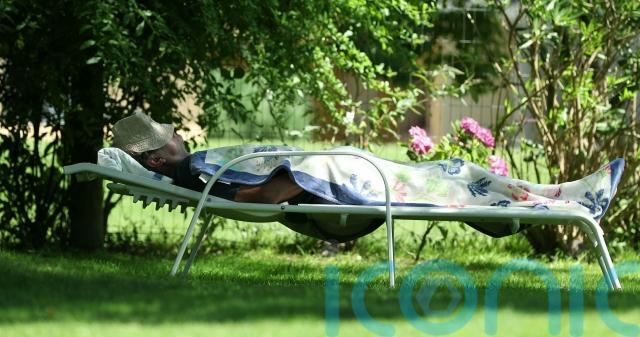
The rhythm of life tends to be a lot more structured for working people than retirees, Ellis points out. People who work will often have fairly regular times when they get up, eat, exercise, socialise, etc, whereas in retirement there’s less need for such structure, and this can affect sleep.
“Losing those patterns can make the system more vulnerable to being more flexible about getting bouts of sleep here and there, rather than in one big chunk,” he says.
And Artis adds: “Retired people may nap more during the day, be less physically active or spend less time exposed to natural daylight – all of which can influence sleep quality.”
Erratic sleep may not be good
Older people may think that as long as they get the right amount of sleep over a 24-hour period, it doesn’t matter when they get it. However, Ellis warns: “We’re starting to see research suggesting that keeping the same timing in sleep is actually as important, if not more important, than how much sleep we’re getting.
“We start to look at the regularity of sleep, as opposed to how much of it, if somebody is erratic. But unfortunately, most of the research has been done on younger adults or adolescents in this area, so we don’t fully understand yet whether the same thing applies with older adults and the regularity of their sleep.”
How is erratic sleep affecting you?
“If it is, then this is something you should be talking to your GP about.”
Ellis says these days a GP won’t automatically prescribe sleeping pills for a sleep problem – for insomnia, for example, he says cognitive behavioural therapy (CBT), which works on dysfunctional beliefs, attitudes and habits that may affect sleep, may be recommended.
And if someone’s sleep is being disturbed because of sleep apnoea (when breathing stops and starts while sleeping), continuous positive airway pressure (CPAP), which opens the airway at night, may be suggested, he says.
“There are lots of therapies out there, and they’re not all reliant on medication,” stresses Ellis. “It’s working out what the problem might be, and then tailoring that to the solution to try to maintain a better sleep health framework.”
And Artis points out: “While it’s common for sleep to feel lighter or more fragmented as we age, ongoing sleep difficulties shouldn’t be dismissed as simply part of getting older.
“Small adjustments to routine, light exposure and bedroom environment can make a significant difference. And importantly, support is available – good sleep remains vital for physical health, cognitive function and emotional wellbeing at every stage of life.”

Subscribe or register today to discover more from DonegalLive.ie
Buy the e-paper of the Donegal Democrat, Donegal People's Press, Donegal Post and Inish Times here for instant access to Donegal's premier news titles.
Keep up with the latest news from Donegal with our daily newsletter featuring the most important stories of the day delivered to your inbox every evening at 5pm.

This publication supports the work of the Press Council of Ireland and Office of the Press Ombudsman, and our staff operate within the Code of Practice of the Press Council. You can obtain a copy of the Code, or contact the Council, at www.presscouncil.ie, Lo-call 1800 208 080 or email: info@presscouncil.ie.