Search


17 Mar 2026
Search
17 Mar 2026

Please allow ads as they help fund our trusted local news content.
Kindly add us to your ad blocker whitelist.
If you want further access to Ireland's best local journalism, consider contributing and/or subscribing to our free daily Newsletter .
Support our mission and join our community now.
To continue reading this article, you can subscribe for as little as €0.50 per week which will also give you access to all of our premium content and archived articles!
Alternatively, you can pay €0.50 per article, capped at €1 per day.
Thank you for supporting Ireland's best local journalism!


They are among the most beautiful of climbing plants, providing a wealth of colour up trellises, scrambling through shrubs to offer extra blooms and bringing containers to life.
With good choices and sensible pruning, you can enjoy clematis all year round – but when it comes to pruning you need to know your groups.
Clematis types come in pruning groups one, two and three and each needs different treatment, says Guy Barter, RHS chief horticultural advisor.
Cut at the wrong time and you will lose flowers, don’t cut enough and you could end up with a tangled mess which has long outgrown its space and find flowers only at the ends of the plants, not further down the stem.
“They are not difficult, but some of them are relatively short-lived, and if you don’t prune them they tend to weaken and gradually fade away,” says Barter.
Here, he offers a beginner’s guide to pruning.
Pruning Group One
“Group one are easy. They are hardly pruned at all. Some are really vigorous, like Clematis montana, and you can cut them back after flowering to keep them tidy until they start again,” Barter says.
C. armandii, an evergreen type, is a great early-flowering Group one choice thanks to its rich, sweet winter scent, perfect for planting close to the house or a window, so you can enjoy the fragrance as you step outside.
“Others are not quite so vigorous, like Clematis cirrhosa, the winter-flowering type. They can do well and a little pruning to reduce their size can be done after flowering. Don’t prune them before flowering or you’ll cut off all the flowers.”
Remove dead or damaged stems after flowering, in mid to late spring, to encourage new growth.
Flowering times: Mid-winter to early spring
Top tip: “Train them to a certain degree of horizontal growth to keep them low down, keep them bushy and prevent them going straight up into the sky. But they’ll soon need cutting back so they remain within reasonable limits. Most of these ones are usually grown on quite a big wall or fence, or up a tree, and they look after themselves pretty much,” he says.
Group one types: Clematis montana, Clematis armandii, C. macropetala, C. cirrhosa (evergreen), C. alpina
Pruning Group Two
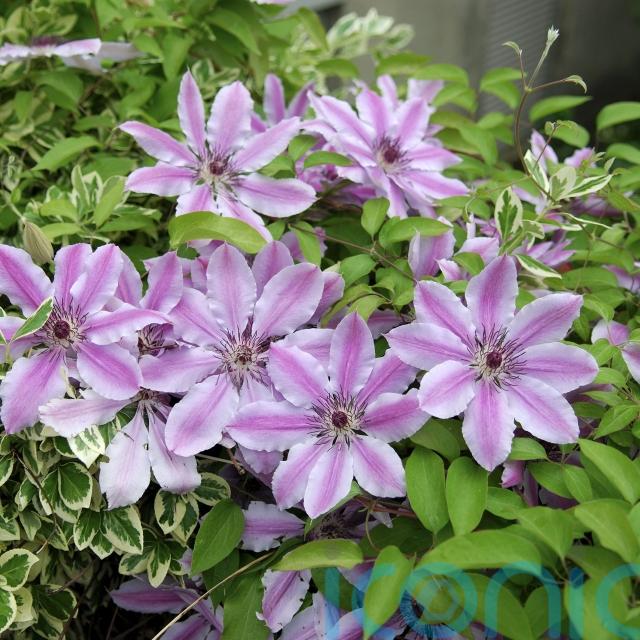
These are large-flowered types that you can typically pick up cheaply in supermarkets and nurseries and come in an array of colours.
They have an early flush of flowers around early summer – May to June – on shoots produced the previous summer and then a second flush in August on the new shoots, Barter explains.
With established plants, in late winter, remove dead or weak stems before growth begins and prune back the old stems to a strong pair of healthy buds, pruning just above them.
If you have a new plant that only has one stem, cut it back hard, to about a foot above soil level, to encourage multiple stems to form which will improve the plant’s framework and encourage it to branch out.
“The second pruning (after the first flush of flowers in early summer) is a light pruning. You are not trying to reduce the size of the plant, you are just trying to elicit a bit of extra growth,” he explains.
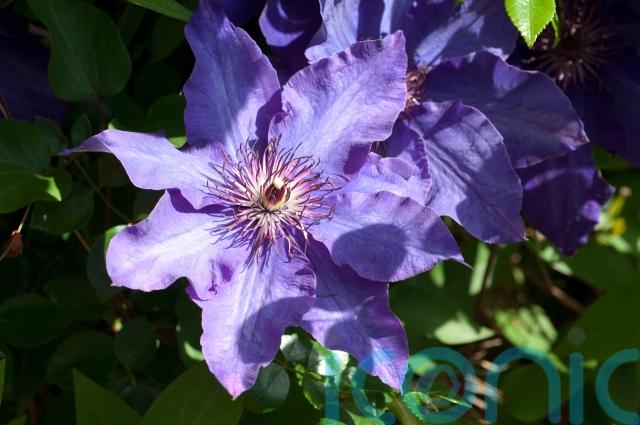
Flowering times: Early summer and again in late summer.
Top tip: Try to prune this group before new growth begins, pruning them back in late winter to a pair of healthy leaf buds. On the second pruning, a good rule of thumb is to cut out a third to a pair of healthy buds to try to induce a number of shoots to regrow.
It’s important to prune young clematis which you only planted last year or you’ll find that the flowers will just appear at the very top of the stem.
Group two types: C. ‘Nelly Moser’, ‘The President’, ‘Lasurstern’, ‘Fireworks’ and many more.
Pruning Group Three
Flowering in late summer or early autumn on growth made that season, this is an easy pruning group, says Barter.
Mainly comprising large flowered hybrids, they do also have some varieties with smaller blooms such as viticella types.
Cut all the stems back hard to the lowest strong pair of buds, around 30cm (12in) above soil level.
“Cut them back at this time of year, but if you miss the growth spurt, as I often do, it doesn’t matter. Cut them back anyway, ideally before they start shooting out, because they grow amazingly fast once March comes around.”
Flowering times: Late summer and early autumn.
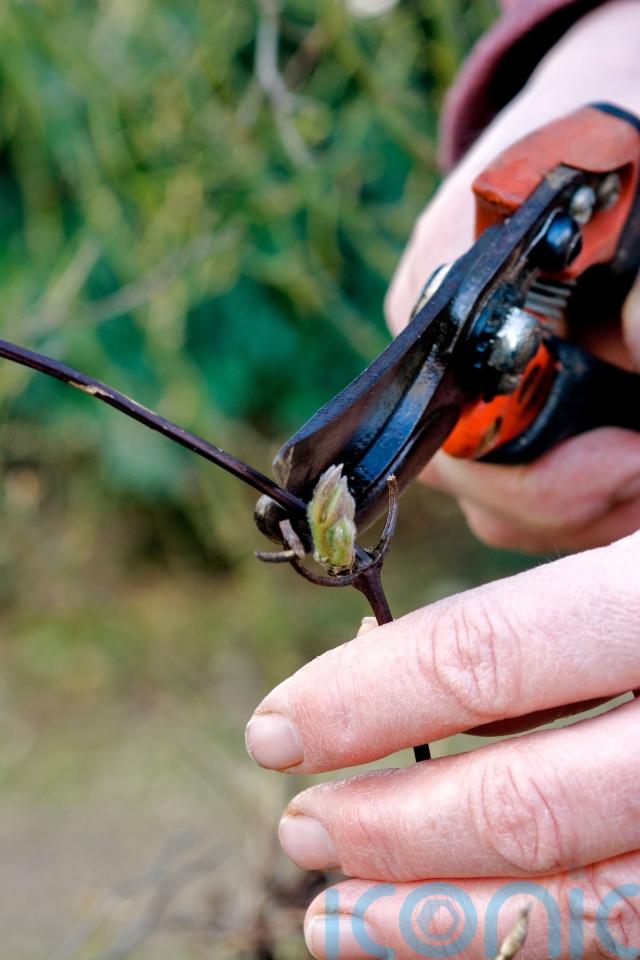
Top tip: Always cut above the buds at an angle so that rainwater is directed away from them.
Group three types: C. viticella, ‘Perle d’Azur’, C. ‘Polish Spirit’, ‘Ville de Lyon’, C. jackmanii

Subscribe or register today to discover more from DonegalLive.ie
Buy the e-paper of the Donegal Democrat, Donegal People's Press, Donegal Post and Inish Times here for instant access to Donegal's premier news titles.
Keep up with the latest news from Donegal with our daily newsletter featuring the most important stories of the day delivered to your inbox every evening at 5pm.

This publication supports the work of the Press Council of Ireland and Office of the Press Ombudsman, and our staff operate within the Code of Practice of the Press Council. You can obtain a copy of the Code, or contact the Council, at www.presscouncil.ie, Lo-call 1800 208 080 or email: info@presscouncil.ie.