

OPINION (AN COLÚN): It would be better if we didn't fall back

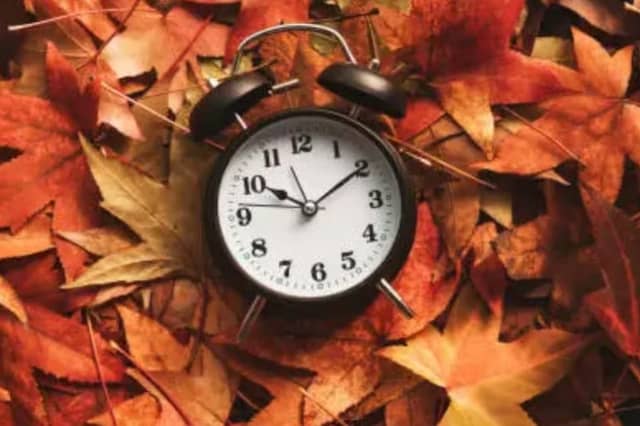

‘Willet argued that the sun was shining for hours while people were asleep’
THE annual ending of Daylight Saving Time (DST) is something which I wish would never happen, as the hour lost in the evening seems to make the bleak prospect of our light-contracting evenings even bleaker. For many years it's been debated whether we should abolish this ending of DST or not, but nothing ever comes of it and we trundle endlessly along in the company of this most unwelcome status quo.
In March 2019 the European Parliament voted in favour of ending DST in 2021. However, both the Council and the European Parliament have to agree in order to pass the legislation needed to end the seasonal time changes. It doesn’t look as if this is going to happen any time soon. (The European Parliament is composed of members directly elected by EU citizens. Its job is to represent those citizens, approve the EU budget, and pass laws jointly with the Council of the European Union. The European Council is composed of the heads of state or government of the EU member states, alongside its own President and the President of the European Commission. The Council’s job is to set the general political direction and priorities of the EU.)
Some studies have shown that permanent DST would help cut down on energy costs. Because the sun would be setting one hour later in the evenings, it would mean that the need to use electricity for household lighting and appliances would be reduced. Opponents of permanent DST argue however that darker mornings would mean greater household energy demands.
Proponents of permanent DST point out that much crime is committed during the hours of darkness. If we were to move sunlight into the evening hours it would have a greater impact on crime prevention than it does in the morning. Crime rates are significantly lower in the morning-to-afternoon hours, even when those morning hours occur before sunrise, when it's still dark.
Many people want us to remain on Greenwich Mean Time all year. If we stayed on Greenwich Mean Time all year, we would never put the clocks forward in March. Winter evenings would remain exactly as dark and early as they are now (getting dark between 4 and 5pm). This would mean that Summer evenings would lose that lovely extra hour of daylight, meaning the sun would set an hour earlier in July than it does under the current system. This is a very bleak prospect and to my mind it beggars belief that people could want Greenwich Mean Time all year round.
There are many of us who would love to see Permanent Daylight Saving Time all year round.
Permanent daylight saving time (DST) all year round in Ireland means staying on Irish Standard Time continuously without turning the clocks back in October. [Irish Standard Time means that the Republic of Ireland is 1 hour ahead of Coordinated Universal Time (UTC) and Greenwich Mean Time (GMT)]. Permanent DST would mean brighter evenings in Winter. This would of course mean darker Mornings in Winter, but in a toss up between the two I think it would be better to opt for brighter evenings rather than brighter mornings. (Ireland adopted permanent DST between 1969 and 1971. This was a regrettably short-lived period of enlightenment (!) and when Britain reverted to the fall back method in 1969, and some workers complained about the dark mornings, Ireland followed suit. Former Taoiseach Garret Fitzgerald was one of those who argued against reverting to the fall back method. He appealed to our spirit of independence, urging us not to follow the English! Unfortunately, his argument fell on largely deaf ears).
While permanent DST is popular among large sections of the general public (56% in one poll), the science community is often against it. Medical organizations and sleep researchers strongly oppose permanent DST, arguing that it does not align with our natural circadian rhythms, and therefore is potentially negative for our health. They argue that our sleep schedules are guided by the Earth's light and dark cycle and that if we were to shift to consistently darker mornings, our sleep schedules would get thrown severely out of sync.
Another positive of permanent DST is the additional brightness at the end of the day would mean more outdoor activity for adults and children. A recent study has suggested that children are less active when the clocks go back as they are unable to play outside after school. It's not only children either - many people struggle to find motivation to get outdoors when the evenings get darker.
For some the change in seasons and light is a big issue. SAD (Seasonal Affective Disorder) can cause serious depression and is seen more often in women than men. Estimates suggest that SAD affects roughly 1 in 15 people (about 5% to 7% of the population) in Ireland, though broader mild "winter blues" impact a much larger share. Symptoms of SAD include loss of interest in regular activities or social withdrawal.
Daylight Saving Time was first introduced in Germany in 1916 during World War I as an energy saving measure. It was also introduced in Britain and Ireland the same year.
The Englishman William Willet led the first major, organized campaign to make DST law. Born in Surrey in 1856, Willet argued that the sun was shining for hours while people were asleep, leaving a shorter stretch of evening daylight for outdoor activity. He argued that brighter evenings would encourage recreation outdoors.