Gardaí are appealing for witnesses following a road traffic collision
Search


07 Mar 2026

Please allow ads as they help fund our trusted local news content.
Kindly add us to your ad blocker whitelist.
If you want further access to Ireland's best local journalism, consider contributing and/or subscribing to our free daily Newsletter .
Support our mission and join our community now.
To continue reading this article, you can subscribe for as little as €0.50 per week which will also give you access to all of our premium content and archived articles!
Alternatively, you can pay €0.50 per article, capped at €1 per day.
Thank you for supporting Ireland's best local journalism!


As January nears a close, many of us may have noticed the familiar themes of a new year playing out over the last few weeks, chasing away memories of mince pies and puddings. Shop windows, magazine covers, and social media channels as usual began in earnest, advertising reminders of ‘a new year’ and ‘fresh starts.’
Interestingly, despite the idea of ‘new year resolutions’ having come to be familiar and often expected in January, I noticed many people turning away from this idea this year. It occurred to me that there may be a turn in the tide when it comes to new year wellbeing.
Beginning where you are
January is often a month where the idea of starting anew and forming new habits feels timely, as we leave one year behind and venture into another. Although there can be much merit in this ritual, and I know many who benefit from this process, it is fair to say that the prospect of new year resolutions fills many others with dread.
I noticed this year, more so than previous years, a sense of resolution fatigue, with many citing tiredness with the anticlimax that resolutions can often bring. I listened to people talking instead about setting intentions, or simply allowing a new year to evolve without making any deliberate intentions or resolutions at all.
Beginning with an intention, wish, or commitment (whatever word feels right) can help us to start the year from where we are, rather than forcing us to stretch towards an ambitious goal that feels out of reach. As well as supporting us to leave unhelpful habits and demands behind us, this shift in perspective can help us to feel a little more connected to our wellbeing routines.
Beginning with what you don’t want
Another simple but effective wellbeing practice can be to begin with what we don’t want, rather than putting ourselves under pressure to achieve what we do want. The idea of beginning with what we don’t want may simply mean not bringing what isn’t serving us into this new chapter.
The rejection of resolutions is one way of saying what we don’t want. Perhaps this year we don’t want pressure or disappointment. Instead we may simply just arrive into a new year and meet it where we are. In this way, sometimes ripping up the page can feel just as effective as filling it with new words.
For me, I found myself reflecting as the year closed on the fast pace at which I was moving – rushing to every destination even if time was on my side, or worrying about things that might never happen, letting my mind run away with me.
While it can be difficult to write down or even imagine new or improved habits or activities, recognising the things that brought us unnecessary stress or anxiety last year, habits or activities that no longer serve us and perhaps never served us in the first place, can be a more helpful place to begin.
Beginning again with today
In the spirit of connecting with what is already in front of us rather than feeling pressurised to create something new, returning to basic and simple mindfulness practices and principles can help to enrich our new ‘new year’ approach.
I found myself revisiting some simple mindfulness ideas as the new year began, a practice of ‘returning’ that is core to the practice of mindfulness. Even if we feel we may already know about a practice like this, we can always benefit from coming back to what we think we know. Often we can be pleasantly surprised to find that we have forgotten it, or we can see it through new eyes as we meet it again.
Mindfulness reminds us to begin with today, that yesterday is gone, and tomorrow hasn’t happened yet, and so today is the best place to begin.
With storms, floods, and unexpected events still occurring widely across the country, it can feel difficult to forget the past or look to the future, however taking a moment’s pause as the tea brews or the day ends can support us to begin today, and to begin again tomorrow.
A final thought...
The prospect of a new year arriving, longer evenings, and more time to spend on things we enjoy can inspire a desire to kick start a new year and set some resolutions. For some however this can feel like a stretch too far. Beginning instead from where we are, considering the things that no longer serve us, and returning to today as best we can, can support us to begin another new chapter with wellbeing in mind.
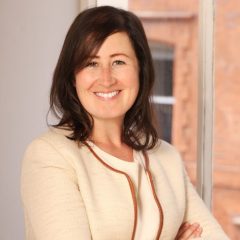
Emma Coonan (pictured above) is an Accredited Psychotherapist with IAHIP and ICP, Lectures in Psychotherapy, and is a qualified Adult Education Trainer. After leaving Coláiste Phobal Roscrea, Emma studied English and Media in Maynooth University, before combining her Psychotherapy training with experience in the corporate world. Emma focuses on applying Psychotherapy practices for everyday living, through developing resilience, stress response, and mindfulness practice.

Subscribe or register today to discover more from DonegalLive.ie
Buy the e-paper of the Donegal Democrat, Donegal People's Press, Donegal Post and Inish Times here for instant access to Donegal's premier news titles.
Keep up with the latest news from Donegal with our daily newsletter featuring the most important stories of the day delivered to your inbox every evening at 5pm.

This publication supports the work of the Press Council of Ireland and Office of the Press Ombudsman, and our staff operate within the Code of Practice of the Press Council. You can obtain a copy of the Code, or contact the Council, at www.presscouncil.ie, Lo-call 1800 208 080 or email: info@presscouncil.ie.