Search


31 Mar 2026
Search
31 Mar 2026

Please allow ads as they help fund our trusted local news content.
Kindly add us to your ad blocker whitelist.
If you want further access to Ireland's best local journalism, consider contributing and/or subscribing to our free daily Newsletter .
Support our mission and join our community now.
To continue reading this article, you can subscribe for as little as €0.50 per week which will also give you access to all of our premium content and archived articles!
Alternatively, you can pay €0.50 per article, capped at €1 per day.
Thank you for supporting Ireland's best local journalism!


Many of us are aware of mammograms and smear tests, but have you ever heard of a faecal immunochemical test (FIT), which is used to screen for bowel cancer?
Bowel cancer screening is a relatively new addition to the UK’s national cancer screening programme list, having been introduced in England in 2006, compared to breast screening which has been established since 1988. Therefore, screening for bowel cancer often flies under the radar.
Ahead of Bowel Cancer Awareness Month in April, Bowel Cancer UK examined the latest screening data from NHS integrated care boards (ICBs) and found that the national uptake average for the bowel screening programme in England was 71%, meaning 29% of people do not complete their tests.
NHS Devon ICB had the highest screening uptake at 76%, while NHS North West London ICB has the lowest uptake at 56%.
But what is actually involved in bowel cancer screening – and who is eligible for it? We spoke to Genevieve Edwards, chief executive at Bowel Cancer UK, to find out…
How common is bowel cancer?
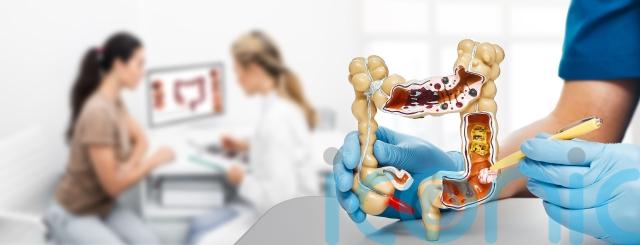
“Bowel cancer is the fourth most common cancer in the UK and is also the second biggest cancer killer,” says Edwards. “This is really concerning because it shouldn’t be, because bowel cancer is treatable, preventable and curable.”
What is involved in the bowel cancer screening programme and who is invited to take part?
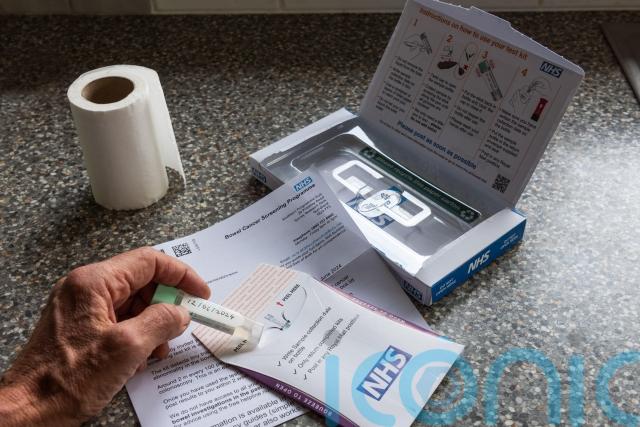
Bowel cancer screening uses a test called a faecal immunochemical test (FIT) which looks for blood in a sample of your poo, according to the NHS website.
“It’s automatically sent to you in the post every two years from the age of 50 until 74 if you live in England, Scotland, Wales, but the age is slightly higher in Northern Ireland [aged 60] at the moment,” says Edwards. “It used to start at 60 across the whole of the UK, but we campaigned to bring the age down to 50 because the evidence was there to show that it would be beneficial from that age.
“After 74, you won’t be sent a test kit automatically, but you can request one every two years if you’d like to continue with the screening.”
How do you do a faecal immunochemical test?
“It’s a really easy test to do and has very clear instructions on it,” says Edwards. “In the test kit there’s a little tube with a screw cap and a little stick attached to it with a scoop on the end.
“What you need to do is catch your poo [before it hits the toilet water] either in a container or with some loo roll, and then you have to scoop a little bit of that and coat the bottom of the stick, and screw it back in again, put it in the box, and then stick it in the post.”
What happens if you meet the criteria but aren’t sent a test?
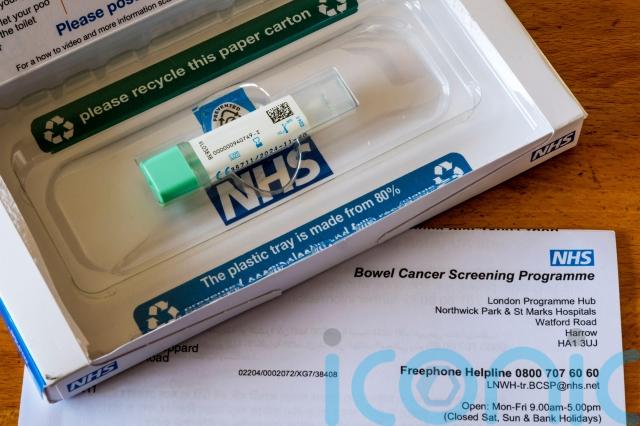
“If you haven’t received one and think you are due a screening test, call your local screening hub,” advises Edwards. “If you can, find the number online and request one.”
Can you get a FIT kit if you are under the age of 50?
“If anybody is concerned about their symptoms (such as blood in the poo, bleeding from the bottom or changes in bowel habits), regardless of their age, they should go to their GP and request a FIT kit,” recommends Edwards.
How long do you have to wait to find out your results?
“The results tend to come back really quickly, usually within two weeks,” says Edwards.
You should get a letter telling you the results, but if do not get your results within two weeks, you can call the free bowel cancer screening helpline on 0800 707 6060.
“The results will either say nothing to report and we’ll see you again in two years’ time, or will say we’d like to refer you on for further investigation,” says Edwards.
If blood is found in your sample, you’ll usually need to have a colonoscopy.
“A colonoscopy can pick up on any cancer in the bowel and can also identify any little polyps growing that might turn cancerous in the future that need to be removed,” says Edwards. “If cancer is found, a patient would then be referred into the diagnostic pathway and treatment would be recommended.”
What do you think puts people off taking part in bowel cancer screening?
“Some people can find bowel screening a little bit daunting because it involves poo, and many of us tend to not like talking about poo because it can feel embarrassing,” recognises Edwards. “However, the evidence shows that when people have done their first test, they usually will do every subsequent test because they realise how simple it is.”
In addition, it’s different to other cancer screening programmes because it relies on people doing it at home.
“With other screening programs, you have an appointment to go to, but because bowel screening involves an at-home test, many people have very good intentions to do it, but it often gets put off or completely forgotten about,” says Edwards.
What are the benefits of taking part in bowel cancer screening?

“If bowel cancer is diagnosed at the earliest stage, stage one, more than nine in 10 people will survive. However, if it’s diagnosed at the latest stage, then that plummets to less than one in 10,” notes Edwards.
“Therefore, the bowel cancer screening programme is very important because it picks up those tiny bits of blood that might indicate bowel cancer before people experience any noticeable symptoms. If cancer is spotted early, it increases your chances of survival significantly.”

Subscribe or register today to discover more from DonegalLive.ie
Buy the e-paper of the Donegal Democrat, Donegal People's Press, Donegal Post and Inish Times here for instant access to Donegal's premier news titles.
Keep up with the latest news from Donegal with our daily newsletter featuring the most important stories of the day delivered to your inbox every evening at 5pm.

This publication supports the work of the Press Council of Ireland and Office of the Press Ombudsman, and our staff operate within the Code of Practice of the Press Council. You can obtain a copy of the Code, or contact the Council, at www.presscouncil.ie, Lo-call 1800 208 080 or email: info@presscouncil.ie.