
Man flooded a cell in Tullamore courthouse because voice told him walls were covered in excrement
Search


07 Mar 2026

Please allow ads as they help fund our trusted local news content.
Kindly add us to your ad blocker whitelist.
If you want further access to Ireland's best local journalism, consider contributing and/or subscribing to our free daily Newsletter .
Support our mission and join our community now.
To continue reading this article, you can subscribe for as little as €0.50 per week which will also give you access to all of our premium content and archived articles!
Alternatively, you can pay €0.50 per article, capped at €1 per day.
Thank you for supporting Ireland's best local journalism!


As the year draws to a close, many of us naturally take time to reflect on the months gone by.
Once the excitement of Christmas fades, some people might start to experience New Year anxiety and fixate on all their unmet goals.
We spoke with Dr Ravi Gill, a health psychologist and founder of Smart Mind Health, who explained how this anxiety can show up and impact our daily life, and also shared some practical tips on how to manage it.

What are some signs of New Year anxiety?
“A common way to recognise anxiety would be look at the thoughts that come up and their frequency,” says Gill. “So, think about how frequently you are thinking about the things that you haven’t done.
“If you walk past a bookshelf and think, ‘oh, God, I really should have put that picture up’, that’s okay in that moment because something has triggered it. But if we constantly find ourselves going back into that space where negative thoughts are firing and get stuck into that negative thought loop, that’s probably anxiety.”
Anxiety can often cloud your judgement.
“If you suffer with anxiety, you might not able to factor in that maybe the goals were unrealistic, or maybe the year was just genuinely hard,” reflects Gill. “You might struggle to see any good points as there is an intense focus on the negatives.”
This can lead to cumulative stress.
“For a short period, stress can be quite good because it helps us to feel quite motivated and we’re able to get things done,” says Gill. “However, if you let that stress build up for long periods of time, it can actually have quite a negative impact on your health,” highlights Gill.
What factors can trigger this anxiety?

“When you’re out socially with friends or colleagues this time of year, many people start talking about New Year’s resolutions which can naturally bring you into that space of reflection,” says Gill. “Maybe you said to yourself at the beginning of the year that I’m going to do something different, or I’m not going to fall into the same patterns of behaviour that I have previously engaged in, and you feel like you haven’t achieved this.
“This can bring up a lot of anxiety and can leave you feeling quite disheartened if you haven’t made the progress that you thought you would.”
The pressure and unrealistic expectations of self-improvement can force people into a negative spiral of comparison.
“People are constantly sharing pictures about of their achievements online and it’s easy to compare yourself to that,” says Gill. “Lots of people get trapped in this negative cycle and the idea that they are running out of time.”
The lull between Christmas and New Year, and all the disrupted routines that come with the festive period, can also exacerbate these feelings.
“During this lull when you haven’t got things to do, you might look around your house and think, ‘oh there’s that DIY project that I didn’t quite get finished’, and get into a negative head space,” says Gill.
Furthermore, external seasonal factors can also set a dreary, negative tone.

“During winter, the days get darker and shorter, and the lack of exposure to natural sunlight significantly impacts our serotonin levels,” explains Gill. “Serotonin is linked to our sleep-wake cycle, so we naturally just feel in this slow, sluggish state and that motivation to do things can disappear.”
Here are some tips on how to manage this anxiety…
Reframe your mindset
“Take the opportunity to reframe some of these negative thoughts, and to separate your worth from the outcomes,” recommends Gill. “Name something that was an achievement this year that perhaps you’ve been unable to recognise.”
Get into a good routine
“Anxiety often comes from the fear of the unknown and is the anticipation of something going wrong and something bad happening. So, if we put structure and routine in place, it creates a space for psychological safety where we know what’s coming next,” explains Gill. “Therefore, our nervous system can relax, and then we don’t have that anxiety build-up.”
Prioritise sleep
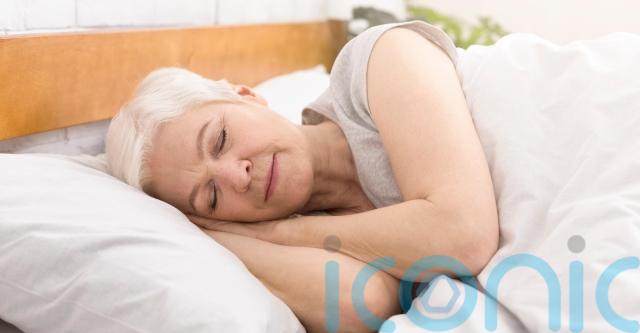
“Sleep is one of those really positive anchors that we all need in order for a general reset of our wellbeing,” says Gill. “If we’re able to get into a really good sleep routine, that gives us the best possible chance to be able to put other things in place to manage the anxiety.”
Stop comparing yourself to others
“Remember that people only tend to share the good stuff on social media and that there‘s a lot that they edit out,“ says Gill. “Don’t take everything you see at face value.”
Try some deep breathing

“When we experience an anxiety attack, our anxious thoughts often take over and it can affect our ability to be able to breathe correctly,” says Gill. “Try and catch your breath and regulate it by breathing slowly and deeply.”
Set monthly goals rather than New Year’s resolutions
“Rather than setting a New Year’s resolution for the entire year, I think we should break them down by month,” recommends Gill. “If we chunk our overall goal into really small, manageable steps, that will make the biggest difference.”

Subscribe or register today to discover more from DonegalLive.ie
Buy the e-paper of the Donegal Democrat, Donegal People's Press, Donegal Post and Inish Times here for instant access to Donegal's premier news titles.
Keep up with the latest news from Donegal with our daily newsletter featuring the most important stories of the day delivered to your inbox every evening at 5pm.

This publication supports the work of the Press Council of Ireland and Office of the Press Ombudsman, and our staff operate within the Code of Practice of the Press Council. You can obtain a copy of the Code, or contact the Council, at www.presscouncil.ie, Lo-call 1800 208 080 or email: info@presscouncil.ie.