Gardaí are appealing for witnesses following a road traffic collision
Search


07 Mar 2026

Please allow ads as they help fund our trusted local news content.
Kindly add us to your ad blocker whitelist.
If you want further access to Ireland's best local journalism, consider contributing and/or subscribing to our free daily Newsletter .
Support our mission and join our community now.
To continue reading this article, you can subscribe for as little as €0.50 per week which will also give you access to all of our premium content and archived articles!
Alternatively, you can pay €0.50 per article, capped at €1 per day.
Thank you for supporting Ireland's best local journalism!


As next year’s trends are leaning towards more natural gardens, award-winning designer Sarah Eberle is creating a Chelsea garden to celebrate the countryside.
‘On the Edge’, which marks the centenary of the Campaign To Protect Rural England in 2026, celebrates the countryside as a living, shared space that shapes our wellbeing, our communities and our future, shining a light on the overlooked ‘edgelands’ of our towns and cities.
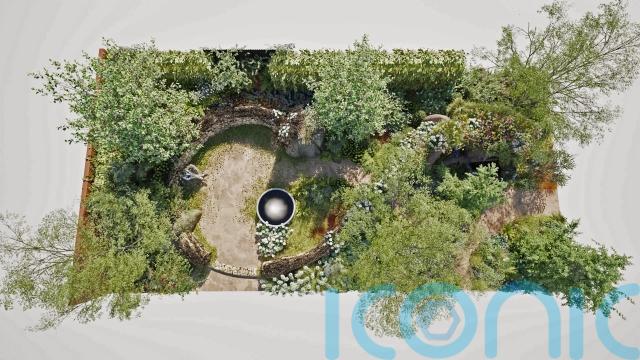
“It’s round, it’s soft, it’s comfortable, it’s like falling on to a pillow,” is how she describes a garden which feels like the countryside. “Naturalistic gardens can be so good for the mind.”
But how can we make our own urban plots feel like the countryside?
Use native plants

“Using native plants, things we see in the countryside, helps,” says Eberle, whose work at RHS Chelsea and Hampton Court has netted her 20 gold medals.
“For instance, the hawthorn is a lovely small tree, very much suitable for a small garden. You can get them with white or pink flowers. Some varieties have very big thorns, so pick wisely, or else they can act as a great deterrent. You could grow them as a shrub or a hedge.
“It’s also very important ecologically. A lot of insects feed off it and it’s very good near water as well.”

Many native shrubs which are seen in hedgerows can be grown as specimens, she suggests, including the common dogwood, Cornus sanguinea, with its coloured winter stems and deep red foliage in the autumn.
“There are also plenty of native grasses. One of my favourites would be the Luzula nivea, the snow rush, which is evergreen. Some carex are very good for shade. I love soft textures in the garden, which gives it a huggable feel.”
Notice the green space around you

“When you’re in the countryside, go with your eyes open. Sometimes we’ll just chat with friends or be distracted by the dog and we tend to just see without seeing,” she says.
Be more aware of your surroundings and you may find plants which you can replicate in your garden which echo that countryside character.
Don’t mistake it for rewilding
You have to get out of the mindset of a carefully manicured garden if you want a feel of the countryside, but it is a far cry from rewilding, she says.

“The approach to gardening has changed. Historically, gardening has always been something to do with control, but nowadays it’s more of a wellbeing, comfort being in nature, feeling nature around you, so that need for excessive control has reduced, but there are ways of dealing with that.
“You can use some elements which are quite controlled, such as the native yew, which you can use as clipped balls, domes or columns which will give a sense of order to the things that are looser around them. It shows there is intent of control.”
This is completely different to the idea of rewilding, she points out.
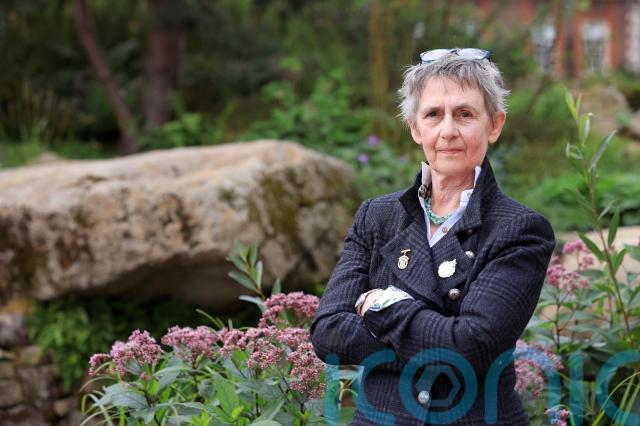
“With rewilding, you just leave it alone. It’s appropriate in certain places but for me it’s for wide areas of landscape, generally, with ecological things in mind.
“Gardens have to be managed because they are small places for people, plants and animals. Rewilding will go through ugly phases. You don’t have any control so if you have something over-vigorous, it takes over.”
Create natural pot displays
“Most of these (native) plants will be suitable as long as the pot’s big enough, or you keep potting them up. They don’t like to be pot-bound.”
Lots of native ferns, both deciduous and evergreen, are good for pots and you can make a whole courtyard garden out of different ferns which again are very textural and soft, she advises.
Allow weeds some space
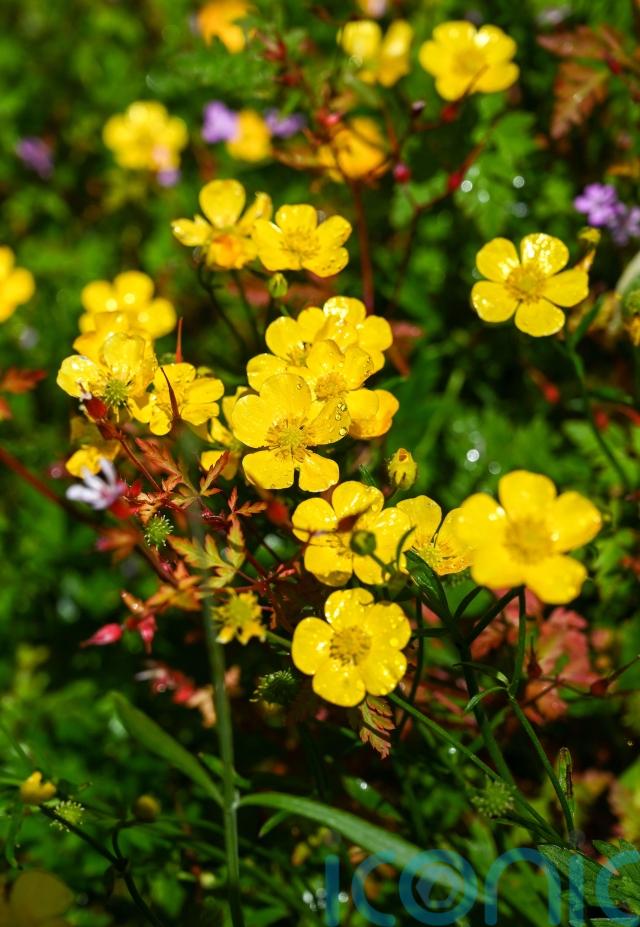
Eberle is using quite a lot of weeds in her 2026 Chelsea garden, she reveals.
“Everybody thinks buttercups are weeds but if you use them carefully and look at how they grow, they’re a great contributor to the garden and bring lots of lovely insects and birds with them.”
She puts them in borders and notes there are many different varieties on the market – taller, shorter and doubles.
“I’m not talking about the mass double ranunculus that we see which are usually sold in seed form for the annual market. These are the yellow things we see rambling around the British countryside.”
Let flowers do their thing
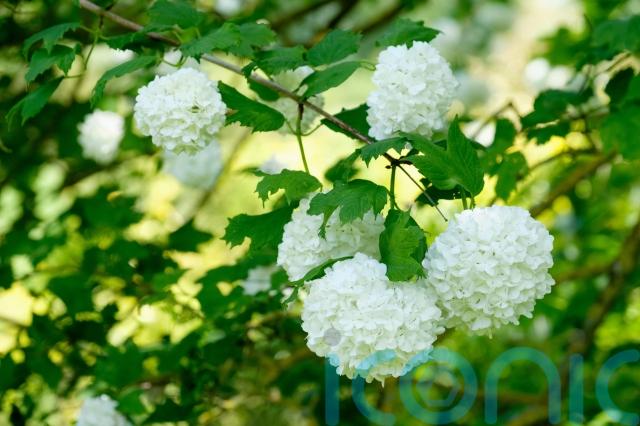
Eberle’s Chelsea garden will contain wild roses, plus Viburnum opulus which produces beautiful white flowers.
“I always use colour cautiously. For me, it’s about a sense of wellbeing and charm. I’m not there to be at a party, I’m there for quieter reasons, so the colours I use are blues, yellows and creams. I don’t use pink and red a lot, but that’s a personal preference.”
Use natural materials
If you are hard landscaping, try to use natural materials such as free-draining gravels, which plants can self-seed into, willow, natural paving materials or things like old brick which people might be giving away but which can look quite rustic.
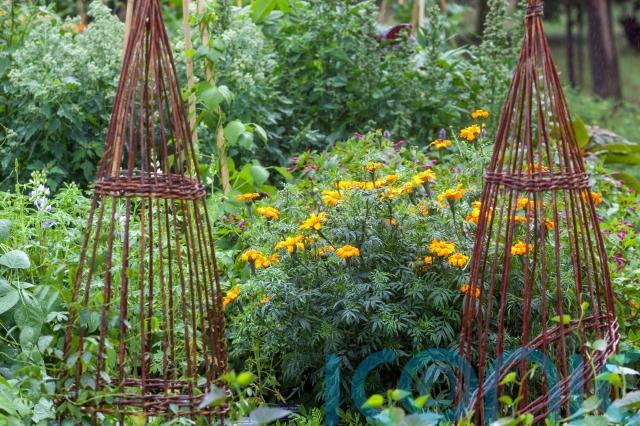
“You might find old driftwood on the sea shore, which makes lovely features in a garden.”
Let lawns be looser
Eberle goes for species-rich turf or seed mix with native perennial wildflowers incorporated, not a bowling green lawn.
“Species-rich isn’t all about flowers, it’s about different types of grasses that are feeding different types of insects and some flowers might be quite inconspicuous.”
Maintain it right
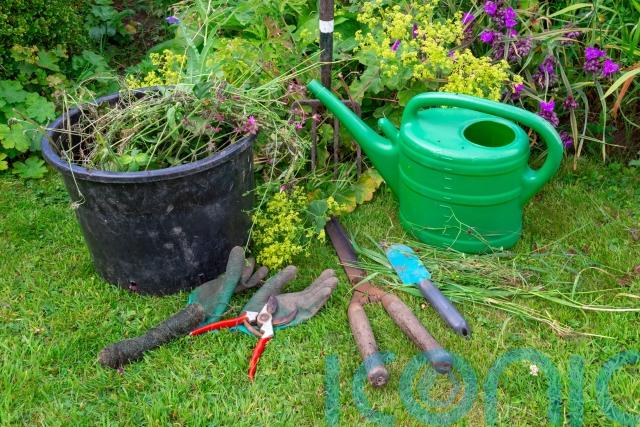
“When a garden is naturalistic you just intervene when something irritates you and if something starts to get too vigorous you can intervene, take some of it out or take the flower heads off before it flowers so it doesn’t set seed that year,” Eberle suggests.
“But you can play with it. It becomes more like you. You become more of the artist in the garden.”

Subscribe or register today to discover more from DonegalLive.ie
Buy the e-paper of the Donegal Democrat, Donegal People's Press, Donegal Post and Inish Times here for instant access to Donegal's premier news titles.
Keep up with the latest news from Donegal with our daily newsletter featuring the most important stories of the day delivered to your inbox every evening at 5pm.

This publication supports the work of the Press Council of Ireland and Office of the Press Ombudsman, and our staff operate within the Code of Practice of the Press Council. You can obtain a copy of the Code, or contact the Council, at www.presscouncil.ie, Lo-call 1800 208 080 or email: info@presscouncil.ie.