

An Colún: A very special bridge in North Tipperary

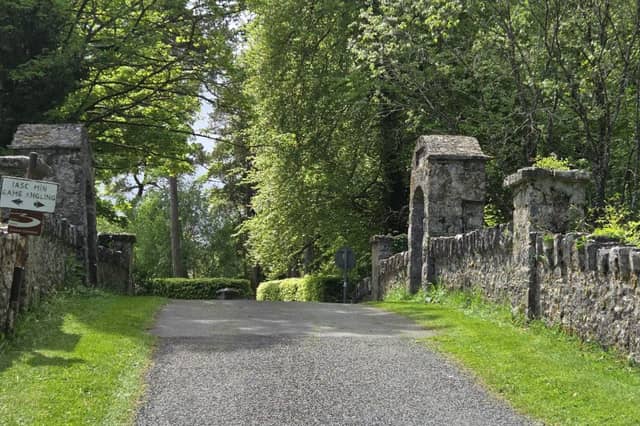

‘Their voices drift like evening mist across the valley green / And live within the ancient stones’
ON the 28th of June the local community gathered to celebrate 250 years of the remarkable structure, The Mouse House Toll Bridge, near the village of Ballinderry. The large size of the gathering clearly showed just how important this very special bridge is to the people in this leafy and beautiful part of North Tipperary.
The evening before, an audience gathered in Terryglass Hall to hear an excellent presentation by historian Helen Fox. Helen told the attendees that the nickname The Mouse House relates to the small “houses” on the bridge where travellers were asked to pay a toll as they crossed.
Helen’s presentation was part of the celebrations that were organised by Kilbarron Terryglass Historical Society to mark the 250th anniversary of the construction of this structure across the Ballyfinboy river at Drominagh Terryglass.
She said the bridge was built in 1776, a date that she put in context by presenting a timeline of events at home and abroad during that period. She outlined the reasons why it was built and its success in that regard; and speculated as to who was actually involved in its construction. She also named the names of many of the local families back in the 1700s who have lived in the area right up to the present day. She told a number of those in the Hall their own connections to particular families in the past from the area. Maria Hogan was thanked at the end of the talk for “providing the excellent technical backup” to Helen’s lecture.
The following day, at the bridge itself, many were very impressed by young local historian Rian Egan who, while standing at the Toll Collector’s booth, outlined the history of the Mouse House to a very attentive audience. Watching on with pride were his Mum and Dad, Olwyn and Paul.
Local man Brendan Boyle wrote lyrics for a song to mark the occasion, some of which went as follows: “In the year of 1776, when the old roads crossed the land / They raised a bridge of cut grey stone / By a steady builder’s hand. / Richard Biggs set the arches high where the Ballyfinboy flows. / And the Mouse House Bridge was born that day; a crossing proudly earned. / In Drominagh’s quiet hollow where the morning mist rolled o’er, / Near Ballinderry’s fields of green where hawthorn ditches grew / Two tiny stone house rooms stood watching day by day / And greeted each weary traveller who crossed that bridge of grey. / Oh the Mouse House Bridge where the old stones still remain / For 250 years you’ve stood through sunshine, wind and rain; / A bridge of stone a bridge of hope that never will pass by / ….And many so with coin in hand crossed from bank to bank / With cattle bound for market day / Their voices drift like evening mist across the valley green / And live within the ancient stones as they have always been.”
"I’ve been coming to this bridge for my whole life,” said Rian. “I walk the 5km local trail a lot and I often come here to relax and to enjoy the river. It’s located near Drominagh House.” He pointed out that many people drive, walk and cycle over it without realising just how old and important it actually is. He said that in the late 1700s Ireland’s road systems were developing and toll bridges like this one were very important. “People passing through – farmers, traders, horsedrawn carriages – had to stop here and pay a small fee to the toll collector who sat inside the small booths. The collected money was used to maintain the roads.
"The Mouse House is one of the oldest surviving toll bridges in Ireland, and, many believe, is just as significant as other former toll bridges such as the Ha’penny Bridge in Dublin, which was built in 1816, and the Trim bridge in County Meath which was built in the 14th Century (which is widely considered the oldest medieval stone bridge in Ireland still in use). Therefore this Ballinderry bridge is part of a much bigger national story.” Rian said the structure was designed by a Richard Biggs, a High Sheriff and landowner who worked in Tipperary and London. While living in Drominagh House he built this triple arch limestone bridge in 1776. The toll booths are set in the centre on both sides. The stonework is a mix of rubble, limestone and cutstone. There is a stone plaque on the west side which says, This bridge was built in 1776 by Richard Biggs overseer.
"Over the centuries,” continued Rian, “this bridge has seen huge changes from carts and horses to bicycles and cars. Now a lot of people walk over it, enjoying the exercise and the nice scenery. In the 1800s it would have been a very busy crossing point, people travelling between the villages, bringing goods to markets, or visiting the estate.
"Tolls ceased to be collected in Ireland in 1858, but the small booths still remind us of how life used to be. Recently the OPW repaired the bridge because it had started to lean. Thanks to the work it is now safe again and open to everyone to enjoy. I am really glad it has been fixed because it is a great part of our local history. This is not just a bridge I walk across; it is a bridge that I grew up with.”
Toll booths, also called turnpikes, first appeared on the roads of Ireland in 1729. During the 18th Century, turnpike roads developed across much of Ireland, developments which were often distinguished by their long, straight stretches. The toll concept returned to Ireland in 1984 when a toll was charged on the new East Link bridge in Dublin. Now we have toll booths on the motorways and the Dublin Port Tunnel, while eFlow electronic tagging was introduced in 2008.