

An Colún: An afternoon with a Birr woman's thoughts

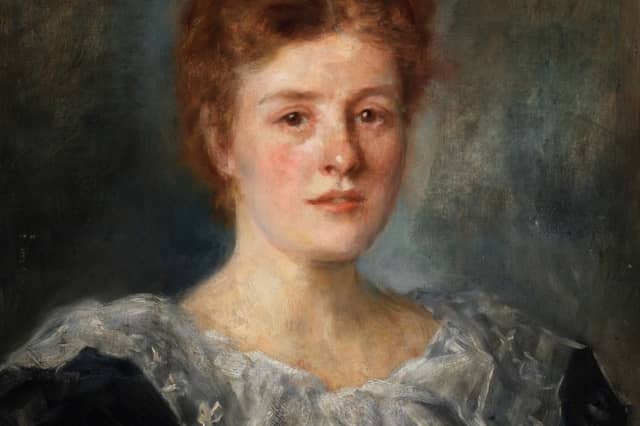

‘Nature is not just physical scenery, but is a living entity suffused with joy and revelation’
POETRY lovers gathered for a couple of very pleasant hours in St Brendan’s Church of Ireland Birr during Vintage Week. Several talented people entertained us with readings, thoughts and music. Afterwards, a number of attendees told me that it had been a special occasion which had been most worth their while attending.
Our focus was on the beautifully crafted and uplifting poetry of Birr poet Susan Mitchell. Personally, I think Mitchell is one of the finest poets to have ever been produced by Ireland. Compared to a number of our poets she's not particularly well known but her skillfully honed works richly repay the reader and they express a way of looking at the world which is to be treasured.
Many poetry lovers who were unaware of this special legacy should be thankful to Birr artists Jackie Lynch and Rosalind Fanning for drawing their attention to it. A few years ago Jackie and Rosalind created their Town Reads Mitchell Poetry Trail, a series of ten panels spread throughout the town (with the support of Offaly County Council’s Creative Ireland Programme and the Anam Beo Arts Collective). Last year, during Vintage Week, a group of 50 people gathered in Emmet Square to follow the Trail, and listen to local people read one of Susan's poems at each panel. This year, due to the threat of rain, we decided to gather in the church instead.
One of the interesting aspects of Mitchell’s life was the political world she found herself in. Her family were against Home Rule but Susan disagreed with them and believed that Ireland should be allowed to stand on its own two feet. Going against your background and your milieu in this way of course requires considerable courage. Independent thinking such as this is often something which should be encouraged and applauded.
Mitchell lived from 1866 from 1926. She was a playwright as well as a poet and was a prominent member of the Celtic Dawn movement at the end of the 19th, beginning of the 20th Centuries. She knew Yeats well (who deeply admired her work) and she became close friends with George Russell (also known as AE). Both Russell and Mitchell are described as being mystics, or, to put it another way, they were deeply fascinated by spiritual experiences.
A few years ago ten local personalities were invited to read a poem by Susan from her 1913 book of poetry ‘The Living Chalice’. Jackie and Rosalind recorded the readings and a short film was made. The readings can be listened to on the Trail's website. This webpage can be accessed through QR codes that have been added to each panel.
The Trail runs down Wilmer Road, alongside Mill Island Park, along Moorpark Street, Bridge Street, Mill Street and ends on Church Street. Sadly, two of the original readers, Val Johnson and Gerry Dolan, are no longer with us.
One of the poems read in the church was “Ireland”, which is the expression of a nationalist yearning to be free from the yoke of the British Empire. Ireland, usually personified as a beautiful woman, is seen by Mitchell as being bereft of its right, which is to take its place among the countries of the world as an autonomous State. The Poetess dreams of an Ireland of love and blossoming trees but the reality is that she, Ireland, is missing her rightful crown. Her throat is dumb and she cannot sing the sweet songs which should be her destiny. She's denied her kingly gems, including amber and carnelian. In the second stanza the darkness of not being an independent country lies heavily upon the Poetess but it ends on a positive note because she can sense forces of freedom and forces of good in Ireland's social fabric:
"None knows my state, since I uncrownèd go,
Nor how in dreams Love makes me blossoming trees,
Through my dumb throat makes sweetest songs outflow,
And gives me store of kingly gems alsó,
The amber beads and carved carnelian
I keep my state though I uncrownèd go.”
As well as nationalism, love is another big theme in her work. It operates on two levels. Firstly, as a strong desire for your lover and a sense of contentment when in the presence of your lover; and secondly as an awareness of God's love in the world. In her poetry God's love finds expression in the tenderness between lovers.
A third theme is spirituality, which is expressed brilliantly in “Amergin” - “The fretted waters I hold in the hollow of my hand. / From my heart go fire and dew and the green and the brown land.” Amergin is an expression of the progenitor, the creator of the Universe. Amergin is God speaking through poetry, stating that He has created all things. In our fractured world, crying in pain because of greed and unbridled desire, the Poet, the Mystic, points beyond our limiting logic towards the Life Force flowing through all things which will bring us harmony and healing. Reading it I was reminded of one of George Russell’s poems that I like very much, “Benediction”, which appeared in his collection “The Earth Breath” (1897):
"And the fire divine in all things burning
Seeks the mystic heart anew,
From its wanderings far again returning,
Child, to you.”
Russell believed that we humans, while trapped in a "vestiture of pain," could momentarily pierce the veil of the material world to find spiritual unity. For Russell, Nature is not just physical scenery, but is a living entity suffused with joy and revelation.