Search


04 Apr 2026
Search
04 Apr 2026

Please allow ads as they help fund our trusted local news content.
Kindly add us to your ad blocker whitelist.
If you want further access to Ireland's best local journalism, consider contributing and/or subscribing to our free daily Newsletter .
Support our mission and join our community now.
To continue reading this article, you can subscribe for as little as €0.50 per week which will also give you access to all of our premium content and archived articles!
Alternatively, you can pay €0.50 per article, capped at €1 per day.
Thank you for supporting Ireland's best local journalism!


Selecting your first hearing aid is a significant step, and finding the right device can make a remarkable difference to your daily life.
With so many options available, the variety can quickly feel daunting. To help simplify the process, we spoke with experts about what different hearing aid styles are currently on the market, and what key factors you should consider before making your choice.
What are the main styles of hearing aid to choose from?
Behind-the-ear hearing aids
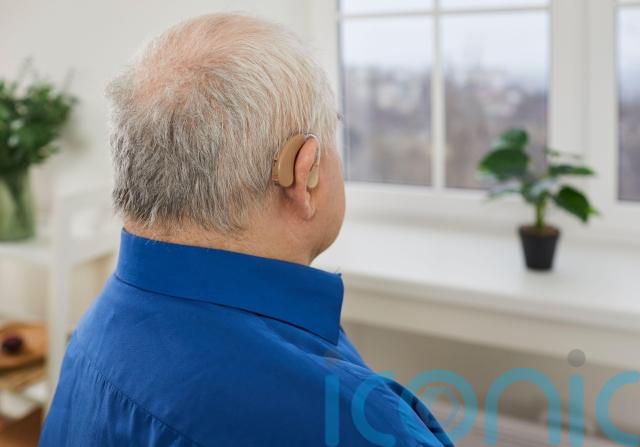
“Behind-the-ear options have a unit that sits behind the ear and either a wire or a tube then goes to a modular fitting ear piece that fits in the ear,” explains Dominique Stone, lead audiologist and clinical governance lead at The Hearing Clinic UK.
Receiver in-the-ear hearings aids
“Receiver-in-the-ear devices have the behind-the-ear unit and a wire that then goes down to the ear and has a speaker that actually fits inside the ear canal. In most instances, that’s coupled with a modular ear piece or a dome, or you could have a custom fit made for it,” notes Stone.
In-the-ear hearing aids

“You can get a custom in-the-ear solution where you have an impression taken of the ear, then a moulding is made, so the hearing aid is built to fit your ear and all electronics are built into that molding,” says Stone.
“We do also now have ready-to-wear instant fit in-the-ear devices which are quite a recent development and have become quite popular.”
Specialist options
More specialist options are also available.
“Phonak, for example, is one of the manufacturers that offers the lyric devices, which are implanted or placed deep into the ear canal and sits about three millimetres away from the eardrum,” says Stone. “That’s what we would classify as a completely invisible device, and can only be done by specialist clinics.”
What factors do you need to consider when choosing a hearing aid?
Severity of hearing loss
“Some devices are more suitable for mild to moderate losses, and other hearing aids will be more suitable for severe to profound losses,” says Stone. “That’s why it’s really important to go through a comprehensive consultation which will generate your prescription.”
Manual dexterity
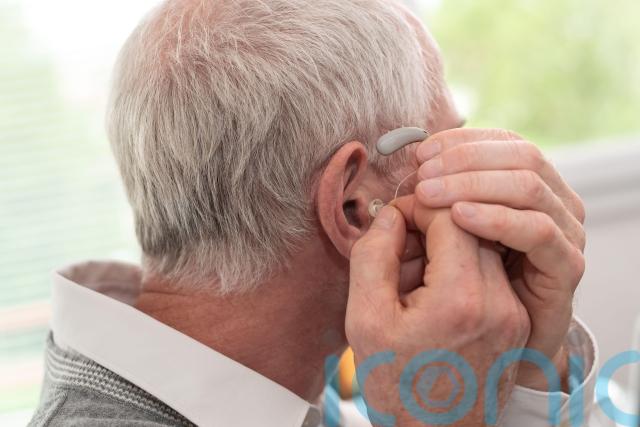
“Dexterity is something particularly older patients need to consider, because hearing aids are only a beneficial, usable tool to help improve communication if they can actually be used comfortably,” says Stone.
“So, it’s important that we make sure that our patients are empowered, can handle and manage their devices, and have access to ongoing long-term support.”
Lifestyle needs
“Hearing aids are not only there to address a medical condition (hearing loss), these devices are also there to address lifestyle needs and overcome barriers,” says Stone.
“For example, we will ask patients if they live by themselves, if they live with family, if they are still working or are retired, and how they cope with background noise and one-to-one conversations. It’s all about identifying those specific needs to help decide what solution would be suitable for them.”
Charlotte Jones, head of hearing products at Specsavers, agrees and adds: “That’s why speaking to an audiologist or a hearing expert is really helpful, because they work holistically to get to know a person and understand their lifestyle and preferences.”
Jones highlights the importance of thinking about how you spend your time and what’s most important to you.
“Think about the situations where without devices, you struggle the most to hear,” says Jones. “For example, if you have got family who visit once a week, you might want a device that’s going to support you to hear as clearly as possible in that situation.”
Comfort

“A device that’s uncomfortable could potentially also cause problems and increase the risk of developing infections,” says Stone. “If someone finds hearing aids too uncomfortable, they tend to stop wearing the device and don’t get all the benefits from it.”
Comfort often comes after a period of acclimatisation.
“When you first get a hearing aid fitted and get that full amplification, it can be a bit overwhelming, therefore it’s really important that you give yourself time to introduce it in a gradual way,” says Stone.
Budget
“In the private market, prices tend to start from about £500 and can go up to about £6,500-£7,000 for a set of devices, so there’s a huge range,” says Stone.
“Top-tier devices offer more features and more advanced technology which tend to have a more advanced processing ability and provide a much more natural sound.”
However, Jones highlights that places such as Specsavers do offer free NHS-funded hearing aids for eligible patients.
Technology and features
“One of the big things available at the moment in the hearing aid technology world are AI devices,” says Stone. “The AI technology helps give users a much better response when they are in high noise environment, like a pub, for example.”
Another feature to consider is connectivity.
“The majority of hearing devices now have Bluetooth, which means that you can connect your hearing aids to a mobile phone, and then they work a little bit like wireless headphones, so you can stream calls, music and any other sound from your phone or device into your hearing aids directly,” says Jones.
“You can also get apps on your phone where you can adjust things like volume when you are in different environments. This provides people with a little bit more control over what their hearing aids are doing.”

Subscribe or register today to discover more from DonegalLive.ie
Buy the e-paper of the Donegal Democrat, Donegal People's Press, Donegal Post and Inish Times here for instant access to Donegal's premier news titles.
Keep up with the latest news from Donegal with our daily newsletter featuring the most important stories of the day delivered to your inbox every evening at 5pm.

This publication supports the work of the Press Council of Ireland and Office of the Press Ombudsman, and our staff operate within the Code of Practice of the Press Council. You can obtain a copy of the Code, or contact the Council, at www.presscouncil.ie, Lo-call 1800 208 080 or email: info@presscouncil.ie.