Search


16 Feb 2026
Search
16 Feb 2026

Please allow ads as they help fund our trusted local news content.
Kindly add us to your ad blocker whitelist.
If you want further access to Ireland's best local journalism, consider contributing and/or subscribing to our free daily Newsletter .
Support our mission and join our community now.
To continue reading this article, you can subscribe for as little as €0.50 per week which will also give you access to all of our premium content and archived articles!
Alternatively, you can pay €0.50 per article, capped at €1 per day.
Thank you for supporting Ireland's best local journalism!


Designer Phoebe English will return to the February schedule at London Fashion Week for the first time since 2020 this season, presenting what she describes as her most personal – and most “exposing” – collection to date.
The circular fashion pioneer, who launched her label in 2011 and built a reputation for working with deadstock fabrics and textile waste, stepped away from the traditional autumn/winter calendar in 2020.
In the years since, she has become a mother and further reshaped her studio practice around regenerative, low-impact production.
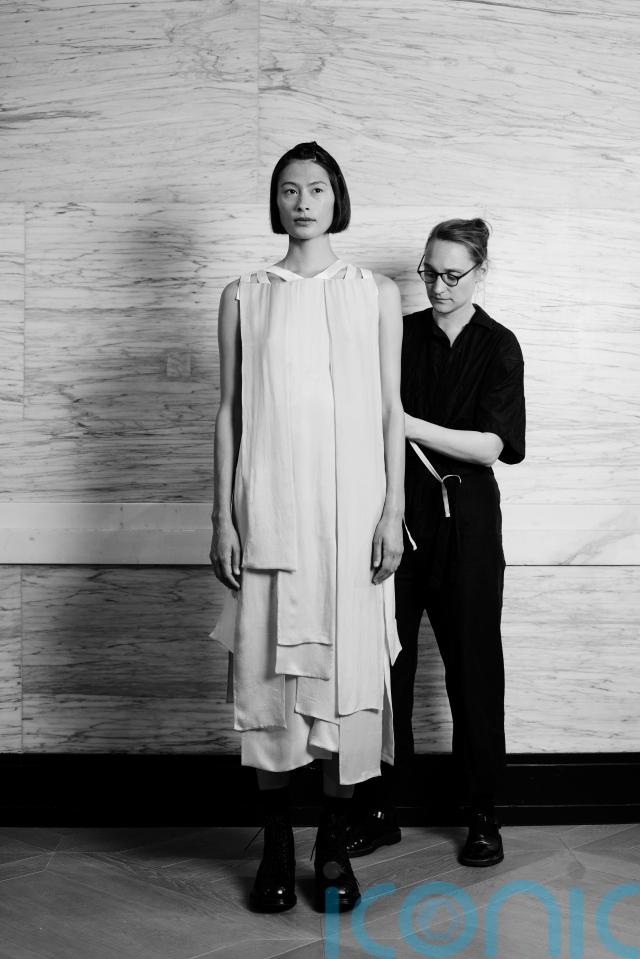
Her return to a February presentation for AW26 is, she says, as much about family logistics as fashion.
“I had some children recently, so I’ve been rejigging our family time and our family schedules,” English says, now in her late thirties. Showing in February rather than September allows her to protect time with her family over the summer, while maintaining a slower rhythm in the studio.
Motherhood, she says, has transformed the way she works.
“You just learn to kind of make decisions a lot faster,” she says, “a whole day of work sometimes just has to fit into like a three-hour morning.”
Previously, English said she might revisit and rework ideas repeatedly throughout a collection’s development. This season, however, she committed to her first instinct and resisted over-editing.
“The first idea I’ve had, I’ve managed to stick with throughout the development of the collection, which is very unusual,” she explains.
The result is a collection that marks a distinct departure from her earlier work. Known for abstraction and restraint, English says AW26 moves into more literal territory.
“The whole collection really revolves around decorating the body,” she says.
Where previous seasons avoided overt iconography or visible embellishment, this collection embraces them. English described the shift as “challenging but invigorating”, adding that it has felt unfamiliar and, at times, unnerving.
“I’ve never done a collection like this before,” she admits, “I feel there’s a lot more of me in it than there has been in the past, so it feels a bit exposing.”
For a designer who describes herself as reserved, the change has required a degree of vulnerability.
“I guess I’m quite a shy person,” she says, “I don’t often write in the press release what the collection is actually about for people to make their own interpretations […] but this [collection] isn’t abstracted in any way.”
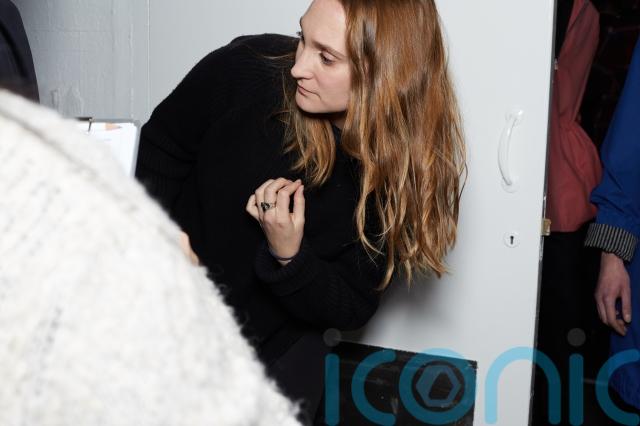
Instead of obscuring her references, English has rendered them directly, drawing on imagery and materials that have offered her what she describes as “personal, kind of spiritual sustenance” over the past year.
The decision to focus on decorating the body is also rooted in care. English explains she felt a desire to create garments that function as a form of protection.
“I felt like there’s that kind of need for protecting ourselves in many ways,” she says, “this act of decorating the human body is a way to keep it safe. It’s felt like a sort of caregiving process […] a loving process.”
Particularly since the pandemic, English has deepened her commitment to moving beyond harm reduction towards regenerative fashion practices. Her studio in New Cross, in south-east London now prioritises regional sourcing, natural dyes and collaborative relationships with growers and farmers.
She has worked with plant-based dyes including indigo and weld, foraged materials after severe storms and partnered with farmers removing hazardous plants by hand rather than using chemicals. Such processes, she says, demand time and resist the rigid cadence of traditional wholesale cycles.
“These working practices […] none of those really fit into four seasons or two seasons a year,” she explains. “It’s like a round peg in a square hole.”
Natural dyeing in particular, she adds, is unpredictable by nature.
“It’s such an anarchist. It doesn’t want to be controlled,” she laughs when talking about the natural world. “In order to work in that way, you need to be able to give it time.”
English has also stepped away from wholesale distribution, working primarily with one-to-one clients and institutions, including museums.
Archive pieces from her label are held in permanent fashion collections at the V&A and the National Museum of Scotland.
Operating outside a traditional retail structure has allowed her to build collections differently, without strict range plans or colourway targets. Pieces are often adaptable, designed to evolve in conversation with the wearer.
“It’s not really about the clothes, it’s about the person inside the clothes that’s really exciting to me,” she says.
As in previous seasons, English will present the collection in an intimate format rather than staging a conventional catwalk show.
“I find catwalks a bit formal and quite hierarchical sometimes. I like the informality of just having some work in a room […] people being able to wander in and give the work as much or as little time as they want.”
The approach reflects her broader philosophy of slowing fashion down – allowing garments to be examined closely and experienced without the rush of a runway schedule.
Returning to February feels, “a bit nerve-wracking,” she says, “but hopefully it will also be a lovely thing to experience.”

Subscribe or register today to discover more from DonegalLive.ie
Buy the e-paper of the Donegal Democrat, Donegal People's Press, Donegal Post and Inish Times here for instant access to Donegal's premier news titles.
Keep up with the latest news from Donegal with our daily newsletter featuring the most important stories of the day delivered to your inbox every evening at 5pm.

This publication supports the work of the Press Council of Ireland and Office of the Press Ombudsman, and our staff operate within the Code of Practice of the Press Council. You can obtain a copy of the Code, or contact the Council, at www.presscouncil.ie, Lo-call 1800 208 080 or email: info@presscouncil.ie.