Search


04 Apr 2026
Search
04 Apr 2026

Please allow ads as they help fund our trusted local news content.
Kindly add us to your ad blocker whitelist.
If you want further access to Ireland's best local journalism, consider contributing and/or subscribing to our free daily Newsletter .
Support our mission and join our community now.
To continue reading this article, you can subscribe for as little as €0.50 per week which will also give you access to all of our premium content and archived articles!
Alternatively, you can pay €0.50 per article, capped at €1 per day.
Thank you for supporting Ireland's best local journalism!


It’s been a decade since MasterChef 2014 winner Ping Coombes published her debut cookbook – and now she’s back with her long-awaited second.
As the first Malaysian-born winner of the prestigious cooking BBC One show title, her plan was to introduce Malaysian food to home cooks, a cuisine which, at the time, was much lesser known.
She had only entered the competition because she was made redundant and “had nothing else to do”. These days, the mum-of-two runs Ping’s Masak Club cookery school and Ping’s Makan Club, a supper club, and collaborates with chefs in restaurants around the country, but aside from improved recipe writing skills, she says she’s the same cook we watched on TV some 12 years ago.
“I always cook the same way as I did 10 years before, I only have one very simple rule – I only cook what I love to eat,” says the 44-year-old.
“In the West, rice is an afterthought. Cook something, and you would say, ‘Should I have pasta or potatoes, or rice, microwavable rice and just bang it on,” says Coombes. “Whereas in the East, we do it every day.
“I also have rice withdrawal symptoms,” she laughs, if she doesn’t eat enough, or if she’s on holiday. “Don’t get me wrong, I love other food other than rice. But we went to Spain for 10 days and five days in, I started to feel like I can’t deal with another jamon, or another plate of patatas bravas. So in Seville, I had to run into a Chinese restaurant to order rice. And it was the best bowl of fried rice and prawns I remember that I ever, ever tasted.”
Growing up in Ipoh, Malaysia, she remembers being four or five and her grandmother chasing her and her brother around the house trying to feed them before school, while her mum and dad were at work. “We would have rice for at least two meals a day.”
“She’s running around scooping this communal bowl of rice with meat and veggies or whatever, because it’s easier to just have one bowl of rice and feed both of us.”
She grew up with an understanding of how important rice is.
“Rice is precious and growing up I’d see paddy fields and how people grow rice – it’s back-breaking work.
“A few years ago, I showed my children the work that goes into implanting it and harvesting it. Of course, there are machines now, but there are still many parts in Malaysia up in the mountains where the machines can’t go, and are still being planted by hand. And you think that so fleetingly you would throw away a bowl – it takes so much work to have that bowl of rice.
So how do we do justice to this simple grain, the backbone of so many Asian cuisines?
Master the absorption method
Coombes’ latest book is full of helpful tips and tricks but she always starts by washing the rice.
“I’ve always cooked rice on the hop with the absorption method. And my go-to rice is jasmine rice, because I grew up with it,” she notes.
“As a rule, it’s one to one-and-a-half. Or, if you’re putting in a microwave, one to one, so 300 grams of water, 300 grams of rice. Putting too much water in [or] not putting enough water in” is a common mistake home cooks make.
“Some grains require a little bit more water, but by and large, it should be fine. The hardest rice to cook is brown. They have more fibre so it requires a lot more water and patience.”
Never drain it
“For me, it’s a definite no no,” says Coombes. “Because you [drain] all the nutrients away. The rice, when it cooks, the starch releases. If you cook it with a lot of water and then drain it, you’re wasting all that goodness in your rice. So the absorption method is much better, that you contain all of that in your rice.”
Let it rest
You might be used to letting a steak rest, but if you’re eating your rice straight away you’re missing a trick. A major mistake is “not letting it rest or steam”, says Coombes, “usually for about 20 to 30 minutes.”
Letting the rice sit after cooking will help it soften, she says. “Also digestion-wise, it’s better to eat slightly warm rice than hot rice. You taste everything more when the rice is warm and it’s just the right temperature. I will never serve rice super hot straight out of the rice cooker or pan.
“I always recommend to do your rice first before you start anything else, then let your rice steam while you chop.”
Freeze extra
“I highly recommend making more rice than you think you need, and then chill it and freeze it. I have a rice drawer. Every time I make a certain type of rice, I make five times the amount.”
It’s a good way to replace those instant packets of rice, with a perfectly home-cooked version you already made. “I freeze it in 150-gram portions, I wrap it in cling film and then I put each individual packet inside a larger bag. And I name it, like ‘sushi rice’, or whatever.
“All I have to do when I need rice is bring out the bag, open it, sprinkle some water and [put it] in the microwave for three minutes and you’ll have instant rice.”
Learn how to store safely
“There’s a bacteria that forms with rice, it’s a high-risk food,” notes Coombes, but one of ways to mitigate any risk associated with reheating rice, is to “chill down your rice” before popping in the fridge.
“I make my rice, I eat my dinner and by the time I’ve finished my dinner, that rice will be cool enough to pack away straight into the fridge. Of course, if you leave it out the whole day in room temperature, or if I forget and leave it in a rice cooker, and the next morning I come down and [wondered] ‘Should I use this?’ The answer is no.”
Read the packet
Like anything else, rice varies in quality. “So for jasmine rice, ‘triple A’ is your best one – [the grains] are longer, they are plumber.
“But the most expensive ones aren’t always the best. It’s a little bit of, you never know until you try it, but I always look for triple A jasmine rice from Thailand – it’s really good – and basmati from Pakistan or from India.
The longer the basmati grain, the higher the quality, she notes. “They’re the luxurious ones.”
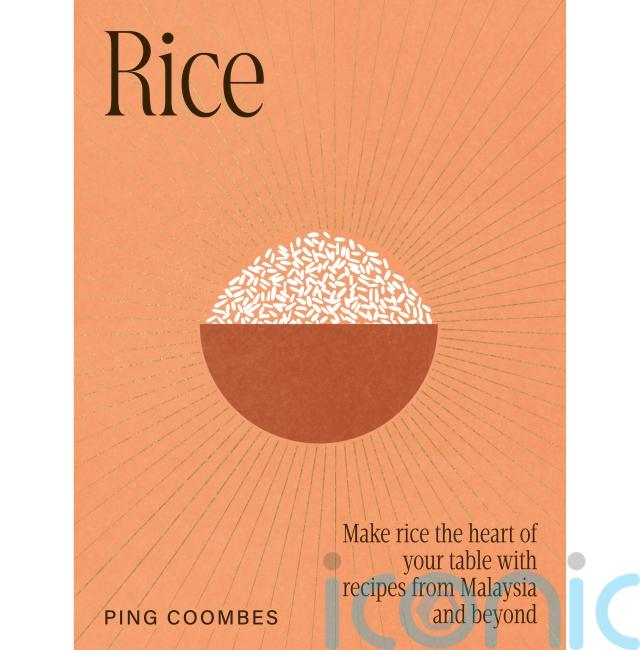
Rice by Ping Coombes is published in hardback by Murdoch Books, priced £26. Available February 12

Subscribe or register today to discover more from DonegalLive.ie
Buy the e-paper of the Donegal Democrat, Donegal People's Press, Donegal Post and Inish Times here for instant access to Donegal's premier news titles.
Keep up with the latest news from Donegal with our daily newsletter featuring the most important stories of the day delivered to your inbox every evening at 5pm.

This publication supports the work of the Press Council of Ireland and Office of the Press Ombudsman, and our staff operate within the Code of Practice of the Press Council. You can obtain a copy of the Code, or contact the Council, at www.presscouncil.ie, Lo-call 1800 208 080 or email: info@presscouncil.ie.