Search


04 Apr 2026
Search
04 Apr 2026

Please allow ads as they help fund our trusted local news content.
Kindly add us to your ad blocker whitelist.
If you want further access to Ireland's best local journalism, consider contributing and/or subscribing to our free daily Newsletter .
Support our mission and join our community now.
To continue reading this article, you can subscribe for as little as €0.50 per week which will also give you access to all of our premium content and archived articles!
Alternatively, you can pay €0.50 per article, capped at €1 per day.
Thank you for supporting Ireland's best local journalism!


Ashley James has gone from reality TV to becoming a feminist campaigner and social commentator on ITV’s This Morning in little more than a decade.
These days, the former Made In Chelsea star is more likely to be in a studio sparring with the likes of Nick Ferrari and Piers Morgan over topical issues than shopping on the King’s Road, although that wouldn’t have been in her budget when she appeared in the E4 reality show in 2012.
She was broke at the time, paid just £50 per filming session and couldn’t take on any other work because she was on call for filming. She had a fake designer handbag for the show, which she had joined because she thought it would make her money and open doors to becoming a TV presenter.
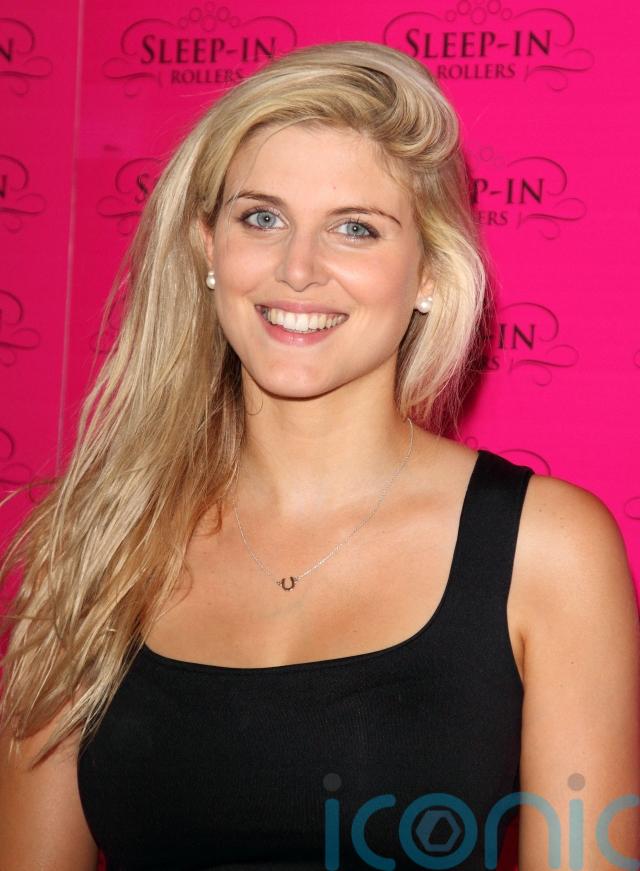
Although she wasn’t wealthy and privileged like her co-stars – born in Northumberland, the daughter of a hard-grafting dairy farmer and hairdresser, who latterly sold up to run a B&B – she had a posh accent, thanks to her subsidised boarding school education, and a certain look which made her an ideal MIC candidate.
But since her reality TV days, James, 38, has pursued the less frivolous side of TV to find a more serious platform as a feminist fighting for female empowerment and social justice.
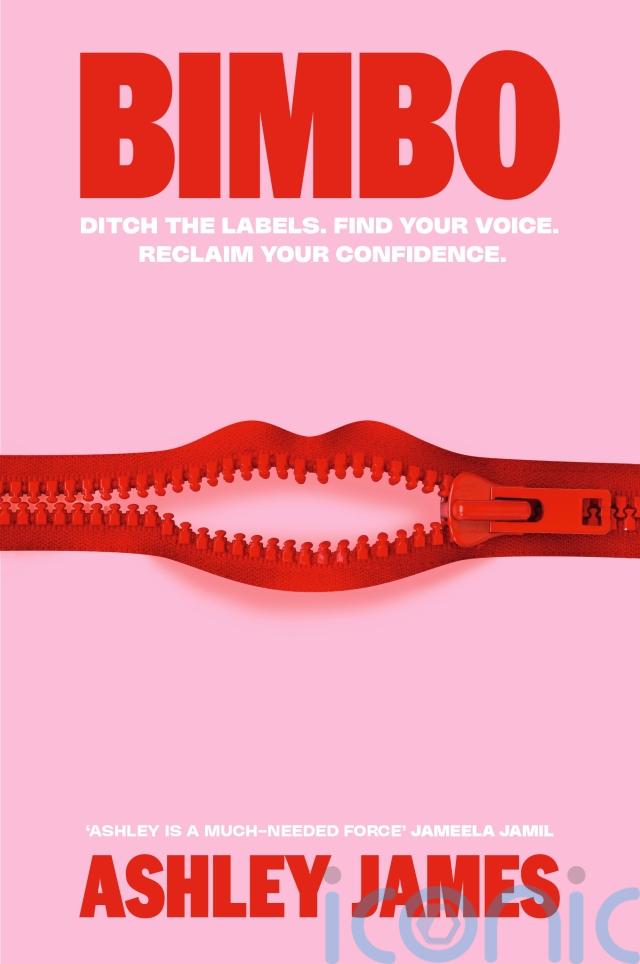
She has now issued a rallying cry for women in her new book Bimbo, a phrase sometimes fired at her during her younger days because she was attractive, blonde, blue-eyed – and considered ‘stupid’ by some.
In the book, she rages about sexism, misogyny and all the attitudes which discriminate negatively against women, the damaging societal norms which sap their confidence and self-esteem, recalling stories about her own body dysmorphia, self-harm, relationship breakdowns, infidelities, initially hating life as a mum and the poor maternal mental health which left her feeling suicidal.
She also says publically for the first time that she was raped while at university.
“We paint people who commit sexual assault or rape as strangers in dark alleyways, but more often than not, and statistically, it’s people we know,” James says now.
“I really grappled with whether or not to include it in the book because it is something that is obviously deeply personal, and the conclusion that I came to is that I wrote this book to address the fact that so many of us feel shame and so many of us are confronted with a broken support system systemically but also culturally,” she says.
“We’re very quick to put the onus on to women and girls to keep themselves safe, almost live by a set of rules.
“But the shame shouldn’t be on our side. It’s something that happens to us and there’s nothing we can do to stop it happening – the onus has to be on the men who rape, on the men who don’t understand consent.”
She writes that it happened when she was drunk and wearing ‘going-out’ clothes after a night at a club.
She didn’t tell anyone about it and was more worried he’d tell other people and she would be branded a ‘s**g’, than her own trauma, she recalls in the book.
“It feels sometimes like the victim is put on trial more than the person who actually commits the assault,” she observes.
The highly publicised case of French mass rape victim Gisèle Pelicot fuelled her decision to write about her own traumatic experience, James recalls.
“I felt very inspired and horrified by what Gisèle Pelicot experienced and I watched her, every day, go into that court with her head held so high and she said, ‘The shame must change sides’.”
Ultimately, James wants to relay to women who have been sexually assaulted, no matter what the circumstances, that it is not their fault.
“We shouldn’t be telling girls that they need to modify how they dress or where they walk. Hopefully, [the book] gives people confidence not to feel the shame and guilt that I felt for so many years.”
“Speaking with my friendship circles throughout my life, so many of us have had situations where we’ve either been assaulted or harassed and we haven’t felt empowered to come forward or to know that it’s not our fault because of the culture around victim-blaming.
“That’s what I really want to change, especially as my son and daughter grow up, because it’s obviously never the victim’s fault.”
James was a teenager during the ‘heroin chic’ era and in her 20s she became a model, so had long been exposed to the idea that being ‘fat’ was inherently immoral, unhealthy or shameful and that being thin was the key to success and happiness.
Counting calories, squeezing into smaller sizes and being a slave to the scales dominated her life.
“The reason I wanted to include so much about body image in the book is because I think we need to be focusing on health and happiness. Often we equate shrinking ourselves with health, happiness or confidence.
“I don’t want anyone to feel like they have to be the smallest version of themselves to bring us love and worth. In my experience that isn’t the case.”
She lives in London with partner Tommy Andrews and their two children, five-year-old Alfie and Ada, two. It sounds busy, juggling young family and career, and she doesn’t sugarcoat her life.
While some books gush about the joys of motherhood, James reveals that she never felt particularly maternal and suffered a traumatic birth with her first child – which she believes left her with rectocele (a pelvic prolapse) and faecal incontinence, for which she will still need corrective surgery.
Motherhood has also changed her relationship with Andrews, she agrees.
“There is such a relationship shift after children that so many people experience, but nobody really talks about it.
“We often say we’re never going to let children interfere with a relationship but the dynamic naturally shifts. So much of Tommy and my relationship now is about logistics because, like so many other parents, we are scrambling to work in a system that was designed when one parent was meant to stay at home.
She wishes there had been a book like Bimbo out there when she was feeling misunderstood in her teens and as she was navigating womanhood in her 20s.
“And it’s the book I wish I had when I was single for six years, at quite a pivotal time in a woman’s life, between 27 and 34, when the noise is so loud on the outdated expectations.
“Even when I was really enjoying my single status and not really focusing on male attention, I felt like I was being judged through the lens of failure because I hadn’t met somebody.
“And it’s a book I certainly wish I’d had as a new mum.”
Bimbo: Ditch The Labels. Find Your Voice. Reclaim Your Confidence by Ashley James is published by Century on February 12, priced £22.

Subscribe or register today to discover more from DonegalLive.ie
Buy the e-paper of the Donegal Democrat, Donegal People's Press, Donegal Post and Inish Times here for instant access to Donegal's premier news titles.
Keep up with the latest news from Donegal with our daily newsletter featuring the most important stories of the day delivered to your inbox every evening at 5pm.

This publication supports the work of the Press Council of Ireland and Office of the Press Ombudsman, and our staff operate within the Code of Practice of the Press Council. You can obtain a copy of the Code, or contact the Council, at www.presscouncil.ie, Lo-call 1800 208 080 or email: info@presscouncil.ie.