Search


22 Mar 2026
Search
22 Mar 2026

Please allow ads as they help fund our trusted local news content.
Kindly add us to your ad blocker whitelist.
If you want further access to Ireland's best local journalism, consider contributing and/or subscribing to our free daily Newsletter .
Support our mission and join our community now.
To continue reading this article, you can subscribe for as little as €0.50 per week which will also give you access to all of our premium content and archived articles!
Alternatively, you can pay €0.50 per article, capped at €1 per day.
Thank you for supporting Ireland's best local journalism!


“I’m staring out to the sea, listening to the waves crashing,” says Deborah Douglas, aka the ‘Erin Brockovich of Birmingham’. The 67-year-old is on holiday in Barbados and, after all she’s been through, you wouldn’t blame her for relaxing by the pool with her husband, permanently. Instead, she’s chatting to a journalist, determined to make as many people as possible aware of what butcher surgeon Ian Paterson did to his patients – including her.
Diagnosed with breast cancer in 2003, Douglas was subjected to seven months of chemotherapy, a mastectomy and reconstructive surgery, when in fact, an independent report found, “I just needed a small lumpectomy, 2cm long, and I’d have been back at work.”
In one of the worst scandals in British medical history, Midlands surgeon Paterson performed numerous unnecessary operations on patients, and deliberately exaggerated or invented their cancer risk. He was jailed in 2017 for 20 years for wounding patients with intent – Douglas helped put him there. Her new book, The Cost Of Trust, catalogues the whole story.
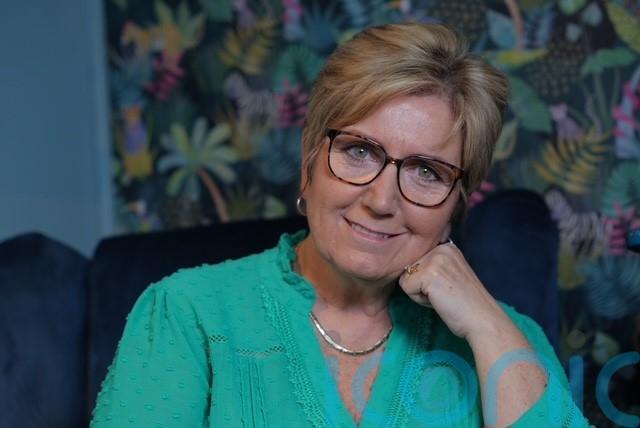
When the retired Rolls-Royce aerospace professional learned what he’d inflicted on her and countless others, her anger was immense. “I didn’t have cancer. That’s good. But he’s done all this to me. He’s cut me open. He’s caused me and my family all this anguish. They’ve seen me suffer through chemo,” she remembers thinking. “A lot of it was that he’d hurt my family as well as me, and nobody is going to hurt your family and get away with it.” From that moment, Douglas was committed to pursuing justice. “He’s messed with the wrong person,” she says.
When she first met him though, Paterson was widely considered a “great man”. “It was like, ‘He’s such a good guy’,” she says. “You forgave [him] sometimes when he came out with inappropriate things, like saying ‘Happy New Year,’ when he dug a needle into me to remove fluid from my stomach.”
“He was a terrible misogynist,” she adds. “He was doing this unauthorised procedure where he would leave a lump of breast tissue in the cleavage area. If [the patient] wanted a prosthesis, they couldn’t fit one properly, because they’ve got this weird mound of flesh he’d left. But to him it’s like, ‘You’ll look nice in a bikini.’”
Matter-of-fact, but warm and passionate with it, Douglas found writing the book cathartic, “but some of the things I wrote were really upsetting,” she admits, particularly mentioning when her daughter, Jennifer Davies, 40, was diagnosed with cancer in 2015 when she was eight weeks pregnant.
“Obviously the worst moments were Jenny’s diagnosis of cancer, Hodgkin’s lymphoma. When your daughter has to go through it, it’s way, way, way worse than anything I’ve been through, the worst thing ever, that was really tough.” Unable to spend time with Jenny, who was undergoing treatment, Douglas, who helps run victim support group Breast Friends in Solihull, wrote the book during lockdown, a time when she was also receiving calls from patients of other criminal surgeons. “I’m not just talking about breast cancer patients. These are patients affected by criminal spinal surgeons, mesh harmed women, people disfigured by plastic surgery. They literally have no one, no point of contact, and they come to me,” she explains. “My priority is always to say, ‘These are the people you need to contact. These are their details. This is what you need to tell them.’ I give them a practical way forward.”
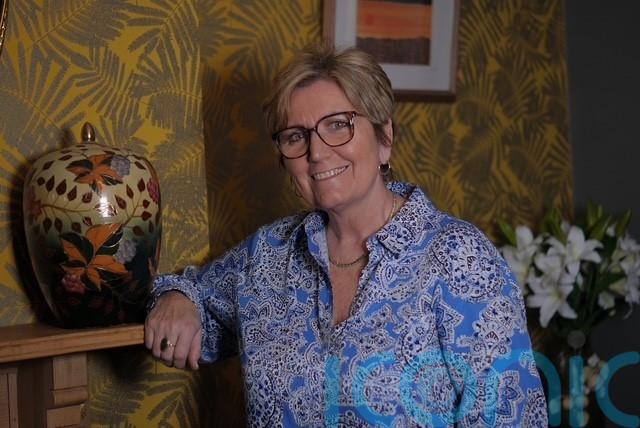
After everything Douglas has been through personally, to carry the weight of other people’s traumas too is “a massive responsibility, but I’m not the type of person that can say, ‘Sorry, I can’t help you,’” she says. “My dad had a strong belief in doing the right thing. I have been brought up to believe in that and fight for what’s right.”
She admits however that her family will say now “you’ve done enough, because they worry about me”. “Obviously I’m retired, but there’s got to be an endpoint,” she says, remembering how, after the Paterson inquiry, when Spire Healthcare who he worked for privately, along with Heart of England NHS Foundation Trust, was slow to recall historical patients, she was so frustrated, it was like, “Are you waiting for me to die?”
“Physically, that’s what gets me the most,” says Douglas, on how her life has changed since encountering Paterson. “I was painting the outside of the house before I went into the hospital for treatment. I said to my husband, ‘People will be wondering why I’m up a ladder, I’ve been diagnosed with cancer!’” she says. “At that point, I’d got a small lump, and it wasn’t taking me down. The operation took me down, and that was really, really difficult to get over, the level of frustration, when I’d been so active and independent.”
“Mentally, I’m intact,” she adds. Her ability to trust in others, however, is not. “Oh God, no!” she says with a dark laugh. “You should be able to trust your consultant. Obviously family, close friends, I trust, but the establishment, doctors… I go in trying to have an open mind, but I have to ask a million questions before I’m doing [what they say].” It was particularly difficult when her daughter was diagnosed. “She would say to me, ‘Mum, don’t say anything yet,’” Douglas remembers. “But then, if I knew there were hard questions [to ask], or she needed them to get a bit of a push to do something, she’d go, ‘You can say something now, Mum.’ When you’re in hospital, you’re very, very vulnerable.”
Paterson is due for release on licence in May 2027, likely before every inquest into his patients’ deaths is heard. “He shouldn’t be out in 10 years when he was sentenced to 20,” says Douglas. “I just feel that it’s wrong, that you’re going to subject all those people going through inquests, the families of the bereaved, 1,000s of people affected.”
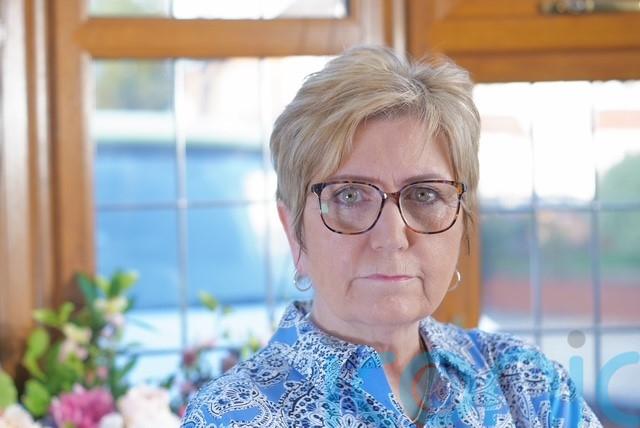
She wants her book to not only be a record of all he did, but “a call to arms” to change the system that allowed him to operate the way he did. “So many systemic failures have not been addressed, and stop pretending this is a one-off,” says Douglas, noting failures in breast cancer care at County Durham and Darlington NHS Foundation Trust. “There are so many similarities, and you just think, how could that happen? It’s because you haven’t got the systems, the governance in place to stop it happening.”
“I cannot stand the dragging of feet,” she continues. “They spend more time in government kicking the can down the road than actually doing something. I really feel frustrated that I can’t get in there and say, ‘You do this, you do that.’ We know what the problem is, just get on and do it, Government.”
She is not without hope though. “I’m definitely an optimist. I wouldn’t have got this far thinking nothing’s being done. I take every little win I can,” she says. And there is another side to her, Douglas is not just an incredibly intelligent, committed campaigner, she’s a grandmother, she paints, she loves music festivals. “I like spending my life on good things,” she says. But she’s not letting this scandal drop. “People should be treated the same way, they should have knowledge and proper consent and should know their consultant is safe, and if anything happens, that they’ll be apologised to, not lied to, not covered up.
“It’s not just about my story,” she adds. “It’s about empowering people to ask the right questions.”
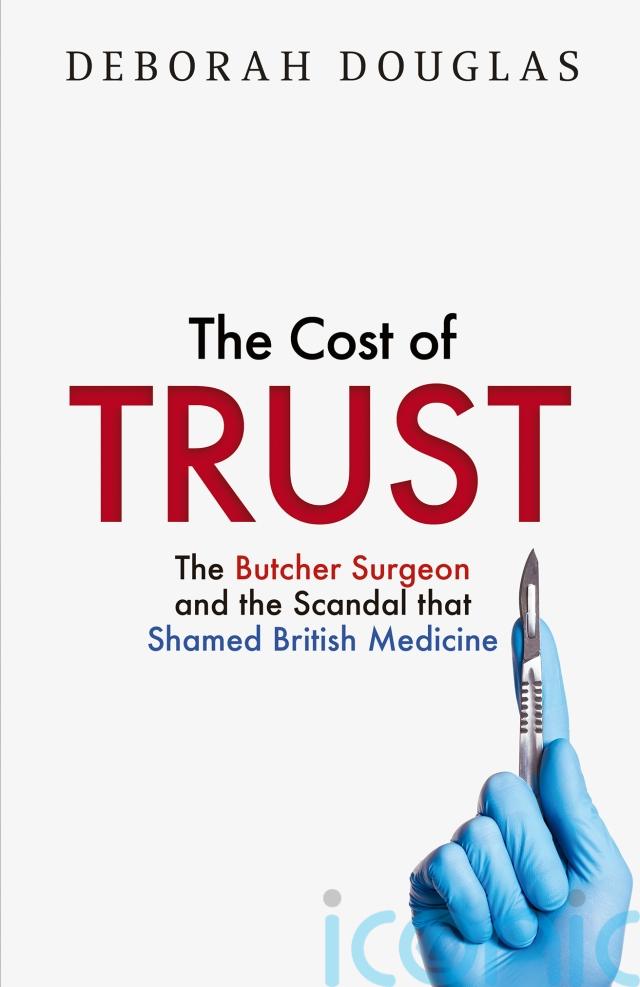
The Cost of Trust by Deborah Douglas with Tracy King is published by Mudlark, priced £20. Available February 12.

Subscribe or register today to discover more from DonegalLive.ie
Buy the e-paper of the Donegal Democrat, Donegal People's Press, Donegal Post and Inish Times here for instant access to Donegal's premier news titles.
Keep up with the latest news from Donegal with our daily newsletter featuring the most important stories of the day delivered to your inbox every evening at 5pm.

This publication supports the work of the Press Council of Ireland and Office of the Press Ombudsman, and our staff operate within the Code of Practice of the Press Council. You can obtain a copy of the Code, or contact the Council, at www.presscouncil.ie, Lo-call 1800 208 080 or email: info@presscouncil.ie.