
THROWBACK TUESDAY: Who will you recognise in our gallery of pictures from the Offaly archives
Search


14 Jan 2026

Please allow ads as they help fund our trusted local news content.
Kindly add us to your ad blocker whitelist.
If you want further access to Ireland's best local journalism, consider contributing and/or subscribing to our free daily Newsletter .
Support our mission and join our community now.
To continue reading this article, you can subscribe for as little as €0.50 per week which will also give you access to all of our premium content and archived articles!
Alternatively, you can pay €0.50 per article, capped at €1 per day.
Thank you for supporting Ireland's best local journalism!


When Jeffrey Boadi first considered giving up meat, fish and diary, he didn’t think he could do it.
The content creator and former semi-professional footballer was used to eating “three or four eggs every single day” plus a lot of chicken and fish.
“Being an athlete, you think you need to get as much protein in your diet as possible,” he says.
“Around two years before I went plant-based, a guy I knew at the time said he was going to give it a try. My initial, visceral reaction was to be like, ‘how could you do that? I need meat or I’ll wither away!’”
And, having grown up in a Ghanaian household, “I genuinely felt like a meal wasn’t complete without meat.”
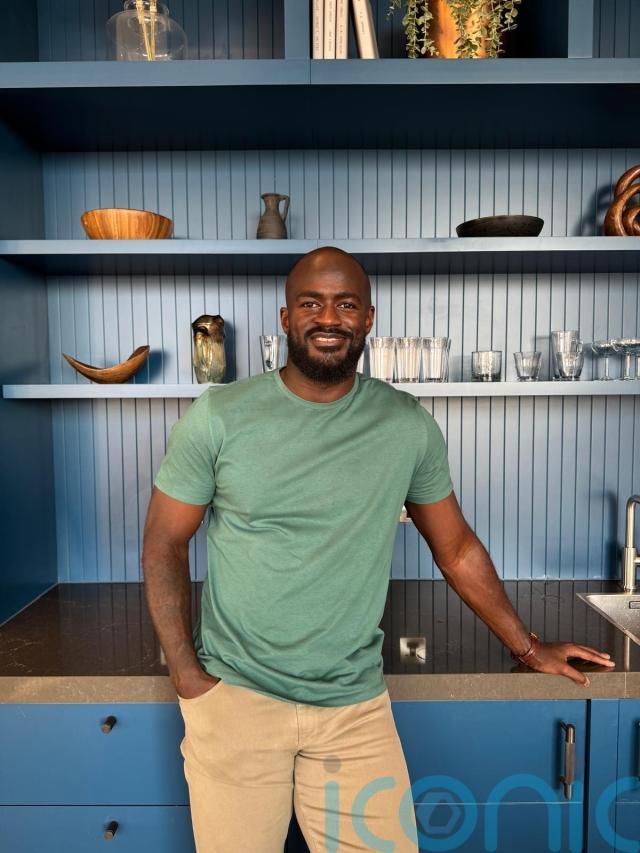
Yet, Boadi, has now been plant-based for eight years – having changed his diet entirely overnight after watching the 2017 Netflix documentary What The Health.
And, he says, “I’ve put on a fair amount of muscle over the years.”
The 37-year-old, who has just released his debut cookbook, Plant Fuel, reckons it’s all about awareness – particularly around protein.
“I think maybe we have a bit of ignorance to some degree – I know I had. It comes down to understanding that there are many foods rich in protein that you can incorporate into your diet; tofu, tempeh, beans, lentils, chickpeas, lentil pasta. It’s not necessarily about meat, per se, it’s about protein as a macronutrient [the essential nutrients your body needs in large amounts] – and you can get that across a number of different foods.”
He still remembers his last non-vegan meal in 2017. “I had a prawn stir-fry, which was actually really nice,” he says, with a laugh. But the documentary highlighted a plant-based diet’s efficacy for reducing chronic disease risk and it “completely shifted” his perspective.
From there, he dived into scientific research and listened to podcasts of doctors and experts in the plant-based space.
Boadi notes that people on plant-based diets “tend to have lower markers of inflammation, lower cholesterol – we know that high levels of LDL cholesterol [i.e. bad cholesterol] can potentially lead to worse cardiovascular outcomes”.
But in the short term, after just two weeks of changing up his diet he “felt incredible”, he says.
“My sleep was so much better, I felt like I had more energy, I felt lighter, I felt like I had more mental clarity.”
So he continued, grew his knowledge of nutrition as a whole and began to share the recipes he was creating online.
“I wasn’t really much of a cook beyond putting chicken breasts onto the grill, boiling sweet potato and steaming some broccoli. That was my typical meal. But I really fell in love with the process of cooking as well.”
His message is about keeping plant-based food straightforward and convenient though.
“I think it should be simple. I think it should lend well to energy, long-term performance with whole foods that are recognisable – so no crazy ingredients that you might not be able to find at your local supermarket.
“We’re now seeing loads of different vegan junk foods, vegan burgers and vegan ice creams, and I’m not the biggest fan of them because there’s a belief among some people that just because something’s ‘vegan’, it makes it healthier, but it’s still junk food. It’s still rich in sodium, it’s still high in saturated fat. It’s not going to promote health.”
The secret to hitting protein goals without meat and fish is to choose your sources wisely.
“Tempeh is a fermented soy product, which has 22 grams of protein per 100 grams, which is quite similar to chicken breasts,” explains Boadi. “Tofu has around 19 grams of protein per 100 grams serving. You can get those into bowls, sandwiches, silken tofu you can blend up and put it into pasta sauces. Seitan is like ‘wheat meat’ and that can have upwards of 25 grams of protein per 100 grams – it’s got a very meaty texture. Beans, lentils and chickpeas – you can put those in stews and soups and lentil bolognaise.
“Those are the ones that you really want to prioritise and get those into your diet in various ways – and you’re really going to have no issues hitting your protein targets.”
His social media followers love his ‘oatmeal bowls’. “I’m a big oatmeal guy, I think it’s a great way to start the day. Typically, I’ll cook a bowl of oats, put some flax seeds in there with some cinnamon, banana, I like stewed fruit, like stewed pear and cardamon, or some berries, add some pumpkin seeds, some hemp seeds and I might put a scoop of protein powder in there.”
While his ‘power bowls’ are very simple to put together – think less recipe, more adding components to a dish. “You have a plant protein source, maybe some whole grains for carbohydrates, like quinoa, you’ve got some healthy fats [like avocado], some greens like broccoli, then fermented foods like kimchi,” he says.
But their creation came from necessity and a busy life. “I’ve got an eight-month-old so in that early period, I was really just focusing on really, really simple meals,” he says.
In eight years Boadi hasn’t had any wobbles. “I’m quite like an all or nothing person, if I’m really convicted about something, I’m going to go into it,” he says. “Sometimes even my wife looks at me and still says, ‘I can’t believe you just changed your diet overnight, that’s crazy’.
But for those looking for a change, he would recommend a more gradual approach. “My advice would be to shift one or two meals a week, get some clarity on ‘we’re going to have lentil bolognaise instead of beef, or I might have a smoothie in the morning instead of eggs’ and then see how it pans out.
“That’s probably a more sustainable approach for the vast majority of people.”

Plant Fuel by Jeffrey Boadi is published in hardback by Bloomsbury, priced £22. Photography by Clare Winfield. Available now.

Subscribe or register today to discover more from DonegalLive.ie
Buy the e-paper of the Donegal Democrat, Donegal People's Press, Donegal Post and Inish Times here for instant access to Donegal's premier news titles.
Keep up with the latest news from Donegal with our daily newsletter featuring the most important stories of the day delivered to your inbox every evening at 5pm.

This publication supports the work of the Press Council of Ireland and Office of the Press Ombudsman, and our staff operate within the Code of Practice of the Press Council. You can obtain a copy of the Code, or contact the Council, at www.presscouncil.ie, Lo-call 1800 208 080 or email: info@presscouncil.ie.