

Please hear the cry of our children begs Offaly columnist
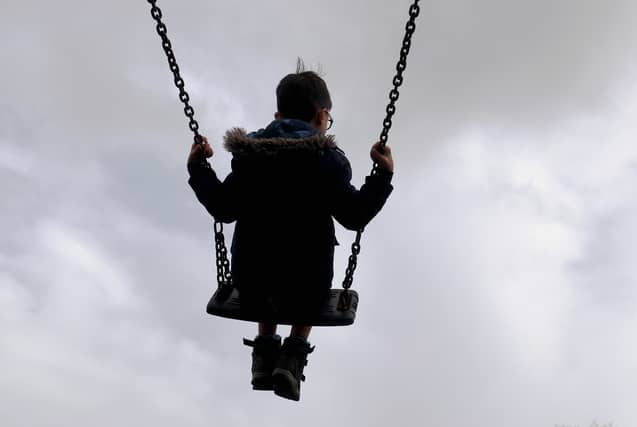

Clara's Ronan Scully writes children deserve to grow up feeling safe, loved, nourished and valued
There are moments when statistics cease to be numbers and become a mirror held up to the soul of a nation. This is one of those moments. New research from the Economic and Social Research Institute (ESRI) tells us that 200,000 children in Ireland were living in households below the poverty line in 2024 – almost 30,000 more children than in 2021.
When housing costs are taken into account, that figure rises to 260,000 children. Behind every statistic is a child. A child with a name. A child with a face. A child with dreams. A child who deserves to grow up feeling safe, loved, nourished and valued.
These are not simply numbers on a page. These are our children. And perhaps, as people of faith, we need to hear these statistics not just with our minds, but with our hearts. The prophet Isaiah tells us, “Learn to do good; seek justice. Defend the oppressed.” (Isaiah 1:17). Perhaps that is the challenge before us today.
A childhood being stolen
Child poverty is about far more than money. It can mean a child arriving at school without the breakfast they need. It can mean watching classmates take part in activities while knowing that their family cannot afford the cost. It can mean worrying about whether there will be enough food until the next payday, whether the electricity will remain connected, whether the rent can be paid or whether there will even be a secure home to return to. Poverty can steal opportunities. It can steal confidence. It can steal dignity. It can steal hope.
And tragically, it can steal childhood itself. No child should have to carry the worries of adulthood on their small shoulders. Jesus said, “Let the little children come to me, and do not hinder them.” (Matthew 19:14). What would Jesus say to us today if He saw a child going hungry in our communities? What would He say if He saw a family frightened that they might lose their home? Would He not remind us that every child is precious in the eyes of God?
A prosperous Ireland – but for whom?
What makes these figures particularly painful is that they come at a time when average disposable household income increased by 4% between 2023 and 2024. Yet the research also highlights something deeply uncomfortable: incomes grew by more than 7% for the wealthiest 10% of households, compared with around 3% for the bottom half. That should make us stop and think. Ireland may be prosperous on paper, but prosperity means very little to the child who goes to bed hungry, the family struggling to pay the rent or the parent lying awake wondering how they will provide for their children.
As Jesus reminds us, “For where your treasure is, there your heart will be also.” (Matthew 6:21). Perhaps our national budgets tell us something about our national priorities. What do we treasure? What do we value? And where are our children, particularly our poorest children, in those priorities? The true measure of a society is not simply how wealthy it becomes, but how it treats those who have the least.
The poverty line has a roof over it
There is another important dimension to these figures. The official poverty measure does not include housing costs. Yet for many families, rent or mortgage repayments consume an enormous part of their income. When housing costs are included, the number of children below the poverty line rises from 200,000 to 260,000. That tells us something important. You cannot separate child poverty from the housing crisis.
A family may technically be above a particular income threshold, but if most of that income disappears in rent, mortgage payments, electricity, heating and food, the reality experienced by that family can be very different. A child's stomach does not understand statistics. A cold bedroom does not understand economic growth. And a frightened child does not care whether poverty is measured before or after housing costs. They simply know that they are struggling. Scripture gives us a sobering warning, “Woe to those who make unjust laws… who deprive the poor of their rights.” (Isaiah 10:1–2). These words should challenge every generation. For poverty is not simply an unfortunate circumstance. Sometimes poverty is also the result of decisions we make, priorities we choose and injustices we allow to continue.
'Not acceptable'
The Taoiseach has acknowledged that the number of children living in poverty is “not acceptable” and has pointed to measures including free schoolbooks, hot school meals, additional DEIS supports and free GP care for young children. These initiatives matter, and every measure that helps a struggling child is important. But the ESRI research also reminds us that we are still very far from the Government's target of reducing child poverty to 3% by 2030. So perhaps the question for all of us is not whether something is being done, but whether enough is being done quickly enough. When a child is hungry, we cannot tell them that change is coming eventually. When a family is homeless, we cannot ask them to wait patiently for a solution.
When childhood is being diminished by poverty, time matters. Every year matters. Every month matters. Every childhood matters. The Letter of James challenges us, “Suppose a brother or a sister is without clothes and daily food. If one of you says to them, ‘Go in peace; keep warm and well fed,’ but does nothing about their physical needs, what good is it?” (James 2:15–16). It is a question we cannot easily escape.
'How can you?'
I remember asking God a question that has stayed with me throughout my life, “How can you let these children live in such poverty?” And in the silence of prayer, I felt another question coming back to me, “How can you?” How can you see suffering and look away? How can you hear the cry of a hungry child and remain silent? How can you know that children are going without the basic necessities of life and simply say, “Somebody should do something”? Perhaps God is reminding us that we are not merely observers of suffering. We are participants in the answer. The prophet Micah asks, “What does the Lord require of you? To act justly and to love mercy and to walk humbly with your God.” (Micah 6:8). Perhaps that is our vocation in the face of child poverty is to Act justly. Love mercy. Walk humbly. And do something.
Children are our greatest treasure
As a father, I find these figures particularly difficult to read. I think of my own children and the instinct every parent has to protect, provide, nurture and love them. And then I think of parents across Ireland who love their children just as deeply but are struggling to provide the basics. They are not bad parents. They are not failures. They are parents trying to survive in extraordinarily difficult circumstances. And their children are not responsible for the circumstances into which they were born. Their children are our children too. Jesus' words are unmistakable, “Whoever welcomes one such child in my name welcomes me.” (Matthew 18:5). When we welcome a child, we welcome Christ. When we protect a child, we protect Christ. When we feed a hungry child, we feed Christ. When we stand up for a child who has no voice, we stand with Christ.
The cry of the poor
During my years working in the developing world, I have held children who were abandoned, abused, starving and forgotten. In Calcutta, I encountered a little boy called Laltu who had been left to die in a sewer. His tiny life became a lasting reminder to me that every child matters. Every child is precious. Every child has dignity. Every child deserves love. Every child deserves an opportunity to become all that God created them to be. The face of poverty may look different in Ireland from the face of poverty in Ethiopia, India or other parts of the developing world, but the cry is the same. “Please don't forget me.”
The Psalmist tells us, “The Lord is a refuge for the oppressed, a stronghold in times of trouble.” (Psalm 9:9). But perhaps God also asks us to become that refuge for someone else. To become the person who notices. The person who listens. The person who shares. The person who speaks up. The person who refuses to walk away.
From compassion to action
Charity can help ease today's suffering, but we must also work for the justice that prevents tomorrow's suffering. We need policies that genuinely lift families out of poverty. We need secure and affordable housing. We need decent incomes and meaningful employment. We need access to healthcare and education. We need to support parents rather than judge them. And we need political courage to ensure that the children who have the least are never forgotten when decisions are made. Whatever solutions are ultimately chosen, the important thing is that we keep searching for better answers rather than becoming accustomed to the problem. Because compassion is not simply feeling sorry for someone.
Compassion is love that gets up and does something. St Paul tells us, “Carry each other's burdens, and in this way you will fulfil the law of Christ.” (Galatians 6:2). That is what a compassionate society does. It carries one another. It refuses to say, “That's not my problem.” It refuses to allow a struggling family to become invisible. And it refuses to allow a child to grow up believing that poverty is their destiny.
Children of our world
And our concern cannot stop at the shores of Ireland. Across our world, millions of children continue to experience hunger, poverty, conflict, drought, displacement and the devastating effects of climate change. Through my work in Africa and Asia, I have seen how poverty can rob families of choices and children of opportunities. I have also witnessed something else, 'Hope'. Hope grows when people stand together. Hope grows when a farmer receives the tools and knowledge to grow food. Hope grows when a community gains access to clean water. Hope grows when a mother can earn an income. Hope grows when a child can go to school. And hope grows when someone simply says, “You matter. I have not forgotten you.” The Gospel of Matthew reminds us, “I was hungry and you gave me something to eat, I was thirsty and you gave me something to drink.” (Matthew 25:35). The Gospel does not ask us merely to feel compassion. It asks us to live it.
Thought for the week
As your thought for the week, I invite us to look again at the children around us. Not at the statistics. At the child. Ask yourself: Have I become too accustomed to hearing about child poverty? Have I allowed another person's suffering to become background noise? Have I mistaken awareness for action? What would I want someone to do if it were my child who was hungry, homeless or struggling? And then ask, “What can I do?” Perhaps we can support a local charity. Perhaps we can give what we can. Perhaps we can volunteer. Perhaps we can contact our elected representatives and ask them what they are doing to tackle child poverty. Perhaps we can simply notice someone who is struggling and offer a listening ear, a meal, a helping hand or a word of encouragement.
We cannot solve every problem in the world. But we can help one person. We can change one life. We can become one small light in somebody else's darkness.
And sometimes one act of love can change the direction of one life forever. Perhaps that is where the real challenge begins. The next time we hear that 200,000 children are living below the poverty line, let us not simply shake our heads. Let us picture one child. Let us imagine their face. Let us hear their voice. And then let us remember the words of Jesus, “Whatever you did for one of the least of these… you did for me.” Perhaps the child we are being called to help is not merely one of 200,000. Perhaps, in the eyes of God, that child is the one who matters right now. And perhaps the question God is whispering into the heart of each one of us is still the same, “How can you?” May our answer be not simply words, but a life of compassionate action. “Lord, show me what I can do – and give me the courage to do it.”
Let me leave you with a prayer I wrote called 'A Prayer for Our Children' - "Loving God, We place before you the children of Ireland and the children of our world. Especially those who are hungry, homeless, frightened, lonely or forgotten. For the child who goes to bed hungry, provide food. For the child without a home, provide shelter. For the child who feels forgotten, provide someone who will care. For the family struggling to survive, provide strength, dignity and support. Give wisdom and courage to those who make decisions that affect the lives of our children. Give us eyes that see suffering, ears that hear the cry of the poor and hearts that refuse to become hardened. When we hear the cry of a child living in poverty, may we never simply ask, “Why doesn't somebody do something?” Instead, may we have the courage to ask, “What can I do?” And when the answer comes, may we have the courage to say, “Whatever I can.” Lord, help us to remember the words of Jesus, “Whatever you did for one of the least of these brothers and sisters of mine, you did for me.” (Matthew 25:40). Help us therefore to see Christ in the hungry child. Christ in the homeless family. Christ in the frightened parent. Christ in the forgotten and the forgotten-about. May we never become comfortable with another person's suffering. May we never allow poverty to become somebody else's problem. And may we build an Ireland and a world where no child is forgotten, no child is hungry, no child is homeless and no child grows up believing that they are worth less because they have less. For every child is precious. Every child is loved. Every child has dignity. Every child is a gift. And every gift from God deserves to be treasured. Amen."