

OPINION (AN COLÚN): When Irish Christians were harsh & cold

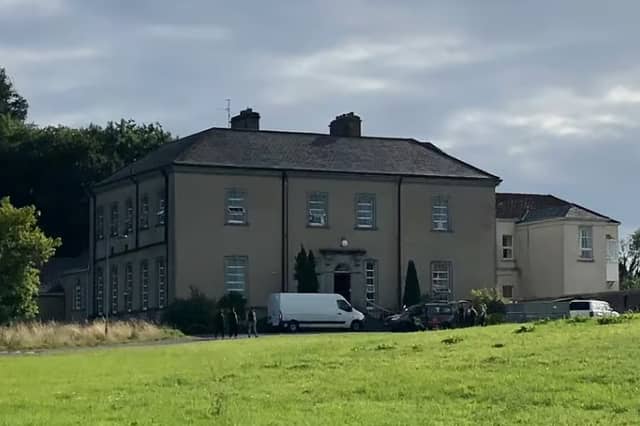

The Sean Ross Abbey Mother and Baby Home in Roscrea operated from 1932 to 1970 and was run by the Congregation of the Sacred Hearts of Jesus and Mary.
THE film “The Lost Children of Tuam” is a powerful insight into the way we were in this country during the 20th Century, a way which was profoundly unsettling, hypocritical and, ironically, deeply unChristian. If the essence of Christianity is a compassionate frame of mind (and I strongly believe it is) then many of us during that unpleasant, nasty period of our history were in fact anti-Christian. It is a frequent irony in the history of all nations (as far as I can see) that those who strut and preen themselves on their piety are in fact unkind, harsh and rule-bound.
The Mother and Baby and County Homes of Ireland ran from 1922 (around the foundation of the Irish Free State) until 1998, when the last home (Bessborough) finally closed. We had no sooner finally got rid of the British Empire from our lives, when we instituted a bleak, inflexible and heartless version of Catholicism into our lives. In other words we replaced one dislikeable form of rule with another (thankfully we didn’t descend into the full-blown authoritarianism of Spain or Portugal, but our instincts were undoubtedly dubious).
During this period, Irish society treated pregnancy outside of marriage as a severe moral disgrace. Unwed mothers faced intense judgment from society and rejection from their own families. Single mothers were routinely denied financial aid, employment, or backing from the child's father, leaving them destitute and with few alternatives. These single mothers were sometimes wild and unruly, but there was no excuse for treating them the way we did. The 18 Mother and Baby and County institutions were set up and funded through a combination of local authorities, the Irish government, and Catholic religious orders (who managed the day-to-day operations) to isolate "fallen women" and manage illegitimate births. During the 76-year period of their existence nearly 56,000 to 60,000 women and tens of thousands of children spent time in these institutions. They were characterized by overcrowding, poor sanitation, inadequate medical facilities, and harsh, unsupportive environments. According to an Oireachtas report on the matter, “Women faced severe emotional abuse, stigma, and denigration, particularly during childbirth.” About 9,000 children died in the 18 homes, representing an overall infant mortality rate of roughly 15%. In certain homes and peak periods, death rates were drastically higher—for example, reaching up to 75% in Bessborough in 1943 and 62% in Bethany in 1943. Common causes included infectious diseases, malnutrition, and congenital debility. Mothers faced immense psychological, social, and institutional pressure to surrender their children for adoption. By 1967, adoption peaked at 97% of births categorized as "illegitimate.” The October 2020 Final Report of the Mother and Baby Homes Commission of Investigation stated that there was “little evidence" of formal physical force in every single adoption, but added that mothers had no realistic alternatives and little control over the fate of their children.
The Sean Ross Abbey Mother and Baby Home in Roscrea operated from 1932 to 1970 and was run by the Congregation of the Sacred Hearts of Jesus and Mary. During its existence 6,414 women and 6,079 children were admitted to the facility. The home suffered from severe overcrowding, and high infant mortality rates were driven by epidemics including measles, whooping cough, viral pneumonia, diphtheria, and typhoid (with 1,090 infant deaths recorded over its history, including deaths from conditions like marasmus). Following legal changes in the 1950s, the home became a major hub for forced or coerced adoptions, sending hundreds of children away, including hundreds adopted by families in the United States. The home features in the oscar-nominated film “Philomena.” Survivors and campaigners have continuously pushed for investigations into the unmarked graves at the site's "Angels Plot" in Sean Ross. They seek the full accounting and excavations of the children who died there. They have called for a tank to be unearthed which they believe might contain human remains, a situation which is reminiscent of the Tuam Home as depicted in “The Lost Children of Tuam.”
I think Archbishop Eamon Martin, leader of the Irish Catholic Church, was correct when he said it would be wrong if religious congregations were left to carry the sole blame for the Homes; and he was right to emphasise that the entire culture and society of the time supported or condoned the system. The crucial point is that pregnant women were frequently rejected, hidden, or sent away by their own families and local communities who prioritized social respectability over the welfare of the mother and child.
In a very interesting article in “The Irish Catholic”, David Quinn made the point that many people unfairly demonise the Bon Secours nuns for what happened in the Tuam Home. “The nuns did not kill the babies or deliberately neglect them to death,” he writes. He said it’s important to also factor in the prevailing poverty of the era and the fact the Home was “badly under-resourced by Galway County Council.” Some years ago the State ordered a dig at the Tuam site to find the bodies of the 800 children. The dig is still underway and periodically issues reports. The most recent report, last July, said another 99 bodies had been found, all in coffins. The underground structure / septic tank hasn’t yet been investigated, but it will be and we know that bodies will also be found there. At this stage, it looks likely that the majority of the bodies were buried in coffins.