

Popular Pagan Festival to be held once again high in the Slieve Blooms

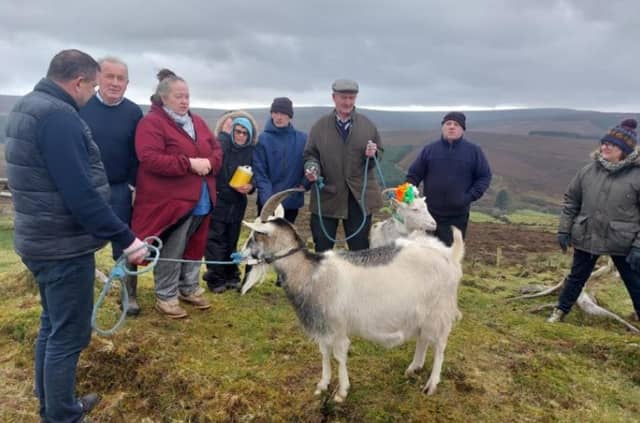

Ceremonial goat will be garlanded on Offaly mountain
A POPULAR Pagan Festival is to be held once again high in the Slieve Bloom Mountains and a warm invitation is extended to the general public to join in the fun.
Every year the Slieve Bloom Association mark the ancient festival of Imbolc by gathering togther for a ceremony involving goat milking, butter churning and music making.
This year they will gather in the former Dempsey's Pub Car Park in Cadamstown at 12.30pm on Sunday February 1, to then proceed to the Bracket Stones on Spink Mountain for the ceremony. The Association pointed out that the event is taking place on St Brigid's Day and it will be a “seasonal ritual rooted in landscape, folklore and community.”
Our Pagan ancestors held this festival in order to mark the official start of spring, signal the end of winter, the return of light, and the beginning of the lambing season. This pastoral, purification festival focussed on fertility, honoured the goddess Brigid, and ensured livestock and crops would thrive. Brigid was associated with fire, healing, poetry, and smithcraft. Imbolc was positioned halfway between the winter solstice and spring equinox, and represented hope and relief following the dark, cold winter months. The name is perhaps derived from i mbolg ("in the belly") or óimelc ("ewe's milk").
Imbolc was one of the four Celtic seasonal festivals, the others being Bealtaine, Lughnasadh and Samhain. It was revived by the Slieve Bloom Association in 2013. There are many customs associated with this seasonal festival. The custom associated with the Slieve Bloom Mountains is the milking of the goat.
The Association brings their festival goat high up Spink Hill. After milking they churn the milk. Afterwards, the Goat is crowned, which means it is adorned with ribbons and garlands.