

Birr Castle's UNESCO bid features on Nationwide

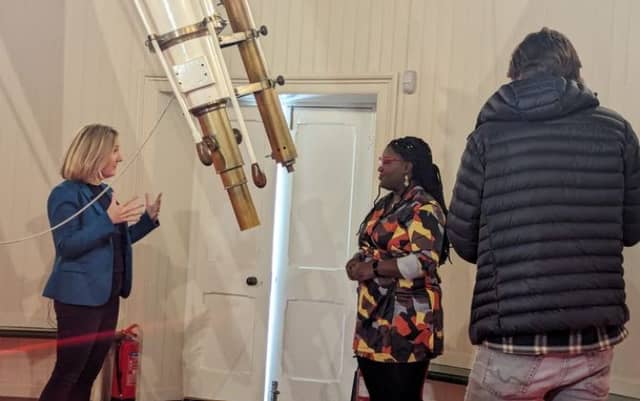

IN FEBRUARY an important meeting was held in Birr Castle as part of a drive to have the Demesne, Armagh Observatory and Dunsink Observatory eventually given World Heritage Site status.
Dunsink Observatory, Armagh Observatory & Planetarium, and Birr Castle Demesne came together in 2023 to form the Astronomical Observatories of Ireland partnership and stated that they have a number of aims but the biggest one is to achieve UNESCO World Heritage Site status for the observatories, a status which is very hard to achieve.
Earlier this year RTÉ Nationwide visited Dunsink (where the people in Dunsink were joined by their partners from Armagh Observatory) and Birr Castle to hear about this partnership and the UNESCO bid. The Nationwide piece aired on Tuesday, 20 August last, and can still be viewed on RTÉ Player.
The programme examined what getting the status would mean for the three historic sites. The Nationwide reporter told us that throughout history curious minds have been intrigued about the night-sky, and the three observatories have been at the forefront of that curiosity and quest here in Ireland. Caitríona Mullan of Astronomical Observatories of Ireland told the programme that the three observatories “are the earliest astronomical sites in the modern era. There are huge connections between the three sites. They have made contributions over the turning of three centuries, the 19th, 20th and 21st centuries. They have a shared architectural heritage in terms of the design of the observatories. There's also a huge social history connected with them as well, in terms of the kind of thinking that founded them and the contribution to humanity that the work at these observatories continues to make in the present day.”
UNESCO recognition is awarded to sites which are considered to be of “outstanding universal value.” Getting UNESCO recognition would also ensure these sites will be preserved for future generations.
Peter Gallagher, astrophysicist, told the programme that in his 15 years working in Birr the Leviathan has only moved once. “It has motors which could work but it's quite a task and is worrying to try. Perhaps UNESCO status will mean we will be able to get it safely moving again.” He said the I-LOFAR Radio Telescope in the Demesne is not part of the UNESCO bid.
In last February's meeting in Birr Castle, representatives from the town, local council, property owners, and members of the National Monuments Service World Heritage Unit gathered alongside delegates from Armagh and Dunsink Observatories for the historical meeting. In a joint statement, Chair of Birr Castle Demesne Peter Gallagher and Councillor John Carroll expressed their enthusiasm and commitment to the project. "The convergence of expertise and passion among stakeholders ignites optimism for the realisation of our collective aspirations here at Birr,” said Cllr Carroll.
The local council expressed its support for this transformative initiative and representatives from the World Heritage unit affirmed their commitment to guide the applicants in their journey towards UNESCO recognition of which the first step would be the inclusion in the Irish Tentative List.