

Delay in reporting separation of UN convoy before fatal shooting, inquest told
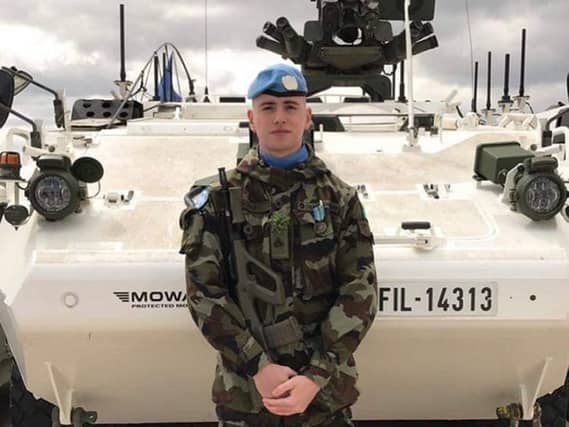

Private Sean Rooney was shot dead in December 2022 after the UN vehicle he was driving was attacked while on a transport mission in Lebanon.
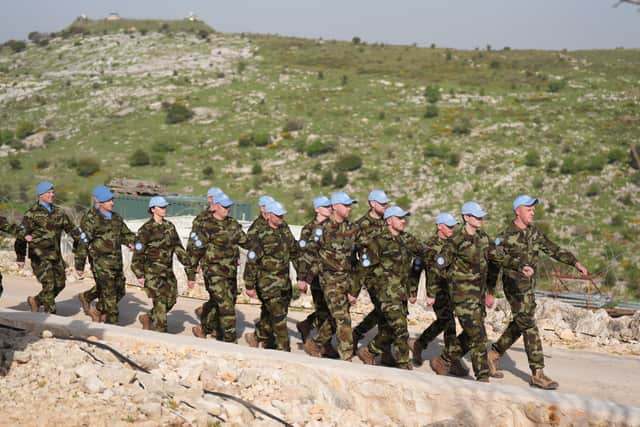
The moment of separation of a convoy of Irish peacekeepers which saw the death of a soldier may not have been reported back to the tactical operations centre for several minutes, a communications operative has told an inquest.
Private Sean Rooney was shot dead in December 2022 after the UN vehicle he was driving was attacked while on a transport mission in Lebanon.
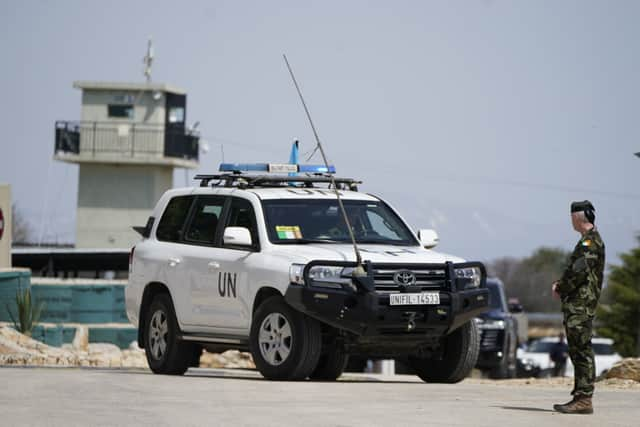
The inquest into his death has heard he was supposed to be following a lead vehicle but the convoy had become separated earlier in the journey and both Land Cruisers ended up on different roads.
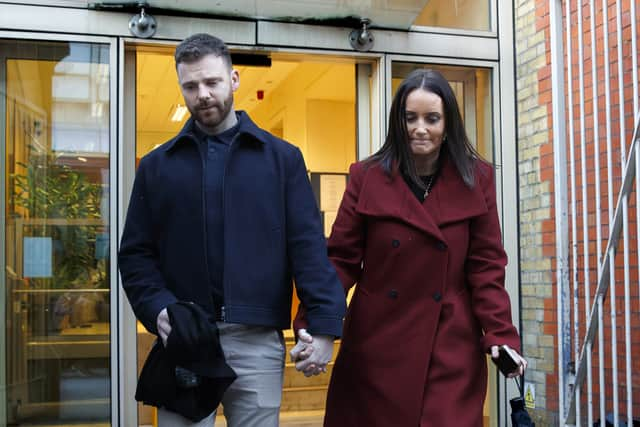
The jury heard the vehicles became separated after a stop at a UN outpost, EP-28, at the edge of Unifil’s area of operations.
There had been an issue with the key fob in Pte Rooney’s vehicle and it departed EP-28 several minutes after the lead Land Cruiser.
The inquest heard Pte Rooney’s vehicle proceeded towards a village where it was surrounded and attacked, later being fired upon as the peacekeeper tried to drive away.
Corporal Richard Shanahan told the inquest on Thursday that those in the lead car thought Pte Rooney’s Land Cruiser was behind them but realised at the highway that it was a different vehicle.
The jury heard that the role of Cpl Shanahan, who at the time was a signalman in the lead vehicle with commanding officer Captain David Kelly and two others, was to make sure communications equipment in the vehicle was working properly.
After realising the cars became separated, he said Captain Kelly took over driving and the vehicle returned to EP-28.
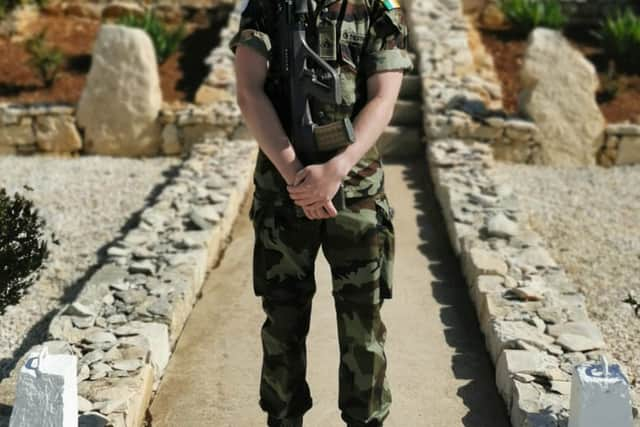
This detail came under questioning from Sean Guerin, the barrister representing Pte Rooney’s family, who asked Cpl Shanahan about apparent discrepancies in his evidence and previous accounts he had given.
Mr Guerin suggested that there were inconsistencies as to how far the lead car had made it up the highway before stopping and whether it had returned to EP-28.
Cpl Shanahan had said during the inquest he could not remember if they had returned to EP-28, which he accepted was a place of significance because of security and was a “point that everybody would know”.
He added: “We were definitely on our way back but I don’t know if we made it the whole way there”.
He had also said the lead vehicle had made it 100 metres up the highway before realising the second Land Cruiser was not behind them.
However, Mr Guerin said Cpl Shanahan had given earlier accounts which said they had returned to EP-28 and that the car had driven several hundred metres down the highway before stopping.
Cpl Shanahan said it was “quite a stressful time” and “maybe my memory was a little patchy”.
Later saying they had made it back to EP-28, he said there had been a passage of time and his “head was scrambled”.
Mr Guerin said the jury may form the view that “those two mistakes are a feature of the recollection of more than one of the occupants of that vehicle” which he described as a “common affliction of the memory” in the lead Land Cruiser.
Cpl Shanahan replied that he was “not trying to deceive” or change a perspective, adding that he did not know why his account changed.
Mr Guerin also challenged the communications operative as to why his statements did not include references to using a very high frequency (VHF) radio in attempts to contact the other car, instead using lower-powered Motorola radios which are not as effective at longer distances.
Asked if that is because he did not use the VHF radios during the incidents, Cpl Shanahan said: “I wouldn’t say so.”
Additionally asked whether he had completed checks on the VHF systems before departure, he said: “I think I definitely would have.”
Mr Guerin put it to him that there was no way he checked the VHF because he would have mentioned it to his senior officers and Lebanese authorities that he tried to used them to find Pte Rooney before he was killed.
Cpl Shanahan said: “I don’t know why I left it out.”
He said his vehicle did have a VHF handset.
He also accepted that a signalman would know he had a better chance of contacting a lost vehicle outside the Unifil area of operations with the VHF rather than the Motorola radios.
He agreed with Mr Guerin when the barrister said the reality was because Pte Rooney’s vehicle continued on the coastal road while the lead car had gone back to EP-28, it made it less likely they would have made contact with them on the Motorola radios.
Cpl Shanahan said the tactical operations centre (TOC) at the Irish base UNP-245, also known as Camp Shamrock, contacted the lead vehicle after Pte Rooney’s car had encountered difficulty.
He agreed that the separation of the convoy outside the Unifil area operations presented security challenges and particular dangers which had not been reported to the TOC straight away.
He further affirmed that it may have been that a period of up to 16 minutes was lost in terms of seeking help and support because of that failure to report the separation.
Cpl Shanahan’s depositions, which were read to the court, also detailed how the lead vehicle headed back to the highway but a tire blew out.
He also said that they were fired at – and because the car was inoperable – they decided to leave on foot.
He said they did not want to “end up in a similar situation” as those in Pte Rooney’s car.
He also recounted hiding from passing cars which they thought may have been responsible for the gunfire, before encountering friendlies and returning to Camp Shamrock.
Earlier in the inquest, retired able seaman and tech specialist Colm McGrath gave evidence that the very high frequency radio was not recovered from Pte Rooney’s vehicle.
Asked by Mr Guerin if he would accept that evidence from people in the TOC that there was no record of a radio check meant it was not done, Mr McGrath said it was his recollection that the checks were done.
The questioning of witnesses is being split into normal public sessions as well as private hearings away from the media because of concerns over the security of serving personnel.
The inquest returns on Monday and is expected to sit into mid-December.