

Can you build self confidence? Here's what the Offaly psychologists say


Yes you can: Offaly-based chartered clinical psychologists explain how self confidence can be built, and rebuilt
MANY people feel at times that they lack self-confidence or that low confidence is holding them back from achieving some of the things they want to do.
They may look enviously at others who seem to be more self-assured and wonder why they don’t have that much confidence. As psychologists we often hear clients saying that their confidence feels 'knocked' by certain life experiences such as illness, loss of a relationship or job.
Wouldn’t it be great if we could all buy a box of confidence to top up our supply when we felt we needed a boost? It may not be quite that simple but as psychologists we know that there are actually many things we can do, at any age or life stage, to boost self-confidence.
What is this desirable quality of self-confidence anyway? The word 'confidence' comes from the Latin word fidere, 'to trust'. So self-confidence is about trusting and believing in oneself and one’s abilities. It affects how we behave in many situations.
When we feel confident we feel able to seek out new opportunities, to face life challenges and difficulties and we do not feel demolished when things go wrong. Many factors contribute to the early development of self-confidence including genetics, learning from parents and caregivers, how we are treated and spoken to and so on.
Yet there is really no such thing as a 'confident person' because confidence is not static, it varies from day to day and from situation to situation. It is not uncommon for someone to be very confident in their professional role or job but to lack confidence in their personal lives and relationships.
It is also very normal and common that people find that a wide range of life events and stressors 'knock' their confidence. So from a psychological perspective, we view self-confidence as something that we build, re-build and need to work at maintaining right through our lives.
When we feel the need to build (or rebuild) our confidence, it is worth considering some of the factors which prevent us from feeling confident. One of the most common ways in which we reduce our confidence is by undermining ourselves in our thoughts. Imagine a situation in which you have been asked to make a short presentation to a group of work colleagues.
If you tell yourself “I won’t be able to do this, I will make a fool of myself”, that will immediately knock your confidence and create feelings of anxiety. Becoming aware of the ways in which we undermine ourselves is a useful first step towards changing that pattern. People who have listened to negative messages about themselves in childhood (for example “you are no good at...”) will often internalise these messages and they become part of their internal narrative as adults when faced with new opportunities.
So taking time to become aware of those internal negative thought patterns helps us change them for more confidence-enhancing thoughts (for example “I can try this and I might be good at it but even if I’m not, I may still enjoy the experience and get better with practice”).
When we feel low in confidence, this often results in a drop in our assertiveness. Then, behaving unassertively further diminishes our self-confidence. So learning and developing the skills of assertive communication can be important in boosting confidence. Assertive communication is about respecting our right to have our needs met and to express those needs clearly.
At times, being assertive may require us to set boundaries by saying no to requests, when we are tired, overburdened or just don’t want to do something. When confidence is low, many people struggle with saying no, often from a misplaced sense of guilt. We like this little saying “You can be a good person with a kind heart and still say No”.
Another aspect of assertiveness which is important for self-confidence is how we handle criticism. Learning to distinguish put-downs from constructive criticism is an important first step. To feel confident, we need to recognise that constructive criticism is an opportunity for growth and learning rather than a diminution of our personal value.
Feeling confident means extracting the useful learning from criticism and moving on, rather than dwelling on the critical words. Psychological research shows that when we develop an attitude of self-compassion, this is very helpful in building confidence.
Self compassion is about developing an attitude of kindness and warmth towards ourselves as well as a preparedness to encourage, support and push ourselves to make positive changes when appropriate.
When we practise self-compassion we are not be afraid to make mistakes as we will not criticise ourselves for them but realise that mistakes are a normal part of learning something new.
Finally, a psychological tip which has long been known to be helpful is to 'fake it till you make it'. Behaving 'as if' you feel confident even when you don’t is a useful way of boosting confidence.
So observe the posture, tone of voice and attitude of someone who seems confident and adopt these behaviours yourself. Over time, the feeling of confidence will follow.
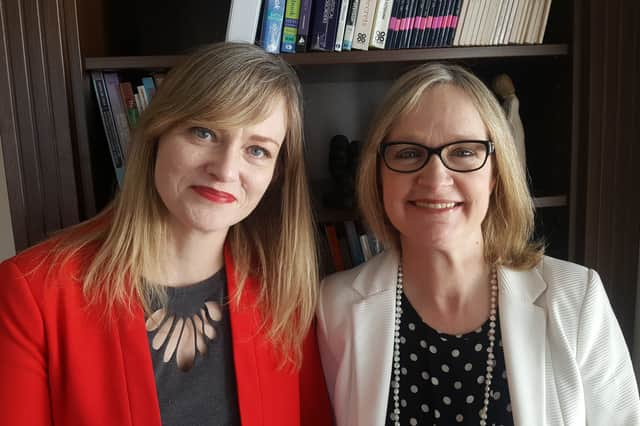
Imelda Ferguson and Julie O’Flaherty are both Tullamore-based chartered clinical psychologists with extensive experience in the adult mental health field. They are running a one-day course, ‘Building Self Confidence and Beating Anxiety’ on Monday, October 12, 10am to 4pm in the Central Hotel, Main Street, Tullamore (opposite Lidl). The cost is €150 (early bird fee of €125 when paid in full by Friday, October 2, fee includes course materials, tea/coffee, lunch and hotel parking). For further information or to book a place, contact Imelda on 087 2271630, Julie 087 2399328 or send a private message on the Facebook page: Mind Your Self Midlands.