Search


23 Feb 2026
Search
23 Feb 2026

Please allow ads as they help fund our trusted local news content.
Kindly add us to your ad blocker whitelist.
If you want further access to Ireland's best local journalism, consider contributing and/or subscribing to our free daily Newsletter .
Support our mission and join our community now.
To continue reading this article, you can subscribe for as little as €0.50 per week which will also give you access to all of our premium content and archived articles!
Alternatively, you can pay €0.50 per article, capped at €1 per day.
Thank you for supporting Ireland's best local journalism!


British star Robert Aramayo’s emotional reaction to winning the Bafta for best actor for his portrayal of a Tourette Syndrome campaigner in I Swear was arguably one of the standout moments of the 2026 Bafta film awards on Sunday night.
Set in 1980s Galashiels, a town in the Scottish Borders, I Swear follows the story of John Davidson, who developed the neurological disorder when he was 12, and his journey to advocating for better awareness of the condition.
Underdog Aramayo also scooped up the EE Rising Star award at the ceremony at the Royal Festival Hall in London, and the film also won the award for best casting.
The BBC issued a formal apology following the broadcast after a racial slur was shouted during the ceremony by a member of the audience who reportedly had Tourette Syndrome, as Sinners actors Delroy Lindo and Michael B Jordan presented the award for special visual effects.
While the highly praised I Swear biopic has shone a much-needed light on Tourette Syndrome, many myths around this condition still remain. We spoke to Dr Lisa Davies, a Priory consultant psychiatrist and Tourette Syndrome specialist, who supports patients at Priory Hospital Roehampton, who has highlighted seven key things she wishes everyone knew about Tourette Syndrome.
1. Diagnosis requires tics to have been present for at least a year
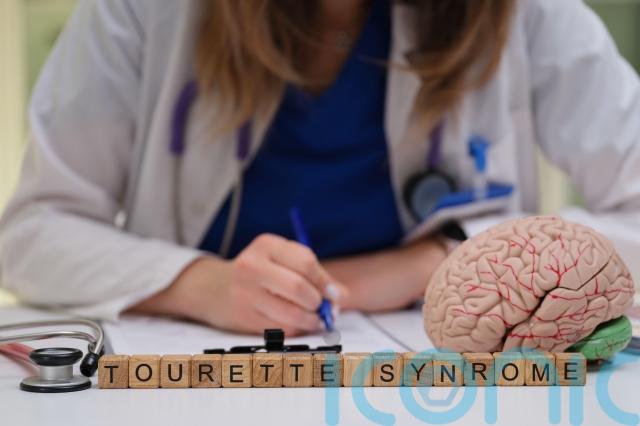
“Tourette Syndrome (TS) is a neurological disorder and is diagnosed based on the presence of involuntary motor and vocal/phonic tics, which must be present for at least 12 months to meet the diagnostic criteria,” says Davies.
2. Tourette Syndrome covers a huge range of behaviours
“Tics can range from mild, which include things like blinking and throat clearing, to very extremely severe and include serious things like coprolalia (inappropriate words and phrases) or copropraxia (offensive hand gestures),” says Davies.
“There is also something called NOSI (which stand for non-obscene socially inappropriate behaviour or symptoms) which can get people into a lot of difficulty. Some people may also present with self-injurious behaviour where, by virtue of their tics, they hit themselves.”
3. TS isn’t just about swearing
One of the biggest misconception around Tourette Syndrome is that everybody with the condition will swear or say socially inappropriate things.
Coprolalia is the clinical term for tics that produce socially unacceptable words, but only approximately 10-30% of people with TS have this symptom, according to Tourettes Action’s website.
“The bias or stigma attached with the label Tourette Syndrome is largely to do with the negative media bias placed on TS, which is largely focused on coprolalia,” says Davies. “That’s what is usually shown on TV and is often what the social media algorithm will feed you, but it doesn’t show the whole picture.”
4. Tics are involuntary
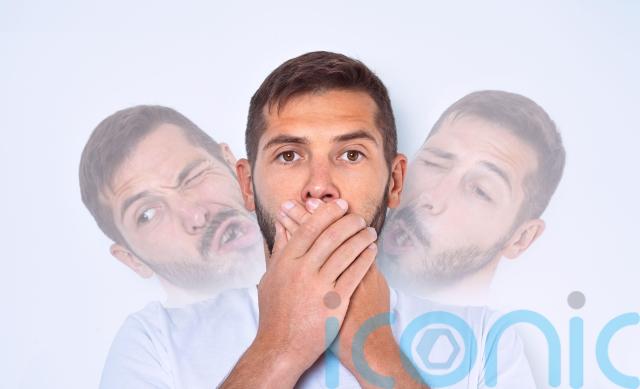
“Tics are involuntary, but some people have something that they call a ‘premonitory sensation’, which is a bit like feeling you get before you sneeze,” notes Davies. “Some people say they feel a tickle or a sensation in their body that signifies that tics are coming on, but that doesn’t mean that they can help it.”
5. Some people adopt strategies to suppress the tics
“Some individuals can suppress their tics for a certain length of time, but often within that period it’s like a pressure cooker building up which feels very uncomfortable,” says Davies. “Then often what happens is a ‘rebound’ where by virtue of holding the tics in, when they do then come out, they come out in a more explosive, severe way.
“That’s why sometimes it can be helpful for them to go to a safe place to let their tics out.”
6. People tend to have their own specific environment triggers

“It’s quite difficult to monitor treatment response to TS because the nature of the tics can get better and worse over months and weeks for no obvious reason, and the term we use is waxing and waning,” says Davies. “However, there’s often environmental variability, and for each child or individual that differs.”
During an assessment, Davies says she will ask her patients questions about what tends to make their tics worse, and what makes them better.
“For example, some people will say when they’re relaxed and watching TV, that’s when their tics will come out, but others will say that’s when their tics are better. So, it depends on the individual,” says Davies. “However, stress, tiredness, anxiety, frustration and hunger are all common things that people often report that make their tics worse.”
7. Co-occurring conditions are very common
Up to 85% of people with TS will also experience co-occurring conditions and features which might include attention deficit hyperactivity disorder (ADHD), obsessive compulsive disorder (OCD), and anxiety, according to Tourettes Action’s website.
“When I’m doing an assessment for tics, it’s just as important to take into account all of these aspects, because something like the OCD might be the thing that’s actually affecting their lives more,” says Davies.

Subscribe or register today to discover more from DonegalLive.ie
Buy the e-paper of the Donegal Democrat, Donegal People's Press, Donegal Post and Inish Times here for instant access to Donegal's premier news titles.
Keep up with the latest news from Donegal with our daily newsletter featuring the most important stories of the day delivered to your inbox every evening at 5pm.

This publication supports the work of the Press Council of Ireland and Office of the Press Ombudsman, and our staff operate within the Code of Practice of the Press Council. You can obtain a copy of the Code, or contact the Council, at www.presscouncil.ie, Lo-call 1800 208 080 or email: info@presscouncil.ie.