Search


13 Apr 2026
Search
13 Apr 2026

Please allow ads as they help fund our trusted local news content.
Kindly add us to your ad blocker whitelist.
If you want further access to Ireland's best local journalism, consider contributing and/or subscribing to our free daily Newsletter .
Support our mission and join our community now.
To continue reading this article, you can subscribe for as little as €0.50 per week which will also give you access to all of our premium content and archived articles!
Alternatively, you can pay €0.50 per article, capped at €1 per day.
Thank you for supporting Ireland's best local journalism!


“Keep moving” orders a voice deep from the abyss, as a length of people, as far as the eye can see, try to avoid bashing their heads on the ancient rocks above them, me included.
Sweat dripping from my brow, there’s no chance of stopping to catch my breath.
A few moments ago, I’d joined the crowds to marvel at the oldest of the Seven Wonders of the World, the Great Pyramid of Giza. Now, having shown perhaps a little too much enthusiasm, I am actually inside the colossal structure.
Standing at over 140 metres high, I clearly hadn’t thought what going inside what was once the tallest man-made structure in the world, would entail. However, crawling up the narrow, clammy shaft, where crowd control clearly isn’t a thing, I am beginning to have second thoughts – it’s intense!
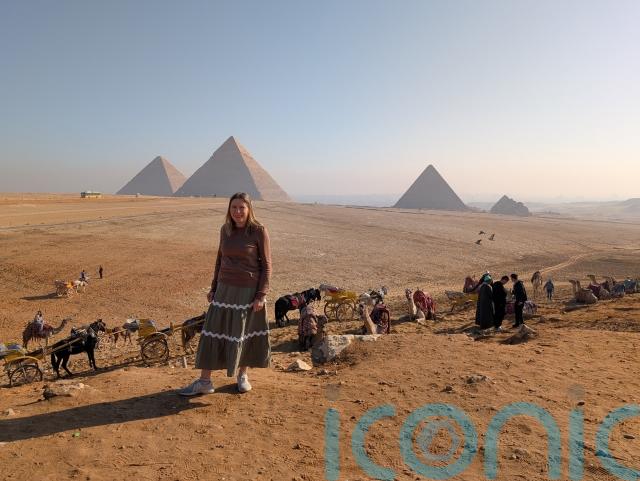
Despite only being about 100 meters from the entrance to the King’s Chamber, it takes a good 15 minutes to reach it. When I do finally make it, I remain at ground level as I try to catch my breath and look around at basically… nothing. Aside from the stone sarcophagus of Khufu (a stone coffin) the only other inhabitants of this tiny room are my fellow travellers.
I’m not sure what I expected; lavish, gold treasures, maybe a genie bursting from a lamp ready to grant me three wishes, but alas, these were ransacked many millennia ago.
Cairo, for me, has always been a bucket-list city. However, it’s one of those places that have always seemed a little too daunting to take on by myself. I’ve learnt that sprawling, chaotic cities require some sort of professional navigation. Coupled with its vast, complex history, this only cemented that feeling. So I joined a whistlestop tour of Egypt’s ancient city, with expert-led small-group tour company Jules Verne.
Cairo is not just one city, it is many cities stacked on top of each other. A city where pharaonic monuments sit beside medieval mosques, colonial-era buildings and modern apartment blocks. It is a city that shouts and sings at the same time. The call to prayer echoes across rooftops, while the crowded bridges over the Nile reverberate with the beeping of horns and shouts of traders. With more than 22 million people, layers of history stretching back to biblical times, and streets that never seem to sleep, this formidable city can feel overwhelming.
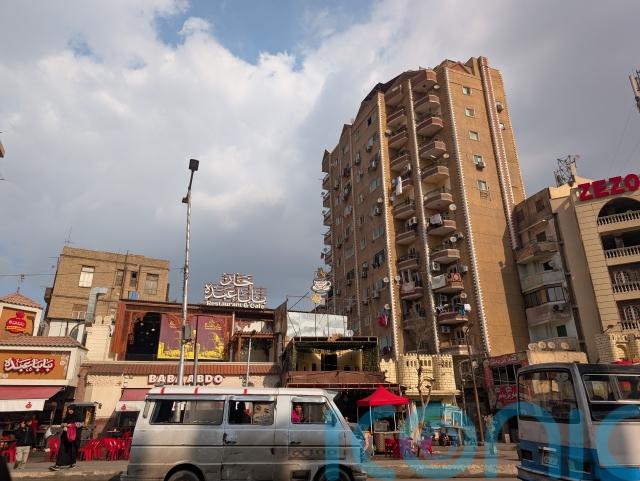
Enter Moustafa. An off-duty archaeologist and our guide for this short break. What he doesn’t know about Egypt, isn’t worth knowing.
From one panic-inducing experience to another – weaving along the roads of Cairo – Moustafa filters 5,000 years-worth of history into bitesize nuggets until we arrive at our lunch destination. In a city of dust, this unassuming spot on the fringes of Cairo turns out to be the upmarket Saqqara Country Club, set in an oasis of lush, palm tree-filled landscape. The kind of place that wouldn’t look out of place in a James Bond movie.
The newly opened Grand Egyptian Museum – described as the world’s largest archaeological museum – is the starting point for my second day. The museum, which opened in November, contains over 100,000 artefacts, including a display of the boy king Tutankhamun’s tomb in full for the first time, since it was found by British Egyptologist Howard Carter.
The museum is expected to be a huge step in cultural tourism for Egypt, and we spend four hours here, also seeing The Solar Boat – or King Khufu’s ship – which at 4,600 years old was built to represent the journey to the afterlife. Discovered in 1954 at the corner of the Great Pyramid, the cedar wood structure is considered to be the oldest and biggest wooden artefact discovered in ancient Egypt and took 10 years to reassemble.
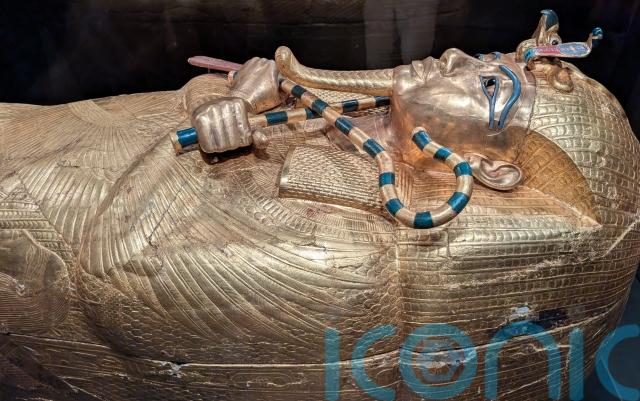
Even walking the magnificent staircase leading to the exhibitions holds real grandeur; lined with statues of ancient kings and queens, a huge window on one of the upper floors gives a perfectly framed view of the Giza Pyramids (when you can get to it).
This is followed by lunch aboard a traditional felucca sailboat, a personal highlight, and one that Moustafa is adamant we all return to do on a ‘proper’ Nile cruise.
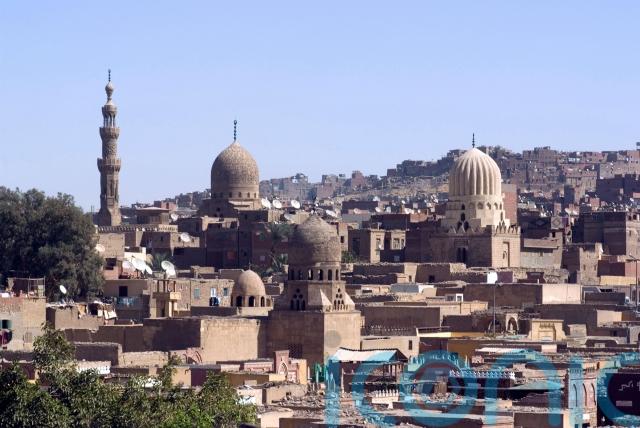
But, out of my brief time here, a whistlestop tour of the past two millennia from the Coptic Quarter to modern-day Cairo is the highlight. Within the remnants of the Babylon Fortress, this compact district, often referred to as Misr al-Qadima, houses labyrinthine streets that hide Roman ruins, centuries-old churches and a synagogue.
Christianity arrived here in around 42AD when St. Mark the apostle founded the Coptic Orthodox Church in Alexandria, making it one of the oldest Christian denominations. By the 7th Century, after the Muslim conquest, Coptic Cairo flourished as a Christian hub, which saw churches erected alongside emerging Islamic sites.
Today, it is a symbol of religious harmony, where mere steps from each other sit Egypt’s first mosque, its oldest synagogue and Roman fortifications. It is like stepping into living history where time seems to blur.
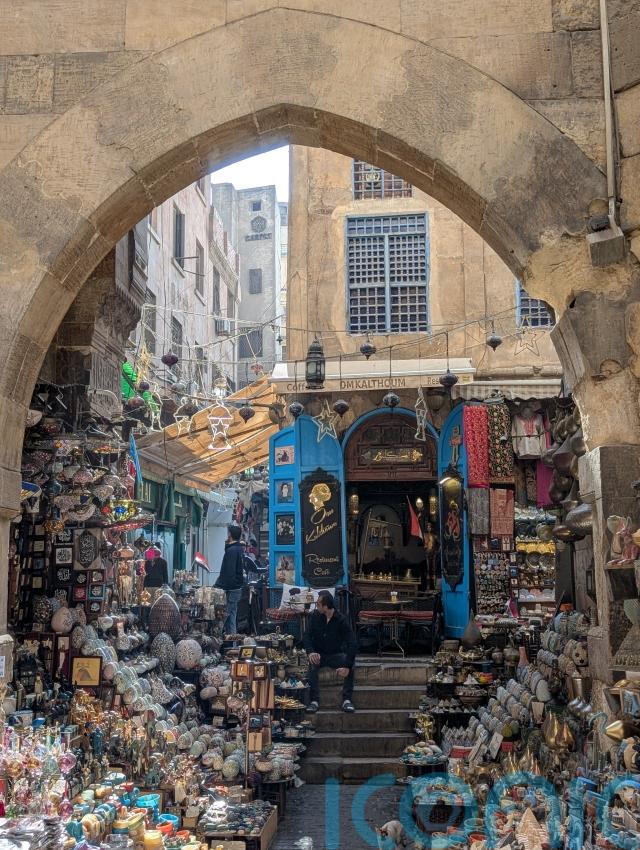
Adorned with exquisite stone carvings at every turn, where discreet doors open out into amazing spaces, it’s hard to believe that Cairo’s bustling streets are just metres away.
From biblical-era churches, like the Saints Sergius and Bacchus, a basilica-style church which harbours the underground cavern where the holy family took refuge to the well from which they drank, and Ben Ezra Synagogue where Moses was supposedly found in the Nile reeds, to Egypt’s most famous Coptic site, The Hanging Church, Coptic Cairo stands as a living testament to Egypt’s layered past.
Moustafa pummels us with facts at every turn, from the trailblazing Queen Hatshepsut to the warrior-king Ramesses II. There is also a somewhat in-depth discussion about Egyptian and Liverpool football player, Mohamed Salah.
Cairo’s street food is some of the best in the world, but it can be hard to know where to start. So, on our final morning, we head to Khan el-Khalili bazaar to barter for some last-minute souvenirs and get our final fill of Egyptian fare. Thanks to Moustafa, what could quite easily have become an intimidating experience becomes exciting as we walk purposefully through the narrow alleys, avoiding the promises of ‘best prices’.
Moustafa guides us to an unassuming eatery that spills out on to the bustling street. We are seated outside, where people watching becomes a whole new experience. The owner insists we try, what feels like, the entire menu, bringing us a feast of Koshari (a mix of chickpeas, pasta and fried onions and Egypt’s national dish), Ful Medames (fava bean stew) and Ta’ameya (Egyptian falafel). When we protest that we simply can’t manage anything else, he returns with the creamiest rice pudding I’ve ever tasted – a sentiment echoed by the local cats.
A once-in-a-lifetime experience, the Great Pyramid is something I have always wanted to see, but what really resonates in Cairo is the feeling of history seeping out of every single corner of this special city.
Jules Verne’s Gems of Cairo: Pyramids & Museums starts from £1,725pp with flights, based on two people sharing a room.

Subscribe or register today to discover more from DonegalLive.ie
Buy the e-paper of the Donegal Democrat, Donegal People's Press, Donegal Post and Inish Times here for instant access to Donegal's premier news titles.
Keep up with the latest news from Donegal with our daily newsletter featuring the most important stories of the day delivered to your inbox every evening at 5pm.

This publication supports the work of the Press Council of Ireland and Office of the Press Ombudsman, and our staff operate within the Code of Practice of the Press Council. You can obtain a copy of the Code, or contact the Council, at www.presscouncil.ie, Lo-call 1800 208 080 or email: info@presscouncil.ie.