
Stills from the video of the incident circulating on social media
Search


31 Dec 2025

Please allow ads as they help fund our trusted local news content.
Kindly add us to your ad blocker whitelist.
If you want further access to Ireland's best local journalism, consider contributing and/or subscribing to our free daily Newsletter .
Support our mission and join our community now.
To continue reading this article, you can subscribe for as little as €0.50 per week which will also give you access to all of our premium content and archived articles!
Alternatively, you can pay €0.50 per article, capped at €1 per day.
Thank you for supporting Ireland's best local journalism!

The beginning of a new year represents a fresh start, and many of us turn our attention to resolutions aimed at creating new healthy habits – but how often do we consider our heart health?
We spoke to Emily McGrath, senior cardiac nurse at the British Heart Foundation, who explained how staying active and engaging in exercise that you enjoy in 2026 could make a powerful difference to your cardiovascular health.
Why is exercise so important for our heart health?
“Your heart is a muscle, so you want to get it working and anything that makes your heart rate go up is going to do that,” says McGrath. “From a cardiovascular perspective, exercise helps lower your blood pressure and cholesterol levels which reduces your risk for developing type two diabetes, and heart and circulatory diseases.
“It also helps you maintain a healthy weight, which is really important as that can help reduce your risk of heart attacks and strokes.”
Staying active is also a great stress reliever.
“Exercise is really good for stress management and is great for mental wellbeing,” notes McGrath.”Stress is very strongly linked to people being more likely to pick up bad habits, such as eating badly and not doing any exercise, so we want people to be doing as much as they can to stay active.”
What types of activity are particularly beneficial for heart health?
“Aerobic exercise and strength training are both very important,” says the cardiac nurse. “We all want to have a combination of getting your heart rate up and also doing things to make your muscles a bit stronger as well.
“The national guidelines recommend doing over 150 minutes of moderate intensity exercise each week, which means that you are out of breath but can still talk.”
She also highlights that cardiovascular issues tend to be more common later in life, so stresses the importance of staying active.
“As you get older you are more likely to have higher cholesterol and blood pressure and are more likely to have problems with your heart,” says McGrath. “So, it’s important to exercise and look after your heart health at any age because it will make such a big difference in the long run.”
Here are 5 fun activities to try to help boost your heart health in 2026…
1. Walking

“Moderate intensity exercise covers a range of different exercise options such as walking,” says McGrath. “The reason walking so good is that you often do it with somebody else and I think that really helps motivates people.”
The British Heart Foundation has launched a Walk for Hearts challenge which is encouraging people to enjoy the benefits of walking and raise money for lifesaving research this February.
“We are encouraging people to take part and walk 28, 50 or 100 miles in the month of February,” says McGrath. “You can do it over a weekend or split it up into smaller daily chunks.”
2. Swimming

“Swimming is great because it’s a full body workout, but it’s low impact,” says McGrath. “As people get a bit older, they might struggle with their joints and a lot of exercises can become very challenging for them, but when you’re swimming in water it’s not weight bearing, so it gives you that full body workout without putting additional strain on injuries or joint issues. So, swimming is a fantastic aerobic exercise that doesn’t increase that risk.”
3. Cycling

“Cycling is fantastic because it gets your heart rate up. You’re strength building and doing an aerobic workout at the same time,” says the cardiac nurse. “It’s also a good one for people to do because similar to swimming there’s less impact on your joints.”
4. Dance classes

“Dance is a very fun aerobic focus exercise and is going to get your heart rate up,” says McGrath. “In a class in like Zumba, you’re going to be doing some elements of strength in it as well, but they’re disguised as dance movement. So you might do a squat, but it’s part of a dance routine. It’s just so much fun that you often don’t feel like you’re working out.”
Exercising in a group setting can also be more appealing.
“A lot of people don’t like working out on their own, and group classes offer a sense of belonging and fun which I think is really important,” says the cardiac nurse.
5. Strength training
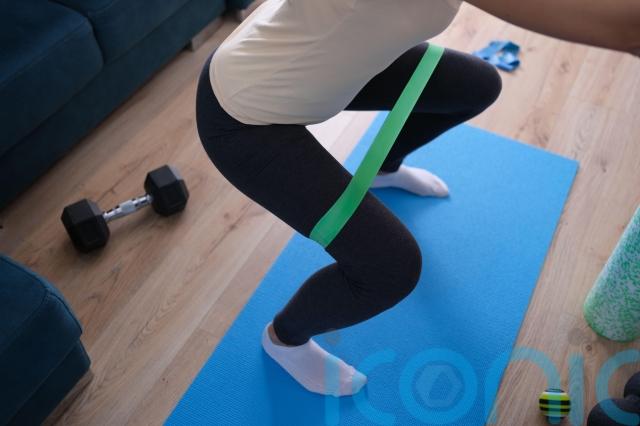
“Strength-based exercises help improve your overall health because the stronger you are, the better your balance is, the better your core strength is, the more able you’re going to be to exercise and do more to get your heart rate up,” says McGrath. “It’s about improving your overall strength to make yourself more able to do more aerobic activity.”
You can do strength training with your body weight, with weights or resistance bands – it depends on what works for you.
“You don’t have to go out and spend loads of money on equipment. You can do things like heel raises, sitting to stand or glute bridges at home with minimal or no equipment,” says McGrath. “Some people really like resistance bands as well as they can help stretch and challenge your muscles a bit.”
British Heart Foundation is encouraging everyone to take part in their virtual Walk for Hearts fundraising challenge and walk 28, 50 or 100 miles this February to help fund lifesaving research. Visit bhf.org.uk/walkforhearts

Subscribe or register today to discover more from DonegalLive.ie
Buy the e-paper of the Donegal Democrat, Donegal People's Press, Donegal Post and Inish Times here for instant access to Donegal's premier news titles.
Keep up with the latest news from Donegal with our daily newsletter featuring the most important stories of the day delivered to your inbox every evening at 5pm.

This publication supports the work of the Press Council of Ireland and Office of the Press Ombudsman, and our staff operate within the Code of Practice of the Press Council. You can obtain a copy of the Code, or contact the Council, at www.presscouncil.ie, Lo-call 1800 208 080 or email: info@presscouncil.ie.