

People seeking housing in Offaly are “doomed to failure"

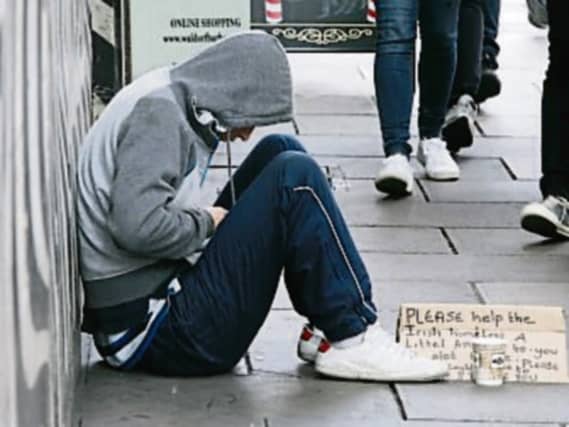

People seeking housing in Offaly are “doomed” to failure because the system is stacked against them, stated a local politician this week.
Cllr John Leahy told the Tribune that he has massive sympathy for people in the 20 to 45 age bracket.
“The way the system is designed at the moment,” he pointed out, “the majority of people aged from 20 to 45 don't stand a chance of owning their own home and will have no option but to rent for the foreseeable future.”
The councillor said new builds are not happening at the rate required.
“There are a number of issues which have not been tackled by the government,” he stated.
“One of those issues is that the cost of building houses for both developers and private owners is not economically viable.
“Another issue is that there is a lack of second hand property on the market. This problem is compounded by Vulture Funds buying everything in bulk.”
The councillor said that he believes that the system over the years has been placing too much focus on social housing and not enough attention on providing sufficient affordable housing.
“The housing crisis here in Offaly,” he stated, “is not in the area of social housing. It's in a lack of affordable housing units for people who are working.”
Cllr Peter Ormond told the Tribune that the housing market in Offaly “is still very trying, in spite of everyone's efforts. A lot of good work is going on but it's not yet translating into the results we would like to see. The delivery of social housing, long promised, is taking a very long time. Regarding the private market in Offaly, whether developers or private owners, there is little uptake in the building of houses.” He said this is because the cost of housing is so high and private owners don't have the incomes to match the high costs.
Because of this problem a massive pressure is being put on the rental market in Offaly, and the rents are going up. The average rent has gone up in the last couple of years from €700 to €800 per month to €800 to €900 per month.
“A lot of landlords are getting out of the renting thing,” the councillor added.
He said many people are living in their family homes at the moment, unable to afford building houses, buying houses or renting. If there weren't family homes for these people to live in then the situation would be a lot worse. Homelessness would be a much bigger problem. “In South Offaly over the last couple of months,” he said, “we have gone to the brink of homelessness on several occasions, but thankfully each time we have managed to get them housed.”
The number of applicants on the Offaly social housing waiting list at the moment is 1600, the highest number of applicants ever.
Cllr Ormond said there are a number of schemes currently being prepared by the County Council to try and tackle some of the housing problem.
A big problem at the moment is there's too much red tape. “We need to go back to a time when there was less red tape, back to the '80s and '90s when the local authorities designed the houses, went to tender, hired contractors, and the houses were built. It was quicker and more efficient.”
Cllr Ormond said the lack of affordable housing is as equally an unsatisfactory situation as the lack of social housing. If you are earning more than €25,000 per annum you are put outside the bracket for social housing. “This means there are many people, a lot of them couples, who have incomes of from €25,000 to €50,000, who badly want homes but can't afford them because the system has priced them out of the market.”
The councillor pointed out that the housing crisis has a huge knockon effect. “We want people living in our communities, using our creches, our schools, their children playing in our GAA teams, but this is not possible at the moment. It's a major societal problem.
“We need to get the mix between social and affordable housing right and the whole thing needs to be sped up.”
According to Social Justice Ireland the situation is bleak nationwide. Social Justice Ireland says the number of households seeking social housing is up 33 per cent since 2016.
“This is just one manifestation of Ireland’s current housing crisis and the huge failure of Government policy in this area,” said Colette Bennett, Economic and Social Analyst with Social Justice Ireland.
There are more than 170,000 social housing units in Ireland today. Some analysts are saying this needs to be doubled if the country is to reach a desirable target of 20% of all housing being made up of social housing; and the Government needs to set a target to reach that level by 2030 if it is to “genuinely solve Ireland’s housing crisis”.
The Department of Housing, Local Government and Heritage is currently developing a new housing strategy called Housing for All.
“Ireland’s housing crisis has not gone away”, commented Dr Seán Healy, CEO of Social Justice Ireland. “The development of a new strategy is an opportunity to get it right, to move away from housing as an asset to housing as a home. Decent, affordable housing should be central to the formation of a new Social Contract and a new strategy should underpin that.”
Dr Healy said SJI has submitted a ten point plan to the Government, which includes the following ten suggestions for a dynamic and far-reaching housing plan:
1. Expand Housing First to families, providing wraparound services and supports for children and parents.
2. Acquire an equity stake in properties in mortgage distress, leaving families in situ and increasing the State’s housing stock.
3. Build 14,341 social homes each year for the next 10 years at an annual investment of €3.3 billion.
4. Prohibit the sale of State lands suitable for residential development and use this land to build social housing.
5. Ensure that AHBs (Approved Housing Bodies) retain their social housing stock and prohibit its sale on the private market by AHBs.
6. Address housing affordability on the supply-side rather than investing in demand-side schemes that artificially maintain high house prices.
7. Close all tax loopholes for large-scale investment vehicles purchasing residential properties.
8. Invest in Property Inspections and enforcements.
9. Legislate to increase tenant protections and introduce long-term leases.
10. Invest in the services and infrastructure to support housing developments, with particular focus on social housing developments.
Emergency housing policy in response to Covid-19 saw the introduction of a ban on evictions; a prohibition on rent increases; payment breaks for mortgage-holders; a decrease in the numbers of people accessing emergency homelessness accommodation and the return of properties for long-term rent from the short-term holiday lettings market. The worry now is that as the Covid-19 restrictions lift, so too will the housing protections. Therefore groups are calling on the government to provide a new housing strategy that is fit for purpose and is at the scale required to really address the country’s housing crisis.
Deputy Carol Nolan said there is a big problem in Laois / Offaly where young couples are being refused a mortgage because their earnings are deemed to be too low and who don't qualify for social housing either because their income is deemed to be too high. “The only option for this cohort of people is affordable housing schemes which should be made a priority. These schemes should also be unlinked to any state equity scheme.”