

1988-1992, when the roles were reversed between Ferbane and Tullamore

Tullamore Court Hotel Senior Football Championship final preview
WELCOME or otherwise, here is a history lesson for the young Tullamore and Ferbane footballers that will do battle for a fourth consecutive year in Sunday's Offaly Senior Football Championship final.
It shows that every golden era ends, nothing lasts forever. The take away for Tullamore is to enjoy every moment of their current long spell out in the sun; and for Ferbane, the message is that dark clouds come and go and not to give up hope.
Tullamore may very much have the indian sign over Ferbane at the moment but there was a time, not that huge length ago, when the roles were very much reversed.
In the modern era, Tullamore have been able to win all the big games that matter between these two great clubs. They have beaten them in three finals in succession. They may have fallen across the line in a couple of them but the bottom line has been the same: Ferbane may have encountered bad luck but defeat has been their lot.
They also lost to Tullamore in Offaly's first penalty shootout in the 2020 semi-final and history is already showing that result to be way more significant than it looked in real time. Ferbane had ended a long 25 year famine when winning the Dowling Cup in 2019 and looked to have more than enough talent to add a few more.
Instead, the emergence of a brilliant, dominant Tullamore has ensured that Ferbane are still seeking a partner to that 2019 title.
In the early post 2019 years, Ferbane had to cope with both Tullamore and a still lethal Rhode. Rhode denied Tullamore in the 2020 final, Tullamore beat them in a replayed 2021 final and Rhode scraped over Tullamore in 2022. Inevitably, age caught up with some of Rhode's long serving stars after 2022 and Tullamore and Ferbane have enjoyed a monopoly on county final day in the last three years – one that is very healthy for the two clubs, not so good for the broader footballing picture in the county.
Ferbane have been agonisingly close in the past three years. Tullamore beat them 1-5 to 0-6 in a shockingly dour final on a horrible day for football in 2023. The margin of victory was halved to a point, 0-15 to 0-14 in 2024 with Ferbane bitterly complaining about some decisions that went against them. And in 2025, Ferbane got into a winning position near the end when a Darragh Flynn goal gave them a 1-12 to 0-12 lead but Tullamore went on a remarkable scoring spree, with an onfire Harry Plunkett pulling the trigger, to win by 0-19 to 1-12.
They have been hard losses for Ferbane but there was a time when the shoe was very much on the other foot: an era, still fresh in the memory of many who will be at Sunday's final, when Ferbane were unbeatable and just had to turn up to beat Tullamore – that may be a stretch but from 1985 to 1995, Ferbane knew they would win the big games between them and, deep down, Tullamore may also have known it.
A time when Tullamore were in the midst of their own traumatic famine as they went twenty three years without a championship win from 1977 to 2000. In 1977, Tullamore looked in great health as they won a clean sweep of Senior, U21 and Minor Football Championships but a couple of things plunged them into a long recession much quicker than anyone could have anticipated.
The big one was the emergence of a brilliant Walsh Island side who won six in a row from 1978 to 1983 – they couldn't be beaten and certainly not by Tullamore who failed to reach a final from 1978 to 1988.
The other factor was the loss of key players. Emigration took Ollie Bracken and others while some very good footballers preferred other sports and the less pressured surrounds of soccer in Puttaghaun or rugby in Spollanstown.
It was a rough time in Offaly's biggest population centre – a mood of despondency lowering the mood among its big footballing fraternity, the critics damning in their opinions, and making no attempt to dress them up.
After Walsh Island's great run was ended by Gracefield in the 1984 semi-final, Tullamore still had another decade and a half to wait. The emergence of new giants kept them in the doldrums. The first was Ferbane who had the best spell in their great history, winning five in a row from 1986 to 1990, adding more in 1992 and 1994. Clara came good for the second time in their history in the early 1990s, winning the championship in 1991 and 1993. Edenderry were brilliant from the mid 1990s to the mid 2000s and another sleeping giant re-emerged in Rhode in 1998 and embarked on a remarkable period of sustained excellence from 2003 until 2022, almost twenty years when they won titles with fantastic regularity.
Tullamore began to recover in the second half of the 1980s but there were days when Ferbane just had to turn up to beat them. It is an era that none of the players lining out on Sunday will have much awareness of for the very simple reason that they weren't born but if they wish to find out what that time was like in Ferbane and Tullamore, they just have to ask their parents, uncles and aunts and grandparents.
Tullamore's long famine was ended with the 2000 final win over Shamrocks and they added titles in 2002, 2007 and 2013 before a golden generation took over in recent years.
Ferbane beat them in the 1988 and 1992 finals while the 1996 final loss to Shannonbridge was a bitter pill for Tullamore fans to swallow – the west Offaly club won their first and only title that day but from a Tullamore one perspective, that was the one that really got away.
Ferbane's five in a row side were at their peak in 1988 and it was a bleak day for Tullamore. It was a strange time in the Offaly football world. The 1982 All-Ireland senior football champions had declined way quicker than they should and by 1988, they were among the also rans. Offaly lost an All-Ireland U21 football final in 1986, won one in '88 and lost an All-Ireland minor football final in 1989 but at senior level, there was a toxic mix of high expectations and very poor performances – and as you can imagine, the atmosphere was fairly putrid.
The club scene was rescued by the brilliance of Ferbane. A team full of characters with a deadly full forward line of Pat Doyle, Paul Mollen and Brendan Lowry for much of their great run. It is worth spending a moment to stress how good they were – Mollen was a great ball winner at full forward and while he could score himself, his main modus operandi was to quickly transfer to Doyle and Lowry, who were two of the best finishers I have seen on the Offaly scene.
There were so many more: Dinny Kelly, a real powerhouse of a centre back or midfield, brother John, and Kevin Brazil, so tidy and efficient in the corner of defence, Mick Lowry showing great leadership wherever he was played, Johnny Grehan, Jackie Kenny, Kieran Flynn flying at opponents; John Keena, so good at full back and then later at the opposite end of the field.
The emergence of great young talent in Cathal Maher, Brendan Flynn, Sean Grennan and many more ensured that Ferbane kept things fresh and Tullamore were handed their tails in that 1988 final.
For 19 minutes at the start, it was so different as Tullamore stormed into a 2-2 to no score lead but it ended up such a bad day for them and they only managed one more point. They led by 2-2 to 0-3 at half time, the late John Lonergan (he was killed in a flying accidnt in the Wicklow mountains a few years later), getting one of the goals but could only add one more point in the second half when Ferbane turned on an exhibition and had the game won early – the final score was 1-12 to 2-3.
Incidentally two other members of that Tullamore team also died tragically early, full back Liam Whitney and forward Ronnie Walsh.
It was a sign of how dominant Ferbane were in 1988 that the big talking point for some supporters afterwards was the bizarre sight of a cock being attacked by a dog on the O'Connor Park pitch before the game. The cock had been let loose by by someone, but unfortunately, a dog had been brought into the ground and there were scenes of mayhem as the dog went for the kill, with stewards and players trying to save the unfortunate cock – one of Ferbane's greatest ever players, Pat Doyle knows who let the cock out and we will keep our powder dry on that one but it was Ferbane manager, Kevin Gavin who saved his life, Doyle remembered, throwing a jacket over him and order was soon restored..
Former Offaly GAA secretary and soon to be GAA president, John Dowling described the incident as a “little foolishness” at a County Board meeting the following night. The late Tullamore man told delegates that “somebody let a little cock out on the field and a dog tried to demolish it”. He said the incident had “sullied the good name of our county finals”, stating: “It was a little foolishness that a dog put haywire”.
1988 Tullamore captain John Keane recalled fiedling phone calls the day after the final from a national and local reporter about the incident. They were heading down the line of “cruelty to animals” but he succeeded in diverting them from that one – the Tullamore camp were also fully aware of who let the cock out and didn't want to open that can of worms.
In 1992, Tullamore were much closer, losing by 2-7 to 1-9 though the final scoreline flattered them. Ferbane led 1-4 to 0-6 at half time, thanks to a Dinny Kelly goal, but were five points ahead with the end line in sight. Tullamore rallied late, a Larry Molloy goal and pointed free bringing the deficit down to a point but Ferbane always looked like winning.
There were intriguing sub plots to both finals with Tullamore having no shortage of extra motivation. 1988 was the centenary year of their formation and in 1992, they wanted to do it for John Lonergan who had been killed with another local man Frank Maher in a tragic plane crash in the Wicklow Mountains that February. Known as “goal a game Lonergan” for the very simple reason that he hit the net with remarkable regularity, he was just 31 years of age and took part in Tullamore's first training session of 1992 on Sunday morning, February 2 before heading off for his ill-fated flight.
John Keane and his wife Margaret were very friendly with John Lonergan and Mary and he recalled the devastating impact this had on them and the Tullamore camp. “That had a fierce impact. He was very popular and had been PRO, always around the club. We were all very friendly with him. We kind of wanted to do it for him but it just didn't happen.”
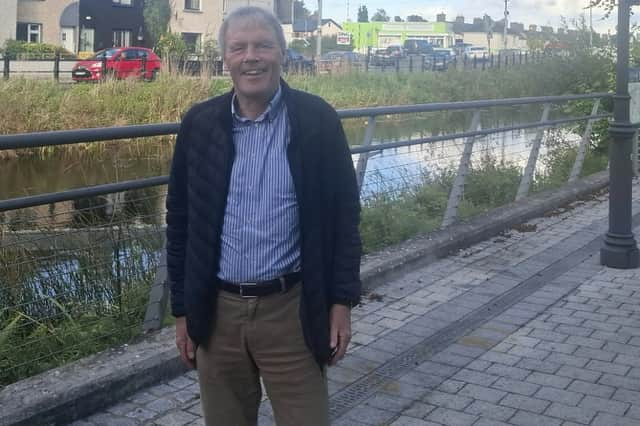

He believed Tullamore's better chance against Ferbane was in 1988 not 1992, when he felt they weren't really good enough – interestingly Doyle has no doubt that Ferbane were at their peak in 1988 but were on the decline by 1992 when some talented new players had emerged but the old stagers, himself included, were on the way down the wrong side of the hill.
“That was their centenary year and they were expecting big things, they got the start. They had a lot of guards and bankers who played with them over the years, Doyle said.
Doyle recalled a game defining move in 1988 with Johnny Grehan in bother at midfield and switched to wing back with Dinny Kelly. “Tullamore didn't counter them changes and we got the supply in. Johnny went back and steadied up the half back line, that got it back in our favour. They missed a few too.”
There was no sense of panic when Tullamore stormed ahead in 1988. “Kevin (Gavin, the Ferbane manager) always gave us confidence, he always told us we were better than them and we believed him. It was a bit of a shock and I didn't get a kick of the ball in the first twenty minutes but we didn't panic. We got no supply until the quick switch with Johnny and Denis. They made moves to counter-act that and they didn't work out as well and they weren't getting the supply.”
Both Keane and Doyle agreed that Ferbane were the better team in 1992 though Doyle doesn't agree that Tullamore had a better chance in '88. “We were peaking in 1988, we weren't as strong in 1992. A lot of young lads came in but there wasn't the stars we had. They blended well and Kevin gave us confidence. We always never gave up, we fought 50-50 for everything. The '88 team would have been stronger. Lads were coming to their age, I was the daddy at that stage but I never lost my speed. I always had speed.”
He was centre forward in 1988 but in the corner in 1992, feeding off Paul Mollen. “Mollen was a great asset to us. How could you mark him? He was too big to go behind and if you go in front, he was slick. He was talented, the very same as all the Mollen's but a huge problem with the knees. All his uncles were like that.”
In 1988, Ferbane's confidence was sky high but there had been considerable pressure on them two years earlier in 1986 when they started their five in a row run. They had gone ten years without a title since 1976 and the arrival of the six in a row Walsh Island side meant that a very good side were denied in the early '80s, losing in the 1980 decider and in a replay in 1983.
Ferbane had delayed Walsh Island's emergence in 1976, edging them by a point in a replayed final and Pat Doyle admitted that they were very lucky to win that. He had missed the drawn county final after getting his jaw broken by a Daingean player in the semi-final, spending ten nights in hospital, but was back for the replay. “It was a deliberate break, he ran and he hit me. He smashed all my teeth.” He recalled the mood of despondency with Walsh Island supporters after that game, them saying that they “would never win anything”!
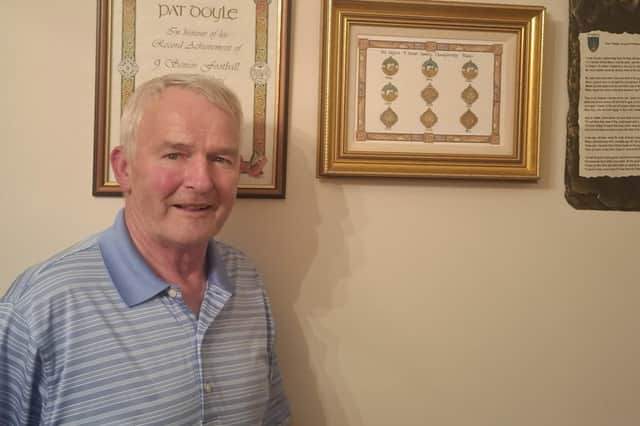
“I remember it well, they cursed them out of it,” he remembered.
Tullamore beat them in the 1977 semi-final but from 1978 to 1983, no one could touch Walsh Island.
Doyle got married to Castledaly woman Mary Young in 1980 on the Friday before the county final with their honeymoon booked for the Monday. “Matt Connor got a great goal against Jimmy Spollen that day and Mary often says to me, Pat I know, if ye won that county final, you wouldn't have been on the plane on Monday and she was dead right. That is the way it wwas, we were totally into it.”
It all meant there was a “lot of pressure” in 1986 and Doyle recalled being less than enthused when he heard of the appointment of a new manager, Westmeath native Kevin Gavin, who had moved into the area after taking up employment in Derrinlough Briquette Factory. “I didn't even know who he was and when I asked who he was, someone said he was from Castletown. When I heard he was coming to Ferbane, it was like holy f***, it would be another ten years before I won a medal. Someone said he was a great boxer and had done a bit of hurling. I was just addicted to it, I just had Mass on a Sunday and that. I didn't smoke, okay I drank, but that was it. Everything else was sacrificed.”
Within the blink of an eye, Doyle and everyone else were playing whatever tune Gavin told them as he led them to unprecedented success until opting out after the 1994 title win. Even now, Doyle is gushing in his praise of him.
“In all my time, I never came across anyone like him. He did everything on his own. He looked after training, putting out everything on the field, the cones, the showers, he swept the floors. He took no expense,” he recalled. 1971/1972 Offaly hero Tony McTague was in the background, a quiet man but every word worth its weight in gold to the recipient.
He recalled the physical training, Gavin doing every bit of the running himself. “He kept all statistics himself, our weight, how we were improving. He was disciplined, if the training was 7.30pm, it was 7.30. That man was leaving for Baggott Street (Bord na Mona headquarters) at 5 in the morning to be in work at 7 and the least we could do was be there at 7.30pm. He would come into the pitch before he ever went home, turn on the showers, the lights, get everything ready. His wife Angela washed the jersies, it was all done.
“He was unbelievable and he always had this mental thing, win, and if you can beat a team by two points, beat them by four and if you can beat them by four, beat them by eight. He would never ever lose the head and he would always give you confidence. You are better than them and you are better than the man you are marking. If you couldn't get that ball, make sure he didn't get it. There was no favourites, no one was better than anyone else. Brendan Lowry could be the best man but he was never told he was. The last sub was as good as the lad playing. There was no distinction. McTague would come around the dressing room and go to everyone. He would come to me and I had played with him in the '70s, he would say Pat, no need to tell you and he would move on.”
He spoke about the great work Kevin Gavin did in the development of the Ferbane Business Park and how everything he did was for the good of the community - “That was a dump and look at it now”.
Gavin was from that era when managers did it for the love of the game and their club, and the only time Doyle saw him angry was when there was an attempt to collect money for a holiday for him and Angela when they finished up in 1994 and that was instantly knocked on the head once he “got the smell” of it.
“He got more enjoyment out of this than any individual player, he said. He says if there is money collected it goes straight into the injury fund for players and I will hear no more about it. I am so lucky he came around the place. In 1986 I had never heard of him and he was something else.”
The 1986 final win over Kilcormac kickstarted everything and was also memorable for Ferbane man Brendan Clarke pulling out as Kilcormac manager once their opponents were his home club. “He always said he would never manage a club against Ferbane. It was unfortunate for Kilcormac that he did pull out, we did give them a bit of a beating. We were a strong team.” Doyle agreed.
Born in 1954, Pat was 32 in 1986 when they won their only Leinster club title, beating Portlaoise in the final. Not winning a second Leinster club medal is one of his big regrets. With Kevin Kilmurray starring and Eugene McGee managing, UCD beat them in the 1974 final while they lost by a point to Parnells of Dublin in a replayed decider in 1988.
“Pat O'Neill was marking me in 1974 and Tony Hanohoe was playing. They were all playing. We had a reunion a few weeks ago and McTague was talking, he doesn't say much but he was saying, and Kilmurray scored against us that day. It is hard to believe it. We probably could have done a bit better in Leinster. We were lucky in 1986 against Portlaoise, we maybe shouldn't have won it but the ones we lost, we shold have won. We lost games we shouldn't have lost, Parnell's and a few things went wrong for us. A few broken legs, Kevin Brazil broke his leg, John Kelly and they knocked us off. We had a great team, everyone grew up together and we bonded together. Kevin always said we were a band of brothers and that is the way it was. Not slating Tullamore but they didn't have that. We would die for each other and Kevin gave us so much confidence. He was a master mind. They were just good times.”
John Keane is a native of Fethard in Tipperary and played football for his home county in the 1970s. He was part of a generation of garda who were encouraged to move into their new community and embrace local life – for many, this meant playing with the local GAA club and Keane duly joined Tullamore for 1980 after fulfilling his ambition of winning a Tipp senior football medal with Fethard – he captained Tipperary in 1979 and 1980 was his last year to play for them.
The whole garda thing has changed with members living away from their station – it has been observed by many that former Clare hurler, Ollie Baker served in Tullamore for years but set up his family home in Westmeath, the same as detective sergeant David Scahill and they have sons playing for Westmeath. In a different era, they would have moved to Tullamore and their sons would be wearing the Offaly colours.
The 1992 team featured a mix of locals and non natives. Tullamore Garda Station was represented on the team by Pat Murray, John Keane and Mick Lowry while Dave Kavanagh, Benny O'Brien and Sean Luskin came into the town from Kildare, Roscommon and Mayo. Members of other clubs fattened on labelling them as “Templemore” or the “League of Nations”, and some of Tullamore's more passionate supporters bit the bullet every time that was said to them!
Keane has given a lifetime of devotion to Tullamore, coaching several of the current senior football side in underage ranks. He moved to Tullamore in 1976 – he had served in Wexford for a couple of years before switching to Tullamore - and trained with them during 1977 when they won that treble – finally “persuaded” to join by the late Paddy Fenning in 1980, he was a rock solid, dependable corner back for the guts of two decades. He was also one of that unfortunate generation who didn't get their hands on a senior football medal, playing in those '88 and '92 finals and he was a sub for the '96 loss to Shannonbridge. In 1988, the big debate around town was that Fenning should have been got back and played but he had won All-Ireland medals with Offaly in 1971 and 1972 and his boots were hung up. “He would have been an ideal man for that day,” Keane admitted.
He heard all the banter about Templemore but it didn't effect him at all – his track record in Tullamore answers that. “I always say we were living in town, working in town. Tullamore is a good club and we had been around Tullamore for a while before we went up playing. A lot of those guys who were called league of nations, we all stayed in the club. It was our home at that stage and it was the team to play with. In 1980, we were getting married, building a house, working shifts and it was very hard to stay going up and down. At that time, it was the done thing and I had come up and down to Fethard for five years after joining the guards. It was accepted that we would move, I had no intention of leaving and the GAA was a big part in me staying here. It certainly embedded you in the community.”
He recalled a barren period, though they did reach a couple of semi-finals, letting a great chance slip against Edenderry in 1984 before the final was reached in 1988, beating Edenderry in the semi-final.
In 1977, the mood in the town had been exuberant. “People thought this would never end,” he reflected but it did and it was a long time before it restarted. The emergence of Walsh Island followed by Ferbane are simplistic answers to the obvious question but there were much deeper reasons. The GAA ban on “foreign sports” had ended in 1971 and Tullamore suffered a much greater loss of players to rugby and soccer than rural clubs. Several excellent footballers either devoted themselves to rugby or soccer or fell between two stools, with football often the big loser. On one notorious occasion in 1989, two Tullamore players, Ronnie Walsh, who played in the 1988 final, and Tony Conroy, played the first half of an U21 football match against Clara and left at half time to play the Curragh in an U19 Gale Cup rugby – Tullamore won the football and lost the rugby with Walsh scoring four points for the footballers and the only try for the rugby team.
“It was harder to keep it going here and a lot of people didn't keep going from underage. Soccer was strong here as well,” Keane reflected. “Walsh Island were going really well in the 1980s and then Ferbane came. You would want to be going really well to beat either of those.”
Key players in 1988 and 1992, Ronnie Walsh and Larry Molloy played more rugby and soccer than football, Mickey White was one of the best forwards in the county in 1977 but played mainly soccer after that while 1992 forward Damien Geraghty was an exceptional talent but drifted away early from the game. “At that time, people wanted to play both and we definitely lost out a bit with the lads who went playing other codes. All those players you mentioned were very good players. Soccer was stronger in the town then in that they were playing at a higher level than now.”
That floating between the codes rarely happens now, for the top teams at least, and when a player commits to GAA, that tends to be it – Cormac and Diarmuid Egan, Michael Brazil and Johnny Moloney (he has since transferred to Galway) were all very good rugby players but all opted to devote themselves to the GAA in adult ranks. “You don't train one night in gaelic and one night in soccer now but it did happen back then. Tullamore was big into its soccer then and there were loads of clubs around, Knockvilla and other clubs,” Keane said.
The 1988 final is a big regret for him and looking back now, he felt they nearly started too well. “A little bit of relaxation came into it and in fairness to Ferbane, they got a few scores before half time. They were better than us in the second half. In 1988, we had a better chance. We got a good start but couldn't hold onto it. We should have been able to build on it but didn't. We lost the momentum and couldn't get it back. Ferbane had good players but were also physically strong. They were more experienced than us. They were good enough and experienced enough to see it out when they got ahead.”
In 1992, the combined age of Pat Doyle, John Keena and Brendan Lowry in the Ferbane full forward line was over a 100. John Keane was 37 at that stage stage, bringing it up near 150 for four players on that line and he recalled that they brought in Paul Mollen – that substitution didn't reduce the age tally – with both Keena and Mollen scoring goals. “That wasn't a great reflection on the full back line,” he laughed.
He played in the early rounds in 1996 but didn't make the team for the final against Shannonbridge - “That was the one that really got away, it really did. Fair play to Shannonbridge but Tullamore didn't perform.”
Along with others, Keane's influence on Tullamore's current golden era has been considerable and he can't help but reflect on the difference between now and the 1980s/1990s – the names of several really good young players in the 1980s and 1990s who scarcely played adult football flowed during our chat.
“It became popular for young people to play with the club now. Young people saw a bit of success and Tullamore will never hold onto them all but they stayed now. It was easier earlier on to retain them.”
A big thing for Tullamore becoming so strong was getting their underage structures right from the late 1990s on. “In fairness, Brian Collins was one of the big men involved in that, give him his due. It really took off here. We went into the schools a lot.”
He remembered the first group of U8s and 10s produced players such as his own son James Keane, Paul McConway, Mark Conlon, Shane Dooley, Shaun Martin, who played for years. “They were nearly the first out of the U8s/10s coaching, a lot of them stayed and played hurling as well. We were consistently able to field two teams up to minor for a long time.”
He knows there is challenges facing Tullamore – back in the 1980s and on, a high percentage of Tullamore's playing population came from west of the canal on the Arden end of town and even now, there are big estates that have to be fully tapped. “In Arden Vale you had a lot, just that estate was growing up at that time. You had James, Shane and Cathal Daly, Gearoid O'Grady, all the Martin's were there. Gerry Walsh was brilliant in Scoil Eoin Pol, he put so much in there. There was good rivalry at school level and between lads up here and in Arden.”
There will be an inevitable debate about a second club in Tullamore in the coming years and Keane referred to the strain on facilities, the need for ground in other areas. “It is a national GAA problem, the important thing from an Offaly perspective is that every young fellow starts playing and stays playing,” he declared.
Pat Doyle was one of the most lethal forwards in Offaly during the 1970s, 80s and first half of the '90s – he won a Leinster Senior Football Championship medal with Offaly in 1980 and is one of the unlucky ones on the list of truly gifted players who didn't win All-Ireland medals in 1982.
For years, he had one of Offaly football's most cherished records, the most Senior Football Championship medals with 9, won in 1974, 1976, 1986, 1987, 1988, 1989, 1990, 1992 and 1994. Rhode's Alan McNamee surpassed him in 2017 and was followed by a few other Rhode players in the following five years – McNamee now has 13 medals.
“It was a great achievement to have it but I wasn't thinking about records, just keep winning. I loved the club, I loved coming back to the atmosphere.”
Even now, Doyle buzzes at the recollection of county final wins, old men, long forgotten coming out onto the field and a gentle tap on the back, the more affectionate hug from the woman who rarely attended games – only 5 foot 8, Doyle felt 10 feet tall and was moved on a profound level when he saw the impact their wins had on locals.
He misses all that. “That would mean so much and you would want it next year. When we lost in 1980, 1983, it was nearly like someone died. The two I lost bothered me, the ones I won don't bother me, they are grand. The ones we lost are the ones that I think of.”
1971 to 1994 was the halycon years for Ferbane. They won their first and only title since 1914 in 1971 and won ten between then and 1994 before trumping Tullamore's 23 year famine by two years, until their 2019 win.
He had a deadly left foot. “McGee (Eugene, 1982 Offaly manager) always told me my right foot was only a prop,” he quipped, though ironically he hurled off his right, plays golf right handed, and is frequently called up to the podium to accept prizes, while he also uses his right hand for tools such as a hammer, saw etc. “I could kick with my right if I wanted to but I never used it. I always got onto my left. Most people are right footed and find it hard to mark someone on the left.”
Doyle was football mad from his youngest years. It was a different time, with few phones and players waiting for the local newspaper for word of fixtures if living away.
A defeat by Gracefield in the semi-final in 1991 ended their six in a row bid - “That was a big surprise, Kieran Dunne kicked balls no one ever kicked before” – and Clara beat them in the 1993 final. The ongoing introduction of young players helped them get wins in 1992 and 1994 and then Ferbane went backwards. Now in his 40s, Doyle was asked by Peter Foley in the shop to play a “bit of junior” and they won the championship in 1995. The medal from that may not be in the case with his nine senior ones but that win and the intermediate championship in 1996 were very special to him. “The junior medal was as good to me as any of them. Peter Foley and Martana Guinan were over the moon, we celebrated that more than some of our senior wins,” he smiled. He joked: “We were in Hiney's, a great pub for Ferbane GAA, and Peter said we would go for intermediate next year. We won that and the league in 1996. The next thing I was told, the place for me was senior football and I pulled the plug on it.”
He has often thought about it but doesn't know why Ferbane went 25 years without winning. “They had been doing okay at underage and it is hard to put your finger on it. I know Rhode came along and dominated. They won an All-Ireland minor tournament. The backbone of the team was going in 1994. You take Dinny Kelly, if you give him a penalty, it was straight down the middle and the keeper jumped out of the way, there were no airs or graces with Dinny.”
Doyle did feel some of the players took their eye off the ball and had got too used to winning. “There were great footballers there. I can't see why we couldn't have won anything in that period. We had the talent. It is a big parish but it is not like when we were growing up and all you had was football. We were in the terrace and had the green worn out. When Offaly won in 1971, a bonfire was lit there and the black ring was there for donkey's years, we used to play ball around it. It didn't mean as much but it does now, these boys are hungry and want to win. Back then, it was ah shur next year will do and the next thing you find it is 20 years and they have won nothing. It is too late and then a lot go back playing junior and saying they'd love to get one medal. The underage system was good and they had the facilities.”
Doyle agreed that dual commmitments is a factor in success eluding Ferbane and Belmont in recent years, though he really enjoyed hurling himself, winning a junior medal with Ferbane in 1989. His mother was a Coen from Galway and he played with the Belmont based St Saran's initially before Ferbane decided to go their own way and enter their own team.
From St Cynoc's Terrace in Ferbane, reared beside the Lowry's, he now lives almost equidistant between Ferbane and Belmont and is very happy with the unity between Ferbane and Belmont and the players, pointing out that almost half of the Ferbane senior football team is from Belmont and naming Adam Nugent, Leon Fox, Patrick Taaffe, Ciaran Cahill, Paddy and Jack Clancy, Oisin and David Kelly. That spirit of co-operation was not there in his own playing heyday and Doyle recalled that there were occasions when St Saran's would deliberately put on a match to clash with a Ferbane training session.
He is optimistic about Sunday. Recalling the damage that him, Paul Mollen and Brendan Lowry inflicted, he believes Ferbane need to get the ball in quickly to Cian Johnson, Joe Maher and Darragh Flynn, and not to be short passing out the field. “Tullamore are vulnerable. I think we have a chance. We have very good young lads. If I was shown as a young lad, I would have been better but I was never shown. It was just catch and kick, now it is different, they are all shown.
“They have got lads back, Joe Maher, Leon Fox, who weren't there last year. Mick Kenny who was with us is a selector, he would be very low key. His son Colin is a great bit of stuff and is coaching. Mick would be like Kevin Gavin, it is a simple game. If you hold it, you are giving the opposition time to get back. A quick ball in. Hopefully. Tullamore have three in a row, it is enough.”
1988 final: Ferbane 1-12, Tullamore 2-3
The scorers
Ferbane: Brendan Flynn 0-6 (3f), Dermot Claffey 1-0, Pat Doyle 0-2, Paul Mollen, Mick Lowry (f), Kieran Flynn and Cathal Ryan 0-1 each.
Tullamore: John Lonergan 1-1, Larry Lynam 1-0, Mark Plunkett and Larry Molloy 0-1 each.
The teams
FERBANE: Vincent Egan; John Kelly, John Keena, Kevin Brazil; Dinny Kelly, Mick Kenny, Jackie Kenny; Mick Lowry, Johnny Grehan; Dermot Claffey, Pat Doyle, Kieran Flynn; Cathal Ryan, Paul Mollen, Brendan Flynn.
TULLAMORE: Paul Ravenhill; Pat Conlon, Liam Whitney, John Keane; Vincent McFadden, Pat Dolan, Phil O'Reilly; Mark Plunkett, Dave Kavanagh; Ger Plunkett, Larry Lynam, Ronnie Walsh; Larry Molloy, John Lonergan, John Dowling. Subs – PJ Martin for Ger Plunkett, Sean O'Neill for Ronnie Walsh.
Referee –Carthage Buckley, Clara
1992 final: Ferbane 2-7, Tullamore 1-9
The scorers
Ferbane: John Keena and Paul Mollen 1-0 each, Brendan Lowry (1f) and Brendan Flynn 0-2 each, Sean Grennan, Cathal Ryan and Johnny Grehan 0-1 each.
Tullamore: Larry Molloy 1-3 (2f), Benny O'Brien 0-3 (2f), Mark Plunkett ('45'), PJ Martin, Damian Geraghty 0-1 each.
The teams
FERBANE: Vincent Egan; Sean Cullinane, Cathal Maher, Kevin Brazil; Patrick Egan, Mick Lowry, Jackie Kenny; Dinny Kelly, Tommy Kenny; Brendan Flynn, Sean Grennan, Cathal Ryan; Pat Doyle, John Keena, Brendan Lowry. Subs – Johnny Grehan for Tommy Kenny, Paul Mollen for Cathal Maher.
TULLAMORE: Ken Furlong; Joe Owens, Pat Murray, John Keane; Pat Dolan, Mick Lowry, Des McGirl; Joe Hughes, Dave Kavanagh; Phil O'Reilly, PJ Martin, Benny O'Brien; Larry Molloy, Mark Plunkett, Damian Geraghty. Subs – Alan Hogan for Dave Kavanagh, Sean Luskin for PJ Martin.
Referee – Carthage Buckley, Clara.