

AN COLÚN: Why a social media ban is the right thing to do

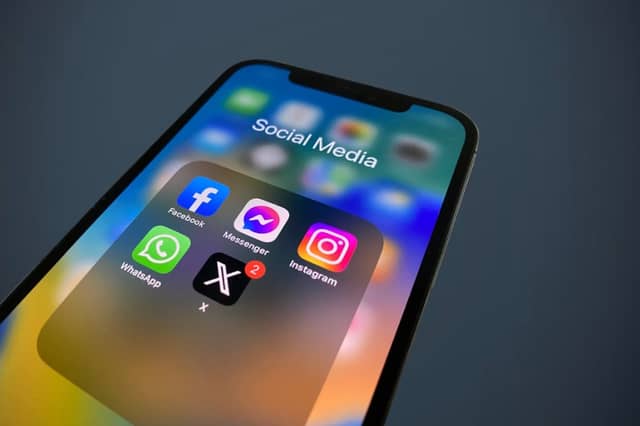

‘Social media is also well known for fuelling political polarisation, for driving emotional responses to politics’
BRITAIN is thankfully following Australia in banning children under 16 from accessing social media. Ireland is considering following suit and polls here show that the majority of people think we should go down this route. Part of the reason why these long overdue bans are happening is because of the work of the New York academic Jonathan Haidt.
Haidt has spent years studying what he calls “the great rewiring of childhood” due to the smartphone and social media. He wrote a great book called “The Anxious Generation” which has proven very influential in changing powerful people’s attitude towards the effects of social media in the lives of children. He says that if he could go back in time and change anything he would change social media so that it benefited democracy and human wellbeing rather than power politics, commercialisation and the bottom line.
In his book Haidt lays out the evidence for what parents around the world often feel which is that phones and social media are harming their children’s ability to learn, to concentrate. He has been teaching in universities since 1995 and he noticed that in 2015 college students started being more anxious and depressed and he started tracking the problem. In 2022 and 2023 a lot of hard evidence was made available to back up his arguments. Even Meta has done dozens of studies and has found that social media is harming mental health. “I have yet to find a single adult,” he remarks, “who would say it was so great for my child when social media entered our lives. The majority see there’s a problem. I don’t have to persuade people – they are in agreement already. Across the West there has been a decline in youth wellbeing. Nearly all of the studies show that when young people quit social media for a week or two weeks their mental health gets better.”
Haidt points out that in 7 out of 8 regions around the world studies showed that when high speed internet came into each area the numbers of women entering psychiatric emergency rooms or hospitals rose. He points out that when in 2012 Facebook bought Instagram, a lot of teenage girls started following Instagram. Girls are drawn to visual platforms such as Instagram and Tumblr, which induce anxiety when it seems you are going down in terms of appearance compared to your peers; when you are going up in the appearance stakes it brings pleasure.
With boys and men the damage is caused by different internet platforms. “With teenage boys,” remarks Haidt, “it’s more about quick dopamine addiction to video games, to porn, to gambling, to sports betting, to crypto investing – therefore it’s not social media as much. As a result, boys have a lot of trouble reading books, listening to teachers, making eye contact or engaging in conversations. Boys are being pulled out of life by the internet, and this pull could be incredibly damaging for their future; which is why girls are pulling ahead of boys in the West. Boys are fading into a kind of mish-mash of screen use. They are robbed of motivation and attention.”
Physical play is a biological imperative for children. Scrolling on your phone is not an adequate substitute. Studies show that as soon as they started getting smartphones in 2012 the number of children playing with other children began to drop. No physical touch, less sunshine, the lack of shared laughter, 5 hours a day of scrolling – these are not the right way to develop the brain.
Adults and children – we are all in great trouble. Many adults are now finding it hard to read a book, for the simple reason that as soon as you get a little bit bored with the book, there’s quick stimulation, there’s dopamine available right beside you in the form of your phone.
“I believe,” remarks Haidt, “that the damage done to the human capacity to pay attention is actually the biggest damage. This I believe is affecting the majority of all people.”
Computers were not harmful in the 1990s. Steve Jobs called them bicycles for the mind. Computers and the internet became problematic when a lot of the platforms became “enshittified.” This enshittification happened with more and more platforms and people’s screen use became more and more toxic.
How should we deal with the problem? Long stories good, quick dopamine bad, says Haidt, pointing out that humans are storytelling animals. “We have always told stories. Telling long stories in whatever way is good screen time. The platforms often gravitate to short videos, which is bad screen time.”
People wonder if this is different from previous new technologies in human history? Haidt believes it is, because even the teenagers are telling us, This is a bad addiction, this is hurting our mental health – children didn’t say that during previous moral panics about comic books or TV.
The good news is that in just the last 6 months we have gone through a global tipping point. Australia was the first to lead. The result was that all the platforms complied and put in an age-gating mechanism.
Social media is also well known for fuelling political polarisation, for driving emotional responses to politics. this is a global problem for democracies. “Democracy is a conversation,” says Haidt. “Our democratic institutions developed and thrived because of the invention of the printing press. Literacy lets us think in ways which enables modern liberal democracy. Initially we thought the internet would be great for democracy but when it became enshittified it meant that we became less tolerant of others’ viewpoints and differences.”