

POSITIVE PSYCHOLOGY: Insurmountable obstacle or a challenge you can overcome? You choose
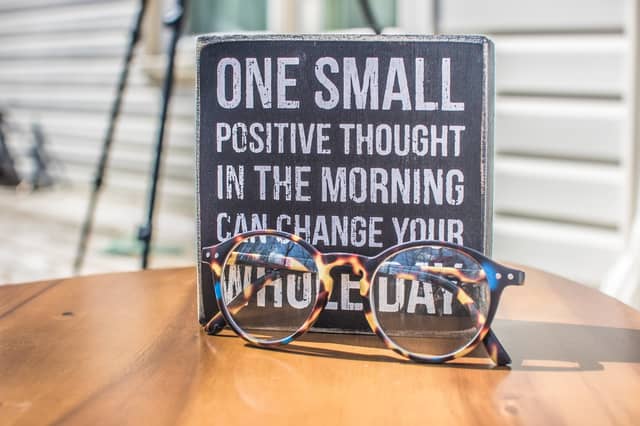

"Thoughts are not necessarily facts. Check if a thought is actually helpful. If it is, pursue it, if not, try to let it go."
WHILE many branches of psychology focus on dysfunction and abnormal behaviour, positive psychology is a relatively young branch of psychology that focuses on people’s strengths, behaviours and resilience in overcoming difficulties.
In this column we try to illustrate how aspects of positive psychology can be adopted and utilised by all of us to better manage stress and distress and mental health in general.
Positive thinking is about outlook
One important aspect of positive psychology is positive thinking. This week we will focus on what this actually means and why it is so important.
Let’s start with what positive thinking is not firstly. It is not about being happy all the time and only thinking positive thoughts. Rather it is about adopting a positive outlook in the face of adversity.
It is about reframing difficulties as challenges where possible, rather than insurmountable obstacles or hurdles.
The psychological literature provides good evidence that as well as making us feel better, optimistic and positive thinking is associated with a range of both physical and mental health benefits.
These benefits include: increased lifespan, better cardiovascular health, better immune function, greater resistance to the common cold, lower rates of psychological distress and depression and better coping skills during hardships and times of stress.
The brain errs on the side of caution
When it comes to our thoughts, the natural default of the brain is to err on the side of caution; hence we are more likely to entertain and engage with negative, worrying thoughts than with more positive ones.
Many of these negative thoughts are entirely random and automatic (we call these ANTs, automatic negative thoughts). These ANTs are powerful and impact on our feelings, quite simply they can make us feel sad and anxious.
Chronic anxiety results in an overproduction of the stress hormone cortisol and this depletes tryptophan (a building block for serotonin, our “happy chemical”).
Hence, anxiety and depression or low mood are often a little bit like the chicken and the egg.
When we feel anxious or depressed our behaviour often reflects this; we withdraw and isolate ourselves from others, we get even more stuck in negative thinking patterns and may stop being proactive in our daily lives.
The body’s alarm system
When we get stressed, anxious or worried the body’s alarm system, also known as ‘fight/flight’ is activated.
This results in an adrenaline cascade which speeds up the heart and blood pressure, diverting blood towards the limbs, preparing us to fight or flee.
Breathing changes becoming faster and shallower, digestion slows down and the liver releases stored glycogen for energy and the muscles tense up ready for action.
These changes are helpful when there is real and present danger, for example, if we are being chased by a lion or a tiger.
However, our thoughts alone are powerful enough to stimulate stress hormones such as adrenaline and cortisol and to generate these bodily changes.
Hence, if we are experiencing intense worry or rumination this can stimulate the fight/flight system and produce these same effects.

How to foster positive thinking
So how can we become more positive and optimistic in our outlook and thinking? There are a number of strategies that we use with clients (and ourselves).
Firstly, we need to look out for the ANTs and catch our negative self-talk. This can be tricky as we may be so used to our negative self-talk that we hardly notice it.
Psychologists have documented a number of thinking traps or cognitive distortions that we can get caught in. For example, catastrophising, or 'making a mountain out of a molehill', when one thing goes 'wrong'.
Do we tend to jump to conclusions about a situation? Are we mind reading? We encourage clients to stand back and separate from these types of thoughts.
Thoughts are not necessarily facts. Check if this thought is actually helpful. If it is then pursue it, if not, then try to let it go. Check if there is a more objective, less personalised way of viewing the thought or situation.
If you recognise that you are a harsh self-critic, it is important to work on this. Self-criticism lowers mood and diminishes motivation.
Experiment with self-compassion instead. We need to talk to ourselves the way we would to a best friend. For example, if our best friend was feeling low, we would most likely talk to him/her in a calm, soothing tone of voice, we would listen and be patient, would try to understand, empathise, encourage and support.
How often do we do this for ourselves when we are feeling down?
A technique that we really like and often talk to clients about is the practice of gratitude. We encourage our clients (and ourselves) to list (using pen and paper) a couple of things they have enjoyed, a couple of things they are grateful for and a couple of things that they have been satisfied with, every day.
These can be simple things, a cup of coffee, a warm house, a piece of work well done. The value of this exercise is that it gets us actively focusing on the positive helping us to steer away from the negative bias.
Research has also demonstrated that the practice of gratitude soothes the amygdala, that part of the brain that is always on the alert for danger.
People who are optimistic and positive in their thinking are less likely to engage in unhelpful coping strategies, such as comfort eating and drinking when they experience stress.
With a more positive outlook it is easier to push ourselves out of our comfort zone and try other ways to manage stress. Take exercise: this has a well known anxiolytic (relieves anxiety) effect and can really help get us out of a negative head space and shift a mood.
When we exercise we are more likely to focus on something outside ourselves rather than our thoughts. We also release endorphins, which calms us and boosts the mood. We always advise clients that physical exercise is the best form of exercise for the brain.
Positive thinking for the heart and immunity
There is a most encouraging body of research that links a positive psychological outlook with health benefits.
One study conducted in the USA at John Hopkins University Hospital found that people with a more positive outlook were one third less likely to suffer a heart attack or any other cardiovascular disease compared to people with a more negative outlook on life.
Research conducted at the University of Kentucky found that optimism and immune system function were positively related; as the study’s sample became more optimistic they showed stronger cell mediated immunity, the flood of immune cells that responds to invasion by bacteria and viruses.
Good immunity in turn means you are better at fighting disease and you also age better.
So remember positive thinking is not about being happy all the time. It is about attitude and outlook and the good news is that we can cultivate this with attention and practise.
Julie O’Flaherty and Imelda Ferguson (pictured above) are chartered clinical psychologists, both based in private practice in Tullamore. They write a fortnightly column in the Tullamore Tribune and Midland Tribune. Through Mind Your Self Midlands, they run courses on Positive Psychology and mindfulness throughout the year. They can be contacted through the Psychological Society of Ireland www.psihq.ie (Find A Psychologist section) or on their Facebook page, Mind Your Self Midlands.