

Rapturous reception for Brian Cowen at Offaly launch of new book


DCU politics professor Gary Murphy penned 'Anatomy of a Taoiseach' and was joined by Bertie Ahern at thronged event in Tullamore where Brian Cowen offered a stirring defence of decisions made when in power
FORMER Taoiseach Brian Cowen received a rapturous reception from a crowd of around 700 people in Tullamore on Friday night as he reflected on his long political career and delivered a forceful defence of decisions taken during the financial crisis.
The Tullamore Court Hotel was packed for the Offaly launch of Professor Gary Murphy’s new biography, Brian Cowen: Anatomy of a Taoiseach, with the available copies of the book selling out on the night.
Among those in attendance was former Taoiseach Bertie Ahern, under whom Mr Cowen served in a number of senior cabinet positions before succeeding him as Taoiseach in 2008. Also present were former Ministers and TDs who had served alongside Mr Cowen, current and former public representatives, councillors, party members, friends and supporters, with many travelling from around the country.
The presence of so many people who had shared different stages of Mr Cowen’s political career gave the evening the atmosphere of a reunion as much as a book launch.
The scale of the attendance appeared to take even those involved in the book by surprise, with Professor Murphy overheard remarking that it was the biggest book launch he had ever seen.
The centrepiece of the evening was Mr Cowen’s own 22-minute address.
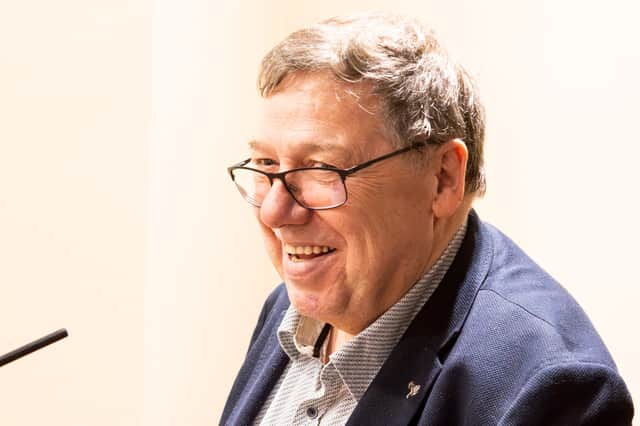
Standing throughout, he ranged across his political career, the people with whom he had served, friendships made on different sides of politics and, inevitably, the financial crisis and the decisions that came to define his period as Taoiseach.
At times humorous and at other times forceful, it provided a rare opportunity to hear Mr Cowen give his own account of events which remain among the most debated in modern Irish political history.
Central to the speech was the night of September 29, 2008 and the Government’s decision to guarantee the liabilities of Ireland’s banks.
“Doing nothing was not an option,” Mr Cowen told the audience. He strongly rejected suggestions that the decision had been motivated by a desire to protect bankers or financial interests.
“No one in Fianna Fáil was beholden to any banker,” he said, drawing a strong response from the room.
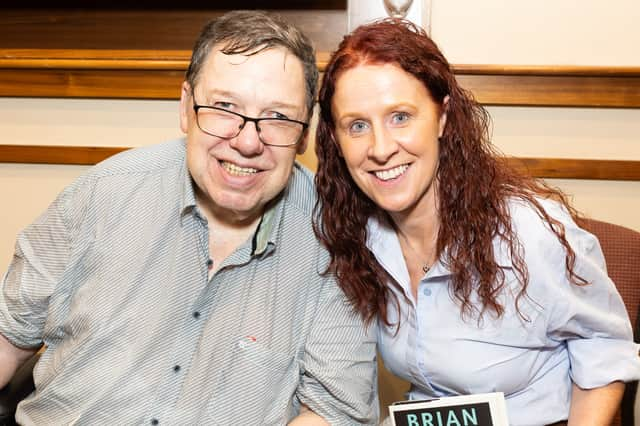
The Clara native argued that the circumstances confronting the Government that night have to be understood in the context of an international financial system deteriorating at extraordinary speed.
The decision, he insisted, was not being taken “on behalf of bankers or elites”, but because of what a banking collapse could mean for ordinary people and businesses.
He asked people to consider the position of employers who would need to go to their banks within days to access money to pay their workers.
“You can’t have a modern economy without a banking system,” he said.
For him, the issue came down to the responsibility of government when confronted with decisions it could not avoid.
“If you have to make decisions, you have to make them and stand up and stand over them,” he told the audience.
Mr Cowen also recalled the dramatic international backdrop against which the Irish Government was making its decision.
That night, he said, those involved in discussions in Government Buildings learned that the US House of Representatives had rejected a proposed $700 billion intervention in the American financial system.
He recalled the American authorities subsequently returning to the issue and approving an intervention, using the episode to illustrate the extraordinary uncertainty facing governments and financial systems internationally.
His argument was that Ireland did not have the luxury of waiting to see how events unfolded elsewhere.
Cowen maintained that the guarantee stopped the outflow of deposits from Irish banks and allowed the country to continue functioning while further measures were developed.
“I do it out of conviction that my government has worked and did act, and has to stand by the way they acted,” he said.
He then traced the decisions that followed, including the nationalisation of Anglo Irish Bank, further State intervention in the banking sector and the establishment of the National Asset Management Agency.
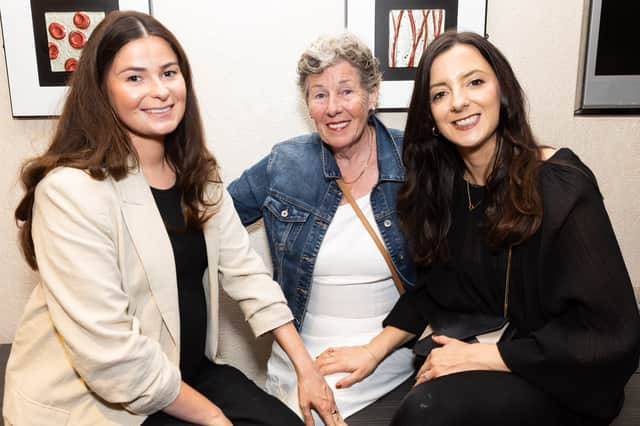
Mr Cowen was particularly robust in his defence of NAMA. He recalled predictions that the agency could cost taxpayers billions and contrasted those warnings with its eventual performance.
NAMA ultimately transferred €5.6 billion in cash and other assets to the State. Over its lifetime it funded or facilitated the delivery of 44,566 new homes, including 14,660 directly funded, while approximately 3,000 homes were delivered for social housing. NAMA-linked sites also accounted for more than four million square feet of commercial development in Dublin’s Docklands.
Mr Cowen pointed to those outcomes as evidence that the eventual results should form part of any assessment of decisions taken at the height of the crisis.
“Those are the records of what we did,” he told the audience. “We should stand up and be counted.”
It was one of the clearest statements of the central theme running through his speech.
Mr Cowen believes enough time has now passed to look at the decisions of that period “beyond the controversy of the time” and with the benefit of subsequent experience.
He acknowledged that decisions taken by his government were unpopular but maintained that they were necessary and pointed to the subsequent recovery and resilience of the Irish economy.
That passage also explained why he eventually agreed to cooperate with Professor Murphy on the biography.
Mr Cowen said he had always believed it was “very difficult for me to be objective” about events in which he had been so closely involved.
Time needed to pass, he argued, before those events could be assessed away from the political controversy that surrounded them.
He said Professor Murphy’s standing as an academic and historian was important in persuading him to participate. But he was equally clear about the independence of the finished product.
“It’s his book,” he said.
He said the author of a book also has to work with publishers and editors in deciding how it will ultimately be structured and presented.
“I will stand over a lot of what’s in it too, and I don’t necessarily agree with everything. You wouldn’t expect me to,” he said.
What mattered, he added, was that it was a “good, honest, fully informed book”.
Mr Cowen also underlined the independence of local historian Michael Byrne, who spoke at the launch, making clear that Mr Byrne had read the book and reached his own conclusions.
The former Taoiseach then turned to the people with whom he had shared his political career.
Some of his warmest words were reserved for those who put themselves forward for public life.
“My respect for people who have put themselves up for election” remained as strong as ever, he said, whether they served in government, the Oireachtas, local councils or simply became political activists because they cared about how their country was run.
“Without them, we wouldn’t have the democratic country we have today,” he said.
He also paid tribute to former Taoisigh under whom he had served, including Charles Haughey, Albert Reynolds and Bertie Ahern.
With Mr Ahern among those listening in the room, Mr Cowen spoke warmly of the political leaders he had worked under.
“I’ve seen them at close quarters,” he said. Whatever controversies had arisen during their years in public life, Mr Cowen described them as “people of ability, patriotic people, good people”.
His loyalty to the people with whom he had served was one of the strongest personal themes of the address. So too was his belief that political disagreement should not prevent friendship.
Mr Cowen recalled advice given to him early in his career by a political opponent who had been a friend of his father.
“Don’t judge your friendship on politics alone,” was the advice he remembered receiving. “I thought that was very good advice,” Mr Cowen said.
He spoke of people who were not of his political persuasion but who had become and remained friends, before drawing laughter by reminding the audience not to forget the many Fianna Fáil friends he had made along the way either.
As his address moved towards its conclusion, Mr Cowen thanked the former colleagues, councillors, activists and friends who had supported him through his political career.
He reserved particular thanks for his wife Mary and daughters Sinéad and Méabh and the support they had given him throughout the years.
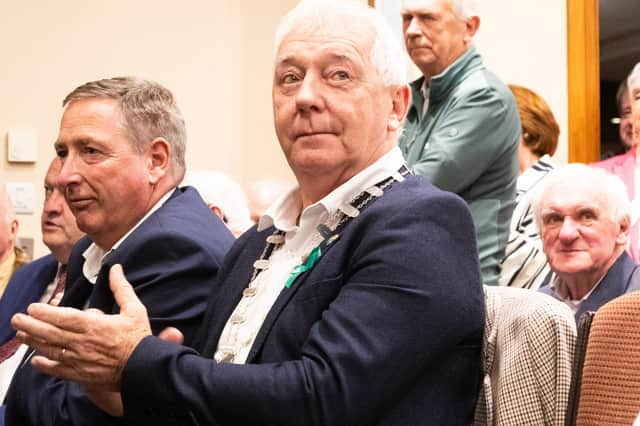
After the speeches, the focus shifted from the political record to the personal relationship many of those present clearly retain with the former Taoiseach.
For more than two and a half hours over the course of the evening, Mr Cowen signed books, posed for photographs, shook hands and spoke individually with people who had travelled to see him.
Despite his visible mobility difficulties, he had stood throughout his 22-minute address before continuing to meet those waiting to speak with him.
For all the national debate that still surrounds his years as Taoiseach, the scene in Tullamore offered another perspective.
The size of the crowd, the people who travelled from across the country and the long queues to meet him demonstrated the support and affection Mr Cowen continues to command both in Offaly and much further afield.
And when it came to the most contested decisions of his time in office, Mr Cowen’s message was equally clear.
“I’ll take criticism, as I do always. No problem,” he said.
But he firmly rejected the suggestion that the actions of his government had been taken for bankers or elites.
“It was done on behalf of the people of Ireland.”
For a speech which began as a reflection on a new biography, it became something broader: Mr Cowen’s own account of public service, political friendship, loyalty and the decisions his government made at a moment of extraordinary national and international crisis.
He did not ask that those decisions be viewed without criticism. He asked that they be viewed in the circumstances in which they were made, and in light of what followed.
And before a packed room in Tullamore, Brian Cowen made clear that he remains prepared to stand over them.